



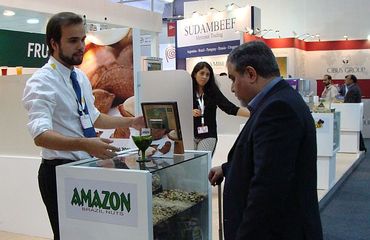
São Paulo – For the first time since its inception, in 1998, Amazon Brazil Nuts participated in an edition of food industry fair Gulfood, in Dubai, and already the company is preparing to return for the next edition. The company’s flagship product, Brazil nut, is yet little known in Middle East and North Africa countries, but the company is planning on taking advantage of the fact that Arabs like dried fruit and nuts to sell such a thoroughly Brazilian product in that region.
According to Amazon Brazil Nuts CEO Ricardo De Rosa, the Arabs who visited the Brazilian stand at the event expressed interest in importing the product. “This is the first time a product is brought to the fair that bears the name of Brazil. They are enjoying the nut,” he said. In Brazil, the nut is called castanha-do-pará (after the northern state of Pará).
The fruit is found throughout the Amazon forest, and not only in Pará. The state, however, was the first to process the fruit of the Brazil-nut tree. Currently, the company ships out 30% of its output to customers in Europe, the United States and China. The production volume varies depending on crop yields. In 2013, output stood at 1,000 tonnes of peeled Brazil nuts, the kind that was introduced to the Arabs.
The company’s managing director Ana Paula Denardi says small amounts of Brazil nut are on sale in Arab supermarkets and claims the local crowd can be won over. “The Arabs enjoy nuts, chestnuts, pistachio. Our product is ideal to their tastes. Most of those who sample it at our stand like it; some say it is a bit oily. And it is. The market is under-tapped and we can supply it, because we have the manufacturing plant,” she said.
The potential Arab clients, says Denardi, have said the price charged by the company is lower than what local importers pay. “They usually buy from trading companies which resell product sold to Europe. Consequently, the price is higher, because it passes through more hands,” she says. The Arabs who took an interest in the Brazil nut will likely buy it in order to resell at supermarkets. It can either be sold whole or in pieces, in flour, or ground. “Some even inquire whether we can print their brand on the packaging,” said Denardi.
Other Brazil nut features De Rosa presented to potential clients are its nutritional and environmental qualities. “It is rich in selenium (a mineral). A nut contains the daily amount of selenium human beings need. It is also eco-friendly, in that harvesters in that area will not cut down trees to sell them,” the executive said. The company has no sales target in place, but due to the demand for information and the interest from potential clients at the fair, Denardi says a decision has been made for 2015: Amazon Brazil Nuts will be back at Gulfood.
*Translated by Gabriel Pomerancblum
