



São Paulo – A survey conducted by the Brazilian Trade and Investment Promotion Agency (Apex-Brasil) shows that exploring the fruit market can be a way for Brazil to expand as a foodstuffs supplier in the Arabia Peninsula and Persian Gulf. “It’s a buying market, we have the fruits to sell and we’re not the main suppliers,” says the coordinator of Market Intelligence at Apex-Brasil, Leonardo Machado.
The research done by Apex-Brasil, which is a preliminary analysis of a full study to be released next year, presents the market of foodstuffs and beverages of the region and Brazil’s position as a seller of these products. Based on local imports and Brazil’s share in these imports, plus the expansion of foreign purchases by the country in the sector, the survey listed six food products whose sales Brazil could increase to the United Arab Emirates. They are: fresh eggs, Brazil nuts, lemons and limes, grapes, melons and clove.
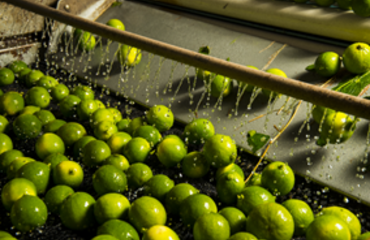
The UAE imported USD 69.6 million worth of lime in 2014, from which only 9.7% was supplied by Brazil. The product’s main seller to the Arab country was South Africa with a 52.9% market share. The competitors increased their lime sales to the UAE in 29.8% between 2010 and 2014 with Brazil bumping sales 43.4% in the same period. Despite Brazil making available more recent data on foreign trade, Apex-Brasil used data from 2014 since other countries take longer to make theirs public.
With fresh grapes, the UAE imports USD 85.9 million per year, a market in which Brazil has only 3% against 22.9% by South Africa, the main supplier. But Brazil expanded its supply in 185.6% between 2010 and 2014, while other competitors increased sales in 21.5%. With fresh eggs, Brazil accounted for 27.7% of imports by the UAE, with Ukraine as the leading supplier.
The analysis primarily includes information on Saudi Arabia and the UAE because those two countries have been identified as the region’s premier destinations for global food and beverage exports, as well as for exports from Brazil. The UAE accounted for 0.63% of total exports from Brazil in 2014, but that share climbs to 1.1% when it comes to food and beverages. In Saudi Arabia gets 0.56% of total Brazilian exports, and 1.5% for food and beverages.
Machado notes that Brazil already retains the lion’s share of the market in those two Arab countries in some food categories. In Saudi Arabia, for instance, Brazil has an 82.1% stake in the raw chicken market and a 61.4% stake in refined sugar market. In the UAE, Brazil holds a 76.8% market share for raw chicken, and a 70.3% share for refined sugar. Brazil is now looking to branch out into markets dominated by other countries. “Other suppliers have market positions like the ones we have in sugar and poultry,” Machado told ANBA.
As for fruit, Brazil is already doing prospection work in the region. Apex-Brasil has partnered up with the Brazilian Association of Fruit and Fruit Product Exporters (Abrafrutas) for a project to encourage international sales. Demand in other industry segments is on the rise in Saudi Arabia and the UAE, but Brazil has no surplus to export, and would have a harder time competing because suppliers are much better located.
Apex-Brasil’s Market Intelligence coordinator believes it’s more advantageous for the region to import goods and to produce them locally. The analysis that has been released names investment in agriculture by the likes of Saudi Arabia to ensure its food supply. Population growth and the 2008 crisis, which caused commodity prices to boom, have fueled those measures. However, the deserts and mountains are prevalent in the region and water is scarce, and that has limited those actions.
“Countries such as Saudi Arabia are changing their policy and relinquishing the drive for self-sufficiency to focus on looking for international food suppliers instead,” the survey claims. The analysis also highlights the drive toward infrastructure investment in the Arabian Peninsula and the Golf, which has made it a hub for international trade and cut down importation costs.
*Translated by Sérgio Kakitani & Gabriel Pomerancblum
