



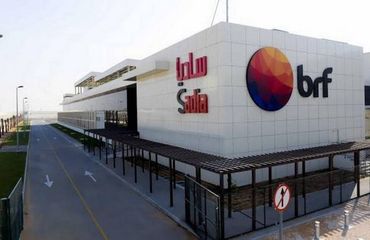
São Paulo – The Arab countries may not be at the top of the list when it comes to Brazilian companies branching out overseas, but they have attracted a lot of these corporations nonetheless. Ranking FDC das Multinacionais Brasileiras (the FDC Ranking of Brazilian Multinational Corporations), released this Wednesday (9th) by Fundação Dom Cabral (FDC), draws a map of Brazilian businesses and shows they are active in at least 13 Arab countries.
As per the survey, there are 11 to 20 Brazilian companies in the UAE, two to ten in Algeria, Tunisia, Libya, Egypt, Saudi Arabia, Oman and Lebanon, and one in Morocco, Mauritania, Qatar, Iraq and Jordan. “I think there could be more Brazilian corporations, but they are not absent altogether,” said the professor and researcher at the FDC’s International Strategy and Business Center, Sherban Leonardo Cretoiu, regarding the Arab world.
The country with the highest number of Brazilian multinationals is the United States, followed by Argentina, Mexico, Colombia, Chile, China, Peru, Uruguay, Paraguay, Portugal, Bolivia and Venezuela. These Brazilian-based businesses are present in 100 countries across all continents, but 82.2% of these countries are in South America. “In their globalization strategies, they look to invest in the areas they are most familiar with, where risk is lower,” Cretoiu explains.
But geographic proximity is not the sole factor; culture and politics also play a role. And this, the researcher says, holds true not only of Brazilian multinationals, it applies to businesses in general. “It is only natural,” he claims.
He also points out that these Brazilian corporations have expanded into Asia, to countries like China and India, as well as to Portuguese-speaking African countries.
The researcher believes that there’s a lack of knowledge about the potential of the Arab world and its facilities to invest. And, thus, a lot of companies access these markets via other regions, such as Africa and Europe. Based on the UAE, where there are a higher number of them, the companies operate in other Arab nations. Cretoiu highlights that in the region the Brazilian companies are mainly service providers or have commercial subsidiaries and not manufacturing plants.
The research shows that there was an increase of 7% in the internationalization of the companies. To measure the internationalization of each company, FDC considers assets, revenues and staff of the company abroad over total assets, revenues and staff. The survey includes companies of all sizes and not only the large ones. In all, 62 companies were surveyed, of which 48 were multinationals and 14 have franchises abroad. To calculate the internationalization of franchises, the survey determines the ratio of operations data abroad over operations data in the domestic market.
The research indicates Fitesa, the manufacturer from Rio Grande do Sul state of non-wovens used in the hygiene and medical and industrial specialties areas, as the most internationalized company in the country. In the second spot comes construction company Norberto Odebrecht, followed by InterCement (cement), Gerdau (steel), Stefanini (technology), Marfrig (food), Artecola (chemicals), Metalfrio (refrigerators and freezers), CZM (machinery) and JBS (food). This ranking considers multinationals and companies with abroad operations, and not franchises.
Along this same logic, and taken into account the number of countries where the companies have subsidiaries, the most internationalized Brazilian company is construction company Andrade Gutierrez, followed by Stefanini, WEG (engines), Vale (ores), Marcopolo (buses), Banco do Brasil, BRF (food), Magnesita (refractories), Natura (cosmetics), Votorantim (cement, mining, metallurgy, steel, cellulose and paper, juice), JBS, construction company Norberto Odebrecht and Itaú-Unibanco. The majority of the multinational companies studied said they are planning to expand their operations abroad at the places they already operate.
Among franchises, Brazil’s the most internationalized chain is iGUI Piscinas, both by the internationalization index and the number of stores abroad. It’s followed by car rental Localiza in second, and Dudalina, of clothing, in third.
*Translated by Gabriel Pomerancblum and Sérgio Kakitani
