



São Paulo – Brazilian professors and scholars will be in the spotlight for the international colloquium Art and Culture in Latin America and the Middle East, slated for the 27th and 28th this month at the Holy Spirit University of Kaslik (Usek), in Jounieh, Lebanon.
The Brazilian speakers will be Silvia Antibas, a historian and the Culture director at the Arab Brazilian Chamber of Commerce; João Baptista de Medeiros Vargens, an Arabic Language professor at the Federal University of Rio de Janeiro (UFRJ); Katia Chalita, the vice president of the Brazil-Lebanon Culture Institute (Icbl); Geraldo Adriano Campos, a professor of Sociology of International Relations at Escola Superior de Propaganda e Marketing (ESPM); Mariane Gennari, the holder of a master’s degree in Social History from the University of São Paulo (USP); Adriana Abdenur, a member of Instituto Igarapé (a Rio de Janeiro think-tank); and composer Alfredo Castro.
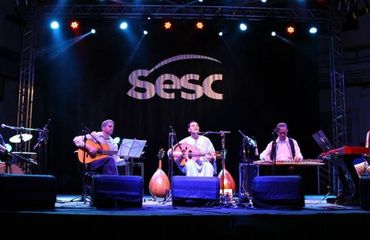
The agenda will include music, exile, memories of migration, literature and theater. “Music is the strongest element [of Arab culture] in all countries [in Latin America]. Gastronomy comes second,” says Roberto Khatlab, the director of Usek’s Latin American Studies and Cultures Center (Cecal).
Khatlab notes that Brazil is the Latin American country that welcomed the most Arabs, particularly from Lebanon, during the civil war that lasted from 1975 to 1990. In the wake of the conflict, economic issues also drove many Lebanese people to migrate to Brazilian land.
Argentina and Mexico were the next-biggest destinations for Middle East immigrants. The event will also feature speakers from those two countries.
Drums and samba
Silvia Antibas will deliver the lecture Arabs in Brazilian music. “The influence of Arab music in Brazilian music predates the arrival of Arab immigrants. It originated from Iberian music, which had a heavy Moor influence,” Antibas points out.
“Then came the African slaves, who were Muslim and would sing and pray in Arabic. Malian slaves staged a revolt in Bahia and hid out in the hills of Rio de Janeiro. That is why the samba carries an Arab influence,” she says. “Only then did the Arab immigrants get in the picture,” she explains.
Besides being a member of the Arab Chamber, Antibas coordinates the São Paulo State Secretariat for Culture’s unit for Diffusion, Libraries and Reading.
Quick facts
International Colloquium: Arts and Culture in Latin America
October 27 and 28, 2016
Where: Holy Spirit University of Kaslik, Jounieh, Lebanon – Faculty of Music Auditorium
Free admission (no prior registration required)
Full program:
http://www.usek.edu.lb/news/arts-and-culture-in-latin-america-and-the-middle-east-2016
*Translated by Gabriel Pomerancblum

