



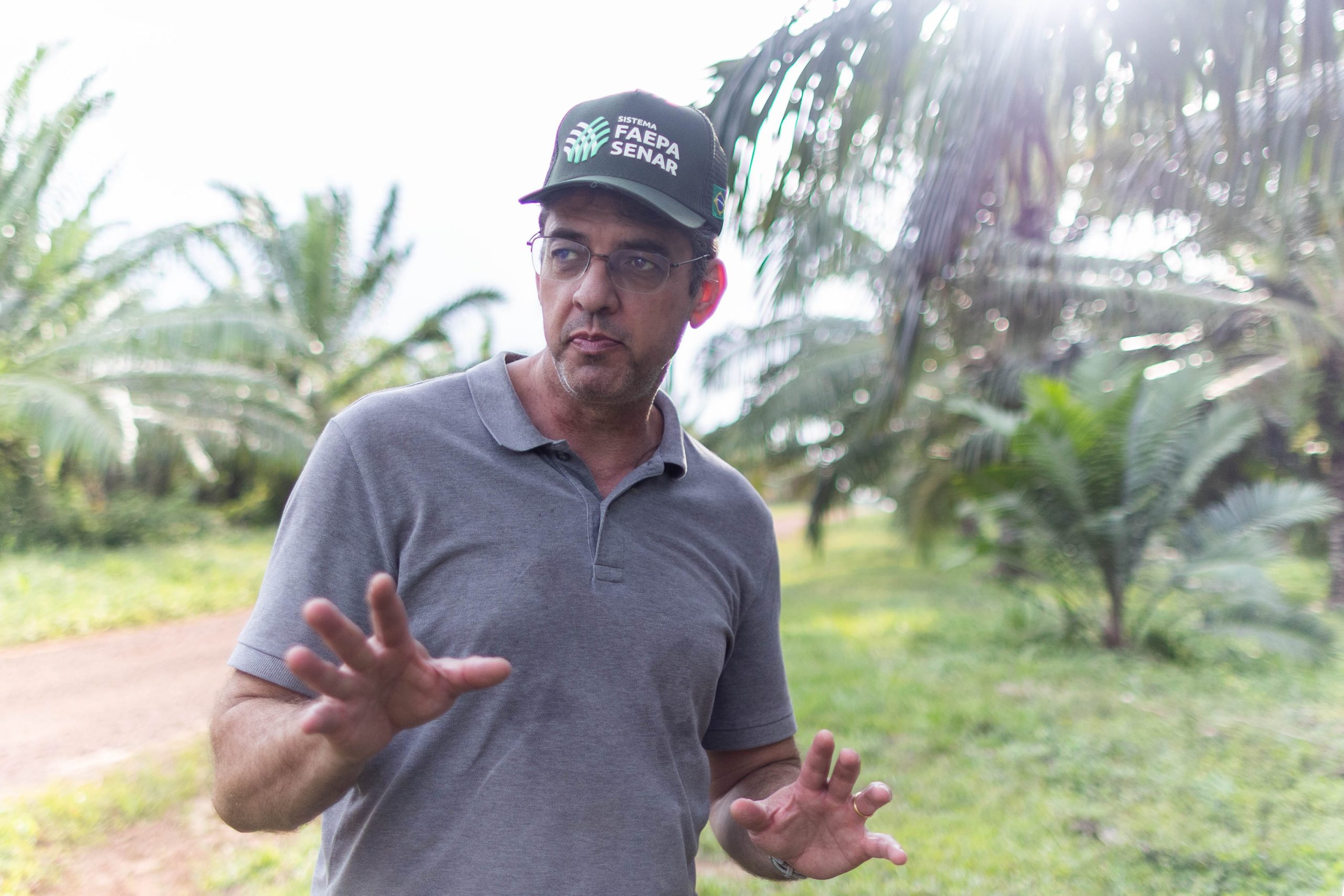
Belém – Brazil’s agribusiness sector views the U.N.’s COP30 climate summit, to be held in November in Belém, Pará state, as an opportunity to show other countries how the sector handles environmental preservation. The fact that Brazil is hosting the COP is expected to draw attention to the country’s agricultural activity. “It’s a discussion that has come close to us, and we have nothing to hide,” says Nelson Ananias Filho, Sustainability Coordinator at Brazil’s agribusiness lobby CNA.
The self-portrait drawn by Brazil’s agribusiness is far from the one depicted by European critics, who claim that Brazil clears forests to produce. The sector believes it operates under one of the most stringent environmental laws in the world, considering it is a tropical nation whose development and economy are grounded in agriculture. “It’s very important to show that this does exist and that it’s being followed,” said Ananias, referring to Brazil’s Forest Code.

“The COP came to Brazil to give us the opportunity to show what really happens here—to draw attention to the fact that, here in Brazil, especially in this forest region, there’s a population that lives harmoniously within the forest, with production chains that reconcile production and preservation. This needs to be shown to the world,” Ananias told ANBA, speaking in Pará, a state located in the Amazon forest region.
The CNA reports that Brazilian law currently requires rural properties located in the Amazon biome to allocate 80% of their land to legal reserves (with native vegetation, without production), a percentage that is 35% in the Cerrado and 20% in the country’s other biomes. In addition, permanent preservation areas on the property—such as springs and hilltops, among other types of terrain—must remain untouched. These percentages were established in the 2012 Forest Code, with some differentiation for those who were already farming the area before July 22, 2008, when Brazil first mapped its native vegetation.
According to data released by the CNA, 66.3% of Brazil’s territory is made up of areas for the preservation and protection of native vegetation, which includes the preservation areas of rural properties. Cities and infrastructure occupy 3.5%, and agribusiness uses 30.2% of the total. “Sixty-six percent of Brazil’s native vegetation is still standing, and 33.2%, that is, half of this remaining native vegetation, is within private properties in Brazil,” says Ananias.
Brazilian farmers will be directly involved in the discussions that the Brazilian government will have at the COP. “The main NDC target proposal, to achieve a 59% to 67% reduction, is based on the agribusiness sector, on the recovery of degraded areas,” explains Ananias, referring to Brazil’s commitment to lower its emissions to the percentages above by 2035, using 2005 levels as a baseline. The U.N. refers to countries’ climate targets as “nationally determined contributions.” One of Brazil’s main strategies to meet its target will be the recovery of degraded areas, especially pastures. “We’re the ones who will make it happen,” says Ananias.
In the field
This type of action—the recovery of degraded pasture areas—has already been adopted by Brazilian agriculture. At the Cooperativa Agrícola Mista de Tomé-Açu (CAMTA), located in the city of Tomé-Açu, Pará state, some cooperative members have converted 18 hectares of degraded pasture into an agroforestry system, which combines trees and other productive plants, especially oil palm. The goal is to reach 2,000 hectares, according to the cooperative’s technical coordinator, Pedro Silva.
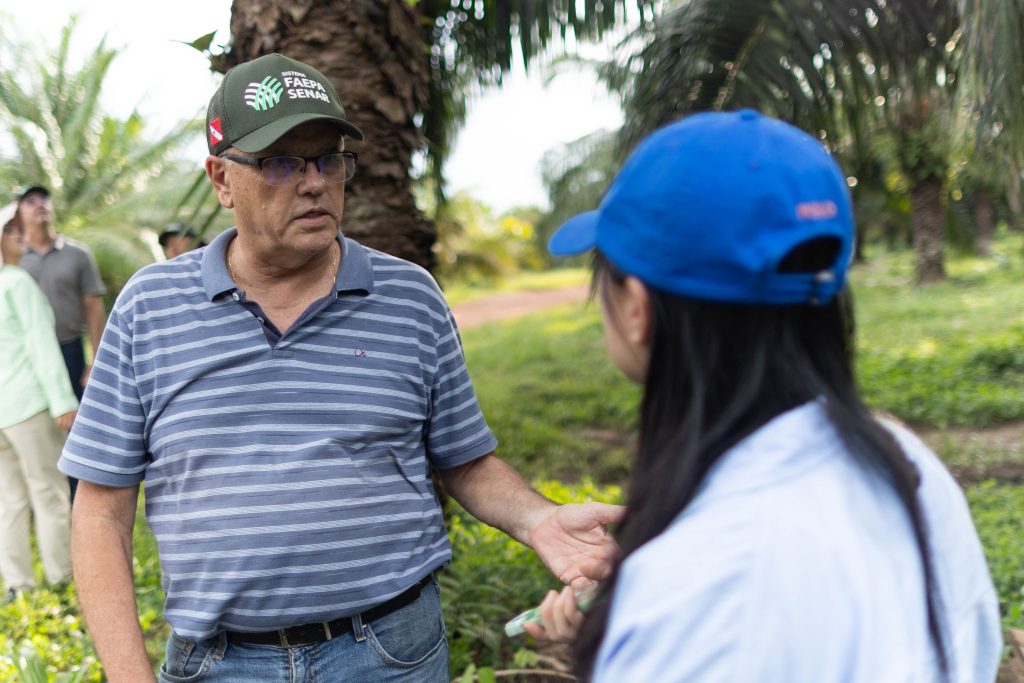
Brazilian farmers also consider increased land and crop productivity as an environmental gain, as it has allowed them to produce more food without opening new areas. For a group of foreign journalists on a press trip to the state of Pará invited by the CNA in a pre-COP initiative, the confederation’s consultant and Brazilian farmer Ricardo Arioli Silva shared his own and his family’s experience in agriculture as an example of this.
Originally from Rio Grande do Sul, Arioli settled in Mato Grosso in the 1990s to farm. The initial goal was to plant only soy, but a few years later, based on the experience of other farmers, the family began growing corn in the off-season. More recently, they adopted planting Brachiaria pasture alongside the corn, turning the crop area into grazing land for cattle after the corn harvest. In other words, land that initially produced only soy has become a source of two additional food products.
COP30 will take place from November 10 to 21, with the heads of state meeting scheduled for November 6 and 7. During the event, Belém will host international delegations and country leaders. A preparatory ministerial meeting was held in Brasília on October 13 and 14. The CNA will have two spaces at the Belém conference, one in the Blue Zone and another in the AgriZone, with the recovery of degraded pastureland from livestock farming and other sustainable initiatives on its agenda.
*The journalist traveled at the invitation of the CNA
Read more:
Private sector: COP30 to focus on implementation
Translated by Guilherme Miranda
