



São Paulo – The Brazilian food company BRF’s Middle East sales increased in 2014, adding to the company’s total net income of R$ 2.2 billion (US$ 763.7 million), up 109.4% from 2013. According to a balance sheet released last Thursday evening (26th), sales across the Middle East reached 909,000 tons, up 4.5% from 2013, and fetching R$ 4.8 billion (US$ 1.6 billion), up 11.6% from 2013. The company owns the Sadia and Perdigão brands.
In Q4 alone, Middle East revenues reached R$ 1.3 billion (US$ 451.3 million), up 27.5% from Q4 2013. BRF has ascribed the performance to increased market share in countries like Saudi Arabia, Kuwait and Yemen. Additionally, the enterprise’s global CEO Pedro Faria has said this Friday (27th) that BRF invested in projects in Arab countries last year, and thus achieved a stronger regional presence.
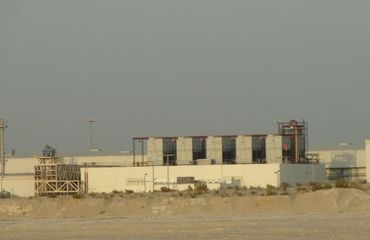
“We had an important year, a year in which we acquired three of our Middle East distributors. We purchased 100% of economic rights for Federal Foods in the UAE, 40% of our distributor in Oman and 75% of our distributor in Kuwait. Furthermore, we inaugurated our largest processed food plant in the Middle East, which significantly strengthens our market position,” he said.
The plant is in Abu Dhabi’s Kizad industrial Zone. It went online in November last year and can put out up to 70,000 tons of processed meat products a year.
Last year, international foreign net operating income (i.e. overseas net earnings) was up 1.5% from 2013 to R$ 13.3 billion (US$ 4.6 billion), as a result of smaller sales volumes and higher average product prices. In 2014, sales to the Middle East accounted for 35.2% of operating income. In the prior year, the rate had been 32.1%. Middle East revenues made up 35.3% of income in Q4 this year, and 29.1% in Q4 2013.
The professor of Agricultural Economics at the Federal University of Paraná, Eugenio Stefanelo told ANBA that BRF’s overseas results aren’t the outcome of an year-long performance, but rather of a long-term policy put in place by the company even before the Sadia-Perdigão merger that spawned BRF.
“Sadia did what most enterprises should. It built a very powerful brand that was synonymous with quality here and in other countries. It broadened its product portfolio and branched out into covering 150-plus countries (at this time, it sells to over 120 destinations). It broke into crucial market such as the Middle East, and adapted to the demands of each, in regards to both packaging layout and meeting regulation requirements. BRF has stuck with this policy, and this is somehow reflected in the results,” Stefanelo said.
He noted that in 2014, BRF and other food companies benefited from high interest rates and embargoes placed by the United States and Europe on Russia and vice versa. Besides, Stefanelo asserted that Brazil was unharmed by sanitary crises that have plagued producers in Europe and the US. “All importers are very strict when it comes to sanitary requirements,” he said.
According to the BRF balance sheet, net operating income reached R$ 13.9 billion (US$ 4.8 billion) last year in Brazil, up 6.8% from 2013. This is one of the figures that allow investors to ascertain how efficient a business is and its ability to deliver results, ruling out external factors. As of 4:14 pm this Friday, BRF shares listed on the São Paulo Stock Exchange (BRF) were selling R$ 64.47 (US$ 22.46), down 3.78%.
*Translated by Gabriel Pomerancblum
