




São Paulo – Ceará seeks closer ties with Arab countries, and with this focus, the state government’s Secretary of International Relations, Roseane Medeiros, held a meeting at the Arab-Brazilian Chamber of Commerce (ABCC) in São Paulo this Friday (18), where she was received by its president, William Adib Dib Jr. They discussed cooperation between the state government and the institution to identify ways to explore economic opportunities between Ceará and the Arab world.
“The Arab market is very important to us in Brazil in general, and to Ceará as well,” Medeiros told ANBA after the meeting at the ABCC. “We’ve also been working to attract foreign investment and seeking every investment opportunity for Ceará, and we see many synergies with Arab countries,” the secretary said.
She believes that the profile of Ceará’s industries, especially small and medium-sized ones, is well suited to serve Arab countries. “The Arab market becomes very attractive, especially now that we’ll need to open new markets for these companies given the tariffs we’re seeing,” she said, referring to the tariffs on Brazilian products recently announced by the United States.
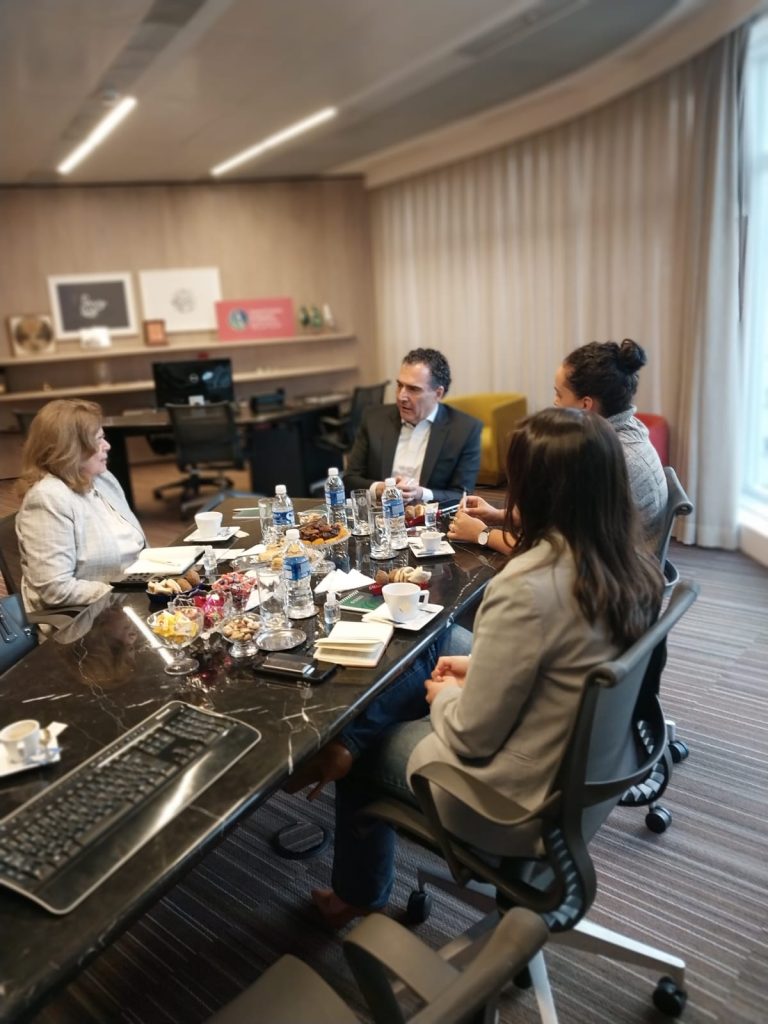
Medeiros described the meeting at the ABCC as a step toward building trust with the region. “We can only do business with those we trust, and this moment here is exactly for us to strengthen ties and establish a closer, more trustworthy relationship,” she said.
During the meeting, several areas to be explored in Ceará’s relationship with Arab countries were discussed, including potential initiatives—especially in the renewable energy sector, in which the state of Ceará has been standing out. Besides Dib and Medeiros, the conversation included Fernanda Baltazar, Director of Institutional Relations at the ABCC, and Elaine Prates, Institutional Relations Analyst.
Medeiros spoke about the desire to attract investments from Arab countries and to have tourists from the region visiting her state. She also expressed interest in closer ties between Ceará companies and the halal market. Halal products are those made according to Islamic rules and suitable for Muslim consumers. This year, the state hosted a roadshow of the Halal do Brazil project carried out by the ABCC to encourage more Brazilian companies to supply this market.
“I hereby extend my invitation to investors, especially in renewable energy, to come and explore our potential,” she said, also mentioning the possibility of partnerships with Arab countries in logistics, particularly maritime transport. One of the topics discussed during the meeting at the ABCC was the establishment of a direct maritime route between Ceará and the Arab world.
Last year, Ceará earned USD 12.23 million from exports to Arab countries, mainly supplying the United Arab Emirates, Egypt, Qatar, Algeria, and Morocco. Top export products included coconuts and nuts, footwear, crustaceans, natural magnesium carbonate, melons, watermelons, papayas, vegetable waxes, and cotton fabrics.
Read more:
Ceará state, Arab Chamber discuss market potential
Translated by Guilherme Miranda
