


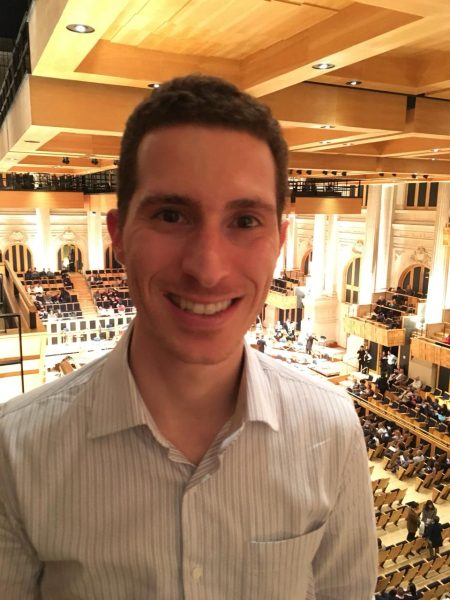
São Paulo – The Italian architect and designer Luciano Deviá has not done business with the Arabs yet, but he wants to. Recently, he developed a finishing technique that turns mirrors and candlesticks into more than mere accessories. They can decorate your house, your bedroom, a hotel hall. “I believe I can sell to the Arab countries because the design of these products is very similar to the type of technique and design that they enjoy,” says the 68-year-old designer who has been living in Brazil for 33 years.
The technique Deviá developed consists of cutting the glass using high-pressure water jets. Water jets are mostly used for cutting granite stones, marble, and steel blocks. But not glasses. Using this technique, Deviá found out that it is possible to create designs on the mirror’s edges. All it takes is to elaborate the design, place it in the machine that controls the water jets, and cut up the mirror’s glass sheet according to the project at hand.
On the other hand, manufacturing the candlesticks requires the glass pieces to be broken, polished and then glued together. Both the mirrors and the candlesticks may take on any shape the designer wants. However, few are the companies that own the machine that cuts glass sheets using water jets. One such company is a partner of Deviá’s, who visited the Arab Brazilian Chamber of Commerce last Thursday (6) seeking information on the Arab countries and trade relations between Brazil and the region.
He is not new to mirrors and candlesticks. He believes the technique he has developed is an evolution of his earlier work.
“I had already designed a mirror collection with a friend in Turin (a city in Northern Italy) in the 1970s. They were these conceptual mirrors, featuring shapes and finishes mirrors are not usually expected to feature. I found that I could use this technology in 1995, as I curated an exhibition on Italian design here in Brazil. Three years ago, I had the idea of doing something using glass,” says the designer.
Deviá does woodwork and projects for companies. One of his items, a buffet table named Copin, is inspired by the Copan building, designed by the architect Oscar Niemeyer in the centre of São Paulo. It sells for 12,000 reals (US$ 6,558) at a store in São Paulo. Many of his pieces of furniture are made by lumber companies in the Amazon. Deviá has also designed showers and even booths for trade shows. Now, he wants to sell mirrors in the Arab world.
“Mirrors arouse our imagination, they enable many different interpretations. There is some of that in Arabic literature, in the story of the ‘Book of One Thousand and One Nights.’ It is somewhat dreamy, the stories feature luxurious details. Another part of the culture of Arab countries is the tradition of marquetry [a technique for decorating furniture and panels] and the use of mosaics,” says Deviá.
The designer has not sold the objects he created yet, and there is no set price for the mirrors and candlesticks. He believes, however, that prices may range from 1,000 to 5,000 reals (US$ 546 to US$ 2,732), depending on size, finish, and type of design. “These items have a contemporary design because they are the product of a contemporary technology. I believe they would not be possible 20 years ago,” he says.
*Translated by Gabriel Pomerancblum
