


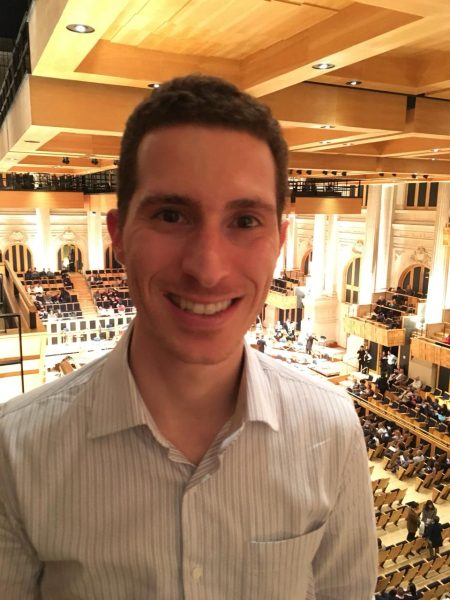

Dubai – The crisis that hit Dubai in 2008 is more and more a thing of the past and both the number of projects and the price of real estate are on the rise. The statement was made this Tuesday (18th) by the Brazilian businessman Omar Hamaoui, owner of the Dubai-based construction company Engeprot, and Edward James, director of the market analysis and research company Meed Insight. They spoke at the “Construction market in the United Arab Emirates” seminar, held in Dubai and sponsored by the Arab Brazilian Chamber of Commerce and the Brazilian Export and Investment Promotion Agency (Apex-Brasil).
The lectures were delivered to Brazilian executives from companies participating in the Big 5 construction industry exhibition and to businessmen from two different delegations – one from the Federation of Industry of the State of Santa Catarina (Fiesc) and another from the Federation of Industry of the State of Paraná (Fiep) and the Paraná State Civil Construction Industry Union (Sinduscon-PR).
James presented data about the construction industry in the United Arab Emirates (UAE) and other Gulf countries. He said most of the ongoing projects are in Saudi Arabia and the UAE. The Qatari market also holds promise because the country is investing in infrastructure projects, since it is set to host the 2022 FIFA World Cup.
The bulk of construction works underway in the UAE are in Dubai. According to James, the emirate is home to 15% of all construction contracts in the Gulf. The share will grow even further in years to come, because Dubai is investing US$ 8 billion in infrastructure in order to host Expo 2020, the world’s fair, which lasts six months and features several countries.
According to James, current construction projects throughout the Gulf amount to US$ 2.4 trillion. The number of new contracts has been increasing since 2010 and the number of halted works is declining, both of which are evidence of a rebound. “The Gulf’s construction industry is booming anew,” said James.
Hamaoui described his experience as a real estate developer in Dubai. He set up his company in the city in 2004, after visiting the Big 5 show in 2013, backed by the Arab Chamber. According to the Brazilian entrepreneur, owning a building company in the Arab countries entails costs and paperwork, because the market is strictly regulated.
One must find a local partner and obtaining funding is also challenging, but the cost of loans gradually goes down over time, as companies prove they can honour their financial commitments. According to Hamaoui, all projects undergo in-depth analysis from regulators prior to being approved.
Once the hurdles have been overcome, however, there is a big chance of being successful. “The market is promising. The crisis has passed, the companies are getting back on their feet. We are expecting a healthier market, in terms of pricing and payments, by early 2015,” he said. He remarks that an aspiring developer must invest at least US$ 15 million and will likely get contracts in two years’ time.
Real estate bubble
In 2008, Dubai experienced a debt and real estate bubble crisis which saw real estate prices soar and properties get sold by speculators at overvalued prices. According to James, the risk of a new bubble is much lower, since several steps have been taken to prevent one.
James also remarked that Dubai is not heavily reliant on oil revenues and has a long-term growth plan underpinned by industries such as marketing and tourism. As a case in point, he mentioned that last year, Dubai Mall, the world’s largest shopping centre, received 77 million visitors.
The real estate boom in the Gulf is a consequence of growing populations and tourism. The industry’s performance also benefits from infrastructure-related spending on schools and hospitals, as well as from post-Arab Spring popular housing projects.
At the closing of the seminar, the Arab Chamber president, Marcelo Sallum, stated that promising opportunities are available in the UAE, Saudi Arabia and Qatar for companies willing to explore the industry in the Gulf. He also said Hamaoui has shown the Brazilian delegations both the obstacles and the opportunities entrepreneurs can come across in the region. Sallum recognized the Arab Chamber’s role when it came to Hamaoui’s decision to invest in Dubai. “His story is the outcome of his attending the Big 5 show, which the Arab Chamber attends and participates in,” he said. The event was also attended by the Arab Chamber Foreign Trade vice president, Rubens Hannun, and CEO, Michel Alaby.
Big 5 exhibition
This Tuesday, the Brazilian enterprises participating in the Big 5 civil construction exhibition received visitors and got in touch with potential clients from countries in the Middle East, Africa and Asia. No deals have been closed yet, but executives from the eight participating Brazilian companies claim the event should lead to orders being placed over the next few months. The Brazilian stand is organized by the Arab Brazilian Chamber of Commerce in partnership with the Brazilian Export and Investment Promotion Agency (Apex-Brasil).
*Translated by Gabriel Pomerancblum
