


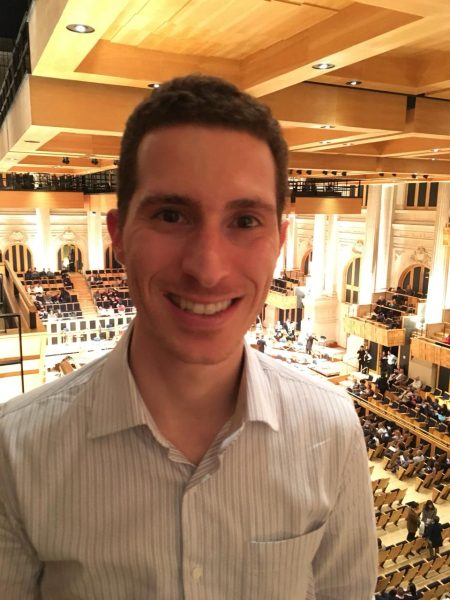
São Paulo – Veterinarian Omar Fayad decided to study Arabic, in 2005, before visiting Lebanon, the country in which his parents were born. He did not imagine that a few years later he would publish a dictionary with 9,500 entries in colloquial Arabic. He also did not imagine that after a while, successful sales of his Arabic Dictionary – Colloquial Terms (Dicionário Árabe – Termos Coloquiais) would lead him to prepare another more comprehensive edition with over 12,000 entries, the conjugation of some verbs, and explanations on the use of possessive pronouns.
“When I began studying colloquial Arabic, I would write down the words as I learnt them and then keep them in a file in my computer. By the time I had about 2,000 words, I had a booklet printed. I did it for myself, so I could learn more and be able to speak. I never considered publishing it,” the author recollects.
An inhabitant of Bauru, in the interior of the state of São Paulo, Fayad recalls that as he studied the language, he could only find classical Arabic dictionaries. Next to none dealt with day-to-day speech. He then started practising with a colloquial Arabic book written by Chafic Elia Said and learned to speak with his friend Amira Said Haddad, who also lives in Bauru.
The idea of expanding that glossary and making a dictionary out of it was not even Fayad’s. “A few friends encouraged me. They saw the glossary and even asked me for copies, because they really liked it. Then they told me I could try and publish it,” says the 65-year-old veterinarian.
The dictionary’s first edition was published in 2008, the year in which Fayad first visited Lebanon. He went to his parents’ city of birth, Maaser Chouf, approximately 40 kilometres away from Beirut, rented a car and travelled the entire country. “I communicate perfectly well in Arabic. I use the colloquial language normally. However, I do have problems using classical Arabic. Whenever I read a book, I will find words I don’t know, whose meaning I am unaware of. It is another language altogether,” the dictionary author compares. According to Fayad, the entries in the dictionary are most widely used in Lebanon, Syria and Palestine.
The idea to create a second edition of the dictionary came from the success of the first one. The 1,100 editions were sold. This second edition has the same print run as the first. “I don’t believe it can teach someone to speak Arabic, but it really helps with the colloquial use of the language,” says the author.
Fayad is not considering a third edition yet, but he has developed a “rudimentary” booklet, as he puts it, also containing colloquial terms, in order to teach his nephews and granddaughters. “I set out to learn the language because I wanted to travel to Lebanon, visit my relatives. It is a way of preserving your origins. I believe we must do it,” says the author.
Service
Dicionário Árabe – Termos Coloquiais – 2a edição; Omar Fayad (Bazar Editorial publishing house), 424 pages, 49 reals (US$ 27).
*Translated by Gabriel Pomerancblum
