



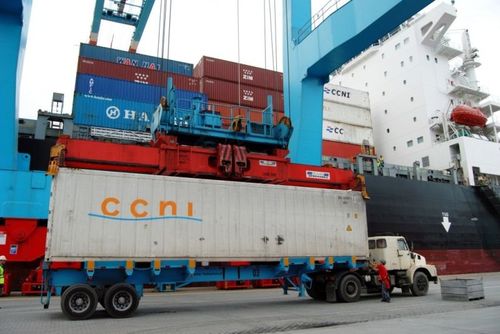
São Paulo – Of all exporting companies in Brazil, 56% are micro and small enterprises (MSEs). Their sales, however, only answer to 1% of total export revenues, according to the Brazilian Micro and Small Business Support Service (Sebrae). But this number can go up, and the federal government’s 2015-2018 National Export Plan (PNE, in Portuguese) can help with the internationalization process.
The PNE will cover five strategic fronts: access to markets, commercial promotion, trade facilitation, financing and export guarantees, and the streamlining of tax mechanisms and regimes to support exportation.
Consulting outfit Deloitte’s leading partner for emerging companies, Ricardo Teixeira claims the plan can assist MSEs in exporting and reaching out to new markets, but could benefit from more dedicated instruments. “All of the points in the project are important [to small businesses], but greater emphasis could have been placed on MSEs. They exist in large numbers, and yet the plan is not custom-tailored towards them. There could have been a specific measure targeting them,” the executive said.
Teixeira claims logistics in Brazil pose a challenge to exporters, because its costs put a greater strain on their budgets than in those of major exporters. He also remarks that how the plan will go about improving export tax regimes is not clear yet, but claims that the general idea of broader access to financing is crucial. “Financing and funding to exports are paramount to small businesses, which need a lot of working capital,” he said.
To the manager of Sebrae’s Market Access and Financial Services Unit, Paulo Alvim, the PNE meets the demands of small and medium Brazilian exporters.
“The country intends to increase market access-oriented actions, which are also challenging for small enterprises due to their high costs,” said Alvim. “The plan also provides for the improvement and strengthening of mechanisms designed to broaden small business access to guarantees and financing,” he added.
Homework
The biggest challenge in increasing exports by small and medium enterprises in Brazil still resides within them. Alvim claims businesses must have an export-oriented culture, which requires training and a strategy for going global. “With that in place, they must define a percentage of revenues to allocate to the international market. No matter what happens in the external market (exchange and interest rates), he (the small entrepreneur) must chase that target,” he said.
Teixeira says MSEs looking to export must “do their homework.” They need to attend trade shows and events, seek out local partners, develop a project and follow up with it, be able to meet client demand, ensure product quality, and be aware of the processes and laws of the countries they are active in.
If they do their “homework,” they stand a chance to succeed, because the potential is there. World Bank data show foreign trade accounts for 27.6% of Brazil’s Gross Domestic Product (GDP). In the world’s six leading economies, the rate is 53.4%.
Compared with the other BRICs countries (Russia, India, China and South Africa), Brazil’s economy is less global. “There’s a good and a bad side to it, because this shows there’s a lot of room for recovery,” Teixeira asserted.
*Translated by Gabriel Pomerancblum
