



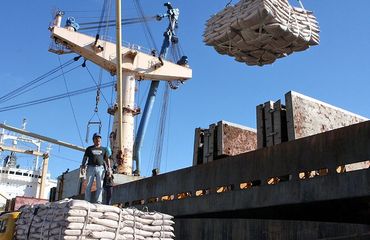
São Paulo – Brazilian exports to Arab countries keep declining. Year-to-date through May, exports were down 9.53%, as per figures from the Brazilian Ministry of Development, Industry and Foreign Trade compiled by the Arab Brazilian Chamber of Commerce. Year-to-date through May, export revenues hit US$ 5.04 billion, as against US$ 5.58 billion in the same period last year.
Shipped volume was also down, though by a lesser rate at 7.25%. This means that the average price of products shipped from Brazil to Arab countries has declined. A total of 14 million tonnes were shipped from January to May 2014, and 15.1 million tonnes in the same period of 2013.
Revenues declined across all product groups exported from Brazil to Arab countries during the period: animals and their products, processed foods, mineral products, and vegetables and their products. An in-depth look at each group shows that the performance was influenced by declines of 22% in poultry revenues, 26% in sugar, and 15% in ores. These three groups are among the main items sold from Brazil to the Arabs.
"Price was a big factor, but the amount exported has also dropped, though not by as much (as prices),” says Arab Chamber CEO Michel Alaby. In the case of poultry and sugar, the decline was partly due to lower product price. Alaby also believes Arab countries have new locally-based poultry suppliers. He highlights the higher sales of products such as dairy and live animals.
Out of all Arab countries, the leading importer, Saudi Arabia, has bought less product from Brazil. Sales to the Middle Eastern country were down 23%. Exports to the second leading buyer, the Emirates, have also dropped – by 5.36%. Exports were up 11% to Egypt, the third leading importer, and 36.68% to Algeria, the fourth. Oman ranked fifth year-to-date through May and stepped down its imports by 38%.
In May alone, sales to Arab countries have also dropped. The decline in revenues was 6.7%, from US$ 1.04 billion to US$ 979 million. There was also a decline in exports of meats, sugar and ores, the main items shipped. Volume-wise, however, Brazil sold more to Arab countries in May: 2.76 million tonnes this year, as against 2.63 million tonnes in May 2013. The 5% increase was influenced by ores sales, up 10.5%.
Imports
Exports from Arab countries to Brazil have also declined. Year-to-date through May, Arab countries saw a 10.6% decline in revenues from exports to Brazil. In May alone, the decline was much sharper, at 28.4%. Revenues stood at US$ 4.4 billion year-to-date through May and US$ 1 billion in May alone. Brazil imports mostly oil and fertilizers from Arab countries.
*Translated by Gabriel Pomerancblum
