



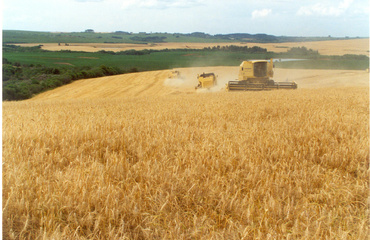
São Paulo – Food prices measured by the United Nations Food and Agriculture Organization (FAO) have dropped in January from December, according to the FAO Price Index released this Thursday (5th). The main reasons for the lower cost of foodstuffs include the fact that crops have been good for the past few years, and the fact that oil is cheap, therefore transportation costs are minimized. This scenario is favourable to food importing countries, but hurts those that export, such as Brazil.
In January, the FAO Food Price Index scored 182.7 points, down 1.9% from December 2014. The index is a combination of five other indicators: Meat, Dairy, Cereal, Vegetable Oil and Sugar.
The Cereal Price Index reached 177.4 points last month, down 3.6% from December 2014 and 34% from its peak, recorded in June 2008. The price of wheat, for instance, was down 7% in January.
The Vegetable Oil Price index scored 156 points, down 2.9% from November and the lowest since October 2009. According to the FAO, the index dropped due to ample soy oil supplies and because crude oil prices are weak, therefore vegetable oils become less attractive as biodiesel feedstock.
The Dairy Price Index remained virtually unchanged at 173.8 points, as did sugar. The Meats index was down 1.6% to 194.3 points, due to the appreciation of the US dollar (the USA is an exporting country) and to the widespread availability of pork.
In a press release, the FAO remarks that food prices have been on a downward trend since April 2014. Since January 2014, the Dairy Price Index has dropped by 35%, while the Meat Price Index has risen by 6.6%.
A professor at the Federal University of Paraná (UFPR), Eugênio Stefanelo told ANBA that food prices tend to remain “stable” this year, and that this should benefit food importing countries and harm major exporters such as Brazil.
“Up until 2005, cereal prices were low. They started climbing halfway through the past decade, as demand from China went up and crop failures took place in the United States, Northern Europe and Australia. Prices kept rising until the end of 2013. As supply rebounded, prices cooled off, but mostly remained above the levels seen leading up to 2005. New lands were incorporated, new technologies improved productivity. Now, there isn’t that much land and technology to deliver productivity gains, and there are no crop failures in sight,” he said.
According to Stefanelo, before prices began to escalate in 2005, a bushel of soybean (a measure equivalent to 27.2 kilograms) sold for US$ 6 on average. The bushel eventually peaked at US$ 17 and now sells for between US$ 9 and US$ 11.
Stefanelo also says pork and poultry prices can decline slightly from 2014 levels due to the lower cost of inputs. In turn, the cost of beef should stay higher due to lower output from major producing countries, and the strong US dollar.
FAO also notes in its press release that cereal inventories are 50% larger than they were in 2008, and 8% larger than in 2014. This year, inventories should amount to a combined 623 million tons.
*Translated by Gabriel Pomerancblum
