



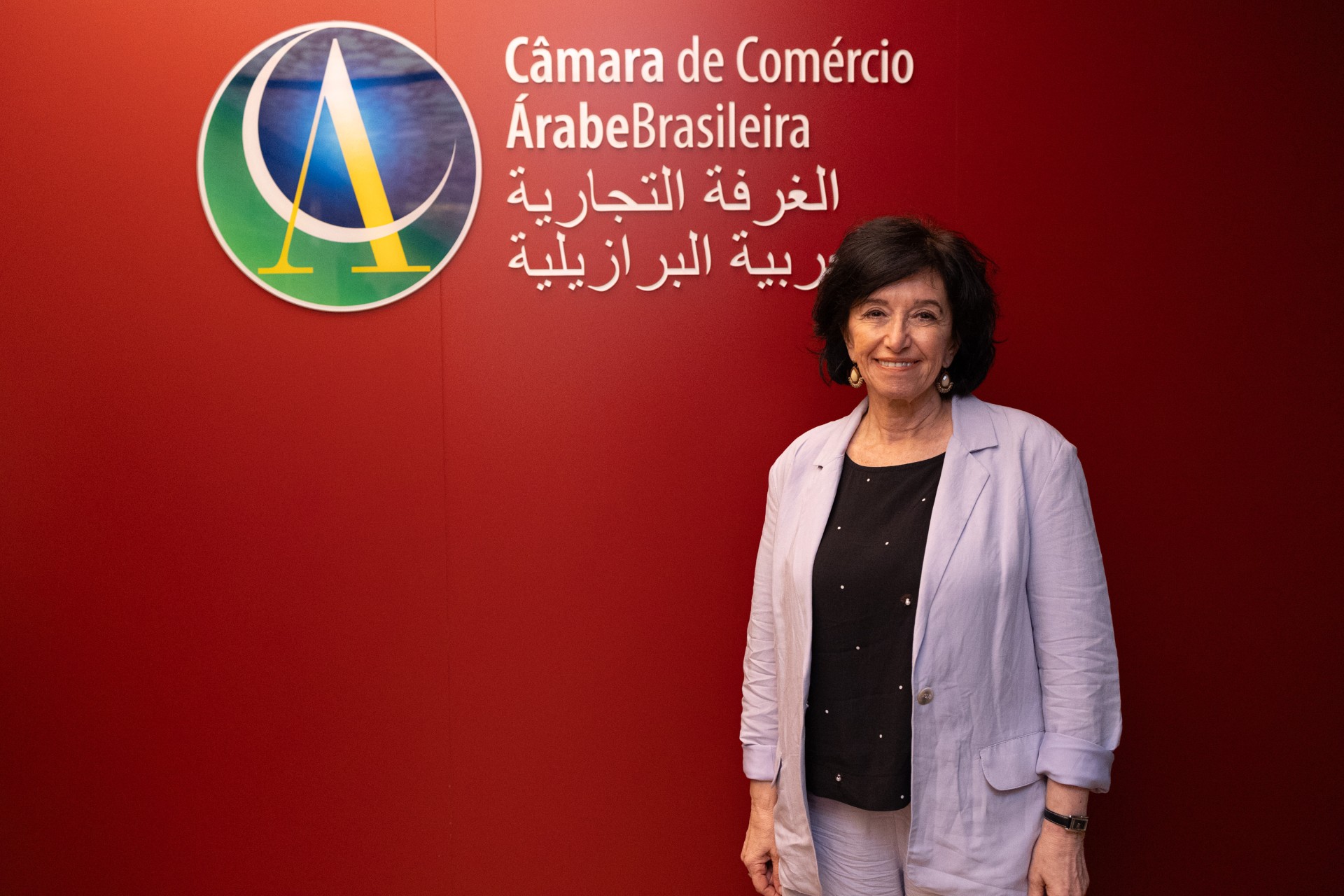
By Silvia Antibas*
In 2016, I was invited to participate in an international meeting called Les Arts et la Culture en Amérique Latine et au Moyen-Orient – 4th International Colloquium of the Holy Spirit University of Kaslik (USEK), in Kaslik, Lebanon. This is a regularly held meeting of Latin American researchers and intellectuals, mostly descending from Middle Eastern immigrants, whose purpose is to connect the Latin American diaspora to its roots in the distant land of their parents and grandparents. At the meeting, the Brazilian professor Roberto Khatlab, director of the Latin American Studies and Cultures Center (LASCC) – and the meeting’s coordinator – introduced me to the Project for the Digitization of the Memory of Arab Immigration to Brazil. The idea was to add Brazil to a big database, hosted within the USEK’s Digital Library as part of an international network of libraries and databases, to enable the sharing of vast amounts of information. Other countries were already in the project, including Argentina and Mexico.
The library includes special collections, photos, and rare books and manuscripts, adding up to 1,600-plus titles in multiple languages and comprising an endless source of knowledge for researchers and the curious. I must confess that, as a historian and a researcher, I had always felt that information and primary documentation was lacking when it came to Arab immigration. Much of the research and content available on the topic came from the same secondary sources: landmark books by established scholars and a few primary sources spread across different public archives.
Access to new sources allows us to dispel taboo and stereotypes and elicits fresh perspectives on the historiography of Brazilian immigration. Publications and newspapers document the work of immigrant intellectuals and writers, demystifying the notion that only the illiterate emigrated from the Middle East. Women, even in the early 19th century, appear as activists and writers. These stories are being revisited. However, many historical testimonials sit within family archives, private libraries, and centennial institutions in the community. These are often in less-than-ideal conditions and are very likely to deteriorate or simply be thrown away.
And so the idea came up to have the Arab Brazilian Chamber of Commerce (ABCC) host the project in Brazil. Nothing is more urgent and crucial in terms of documenting the diaspora of a population that has played a big role in creating the country as we know it today. Also, the goal is more than simply preserving and publicizing all this material; it is to produce knowledge, first and foremost. I went back to Brazil with the mission to persuade a business- and commerce-focused institution to invest budget and human resources into a key project for the community of descendants, researchers, and interested parties, and this was a bit outside the scope of the Chamber’s goals.
But the proposition was irresistible, both to me and to the ABCC. Several projects to preserve and digitize the memory of Syrian-Lebanese diaspora had been pitched to the Arab Chamber in the past. However, the USEK Digital Library initiative was solid and involved a partnership with a major international educational institution, involvement with an already implemented and functioning digitization system, a broadened scope for increased dialogue with Latin America, and the provision of equipment by the USEK. The mission was facilitated by the sensitivity and understanding of the board, then chaired by Rubens Hannun. A few points were decided on: (i) the digitization was to be performed at the Arab Chamber headquarters in São Paulo; (ii) in Brazil, the research work would be broadened to include groups from other Arab countries, especially Syrians and Palestinians; (iii) given the sheer size of Brazil’s territory and the fact that immigrants had scattered across the country, the idea was to build a partners network coordinated by the ABCC and USEK. All was set for the signing of the cooperation agreement. The ABCC’s Communication and Marketing vice president at that point in time, Dr. Riad Yunes, traveled to Lebanon in June 2018 and made the agreement official alongside USEK dean Father Georges Hobeika and Professor Roberto Khatlab. Not only did the Chamber provide support, but it also actively participated in promoting this agreement. The partnership has proved fruitful, and USEK deans have even joined events in Brazil.
The main purpose of the project is to preserve and publicize Arab memory in Brazil by locating, collecting, and digitizing documents relating to immigration history sourced from social and philanthropic institutions in the Syrian and Lebanese community as well as from public and private collections. The USEK has supplied cutting-edge equipment as well as training to coordinators and technicians. The historian Heloísa Dib was responsible for project implementation and training of the technical team.
To set things in motion, the Arab Chamber reaches out to organizations, families, public and private collections requesting authorization to access research material regarding immigration memory, such as foundational documents, minutes, periodicals, newsletters, and various photos and books published by first-generation immigrants. Based on analyses of the material and with guidance from USEK, documents deemed of interest to the project are submitted to the scrutiny of the coordinators. Once a decision has been made on what should be kept, the supplier of the material receives a list of the documents that will be digitized. The supplied material is returned to the sender, along with an untreated, high-resolution digitized copy.
A list of the documents is available in the USEK International Digital Library. Each document has been digitized page by page, and each document includes a photographed card containing the ABCC’s and USEK’s logos and names and/or the name of the owner of the original file. Standalone photographs bear the watermarks of the ABCC, USEK, and the owner. This ensures protection of ownership rights and guarantees that all published pieces of work or consultations including one of these documents will reference the original.
Additionally, the images are available for viewing in the USEK International Digital Library and other partner organizations, in low resolution, but not for printing purposes. Book files and digitized documents are available in a format allowing online viewing only. The ABCC and USEK keep backups of the digitized collections, and access to the information is available online free of charge once researchers have registered and inputted their data. The goal is to enable searching and private or academic research for non-profit purposes.
However, if commercial interests are involved, USEK must obtain prior authorization from the rightsholder for the search, research, or use of the image, as well as agree on the conditions, including economic and financial terms. Partner organizations are tasked with observing proper storage and use of the collection, and its use by third parties with no prior authorization from the rightsholders, the USEK, and the ABCC is strictly prohibited. We also know that this is the beginning of a project with no end in sight, seeing as we intend to cover the entire national territory. To do so, we must rely on trustworthy academic and institutional partners, fostering network-based teamwork.
To this end, the first confirmed partnership will be entered into with the Edward Said Chair at the Federal University of São Paulo (Unifesp). This agreement will propel our research and digitization work, making our archives available to new researchers. Outside São Paulo, we are working out an agreement with Fundação Tasso Jereissati, which will conduct research and digitization in Ceará and neighboring states. Talks are ongoing in Amazonas, Maranhão, Rio Grande do Sul, Rio de Janeiro, Minas Gerais, and Bahia in a bid to protect memory and history.
The pool of information contained in the numerous documents can and should broaden different historical perspectives through people’s recollections documented in different mediums, including photos, print documents, and video. History and memory must be protected before it gets lost and fades away as time passes.
Lastly, we should highlight the role of the Arab Brazilian Chamber of Commerce in this project. We are the hosts of this initiative and play a relevant role in implementing this database. Although this is a business-oriented chamber, its presidents, vice presidents, and board have always given full support to this project. These businessmen, businesswomen, and professionals realize the importance of culture and the preservation of community memory in order to promote respect and dialogue between peoples. Such trust is key even when it comes to commercial activity.
The opinions expressed in the articles are the responsibility of the authors.
*Silvia Antibas is a historian, the Marketing vice president of the Arab Brazilian Chamber of Commerce, winner of the 2020 UNESCO/Sharjah Prize for Arab Culture, a member of the Lebanese-Brazilian Academy of Language, Arts and Sciences, and a founding member of the Arab Latinos group.
Here is a link to the Exilium magazine edition in which this article was originally published.
Translated by Gabriel Pomerancblum

