


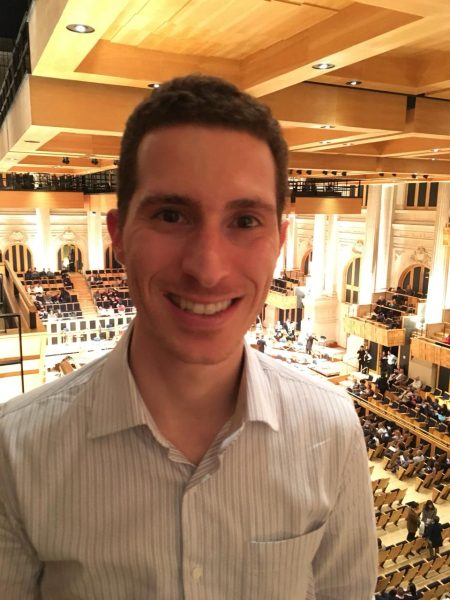

São Paulo – Brazil’s domestic scenario and its global insertion in months to come will be the subject of the lecture “Brazil in the new global cycle: risks and opportunities,” set to be delivered next Tuesday (9) by the sociologist and holder of a doctorate degree in human geography Demétrio Magnoli. The event will be hosted by the Arab Brazilian Chamber of Commerce in São Paulo.
This Friday (5), Magnoli told ANBA that Brazil faces the challenge of working its way out of the crisis despite weak international growth and low commodity prices, which should both last long. Europe is showing lackluster growth, China’s economy is in a major slowdown, and the United States, the sole driver of development, is not growing at the expected pace, he noted.
“This gives us an edge in the short term: with the United States still posting weak growth rates, and European economies in the Brexit aftermath, the United States interest rate increase will be put in the backburner, so we won’t have this additional hit,” Magnoli said regarding the move that could funnel dollars out of Brazil and into the US. Brexit, the United Kingdom’s exit from the European Union, means that the country’s trade agreements with the EU will need to be renegotiated and reworked.
In turn, the outlook for Brazil is not as bad now as it was in recent months, Magnoli said. The government’s team of economists is laying down the foundations to pull in investors, and the economy is likely set to improve, he said, once suspended president Dilma Rousseff’s impeachment process has come to an end, which should happen on the 29th of this month. In case she is not reinstated, interim president Michel Temer and his team are poised to adopt a less flexible, less expansionist fiscal policy over the next few months. The government has faced criticism for not cutting spending as much as it should.
To Magnoli, the interim government still stands on two pillars. “The first one is the unlikely return of Rousseff, and the second one is the positive expectations of economic players,” he said, with the caveat that although economic indicators will probably improve, it will be a long time before the population can sense the positive effects. Inflation is on a downward curve, but remains high, and unemployment is unlikely to drop before 2017.
Trade agreements
Also speaking at a lecture in the Arab Chamber, in November 2014, Magnoli said the administrations of former president Luiz Inácio Lula da Silva (2003-2010) and Dilma Rousseff prioritized commodity exports to China, with finished goods sales to the United States taking a backseat. Moreover, he argued, the country had failed to capitalize on the “window of opportunities” to sign on to international agreements.
That “window,” Magnoli asserted, has all but closed and won’t open again anytime soon. Europe is discussing its Brexit issues, and the United States’ two presidential candidates, the Republican Donald Trump and the Democrat Hillary Clinton, have expressed protectionist views. Besides, Mercosur is in a crisis. And although bilateral agreements with the Arab countries would be a positive thing, that would not be enough. “Anything that’s done to rekindle Brazilian foreign trade is a positive thing, and that includes agreements with the Arab countries, but that alone wouldn’t make up for major international agreements,” he said.
Quick facts
Brazil in the new global cycle: risks and opportunities
Demétrio Magnoli
August 9, 7pm
Arab Brazilian Chamber of Commerce – Avenida Paulista, 326, 11th floor, São Paulo-SP
Free for Arab Chamber members; BRL 100 for non-members
For additional information call +55 11 3147-4066 or write to members@ccab.org.br
*Translated by Gabriel Pomerancblum
