



São Paulo – Up to the 12th, enrolment is open for companies interested in participating in a trade delegation to North Africa in December. The trip is promoted by the Ministry of Development, Industry and Foreign Trade, the Brazilian Export and Investment Promotion Agency (Apex) and has support of the Arab Brazilian Chamber of Commerce, the Foreign Ministry and the National Confederation of Industries (CNI). The Brazilian committee will be headed by the executive secretary at the Development Ministry, Ricardo Schaefer.
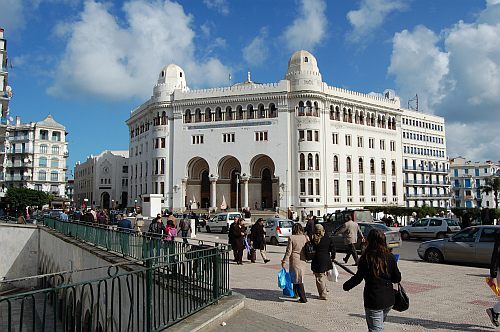
According to information disclosed by the Development Ministry, the delegation should take place from December 1st to 5th, in the cities of Algiers, Algeria, and Casablanca, Morocco. There are opportunities for export of products in several sectors to both countries.
Studies by the ministry show that in Algeria there is potential for sale of electric and electronic equipment, chemicals, shoes, window products, metal works, cosmetics and hygiene, carpentry, paper, wrought iron, iron and steel pipe, industrialized beef, optic equipment, flour for animals, orange juice, tobacco and land-levelling machinery.
In Morocco, in turn, opportunities are focussed on sugar in bulk, pharmaceutical products, shoes, hygiene and cosmetics, tractors, machinery for agricultural use, tyres, compressors and pumps, devices for illumination, auto parts, chicken and beef, pasta, coffee and tea.
The CEO at the Arab Brazilian Chamber, Michel Alaby says that the main opportunity in both countries is in the sector of beef. “In Algeria, we may work in the beef and chicken sector to expand sales through the reduction of tariffs, and in Morocco, beef and chicken,” he said. According to Alaby, industrialized products can also be successful in both countries, though they face import tariffs of up to 40%.
Trade balance deficit
Brazil has been recording a current account deficit with both countries. According to trade figures disclosed by the Development Ministry, Brazil exported the equivalent to US$ 830 million to Algeria from January to September this year. In the same period, imports totalled US$ 2.62 billion. Of the total imported, naphtha sales totalled US$ 1.125 billion and those of crude oil, US$ 836 million. In the opposite lane, the main product shipped to Algeria was sugar in bulk, with sales of US$ 488 million up to September, followed by soy oil (US$ 77 million), beef (US$ 71 million) and maize in grain (US$ 62 million).
To Morocco, Brazil exported US$ 474 million from January to September, and imported over US$ 1 billion from the country. Brazil shipped mainly sugar in bulk (US$ 283 million), maize in grain (US$ 108 million) and soy oil in bulk (US$ 37 million). Among the main products bought are fertilizers (US$ 616 million), superphosphates (US$ 180 million) and naphtha (US$ 107 million).
In 2012, the Gross Domestic Product (GDP) of Algeria was US$ 206.5 billion, according to estimates by the International Monetary Fund (IMF). According to the Ministry of Development, the sector of hydrocarbons represents 30% of the country’s GDP and 95% of its exports. The GDP of Morocco in 2012 was US$ 97.5 billion, according to the IMF. In 2012, the main products exported by Morocco were garments, fertilizers, chemical products and phosphates.
Alaby said that the trade delegation to North Africa is an opportunity for companies to enter the markets and reduce the trade deficit that Brazil has with the nations. However, he warned that it is necessary to invest for presence in the nations. “This is one more opportunity to reduce the deficit, but we have to promote delegations like these with greater frequency, it must be annual, and we need to visit traditional interlocutors and new ones,” he said.
Service
Companies interested in participating in the delegation should send an email to apexbrasil@apexbrasil.com.br by November 12. Further information at telephone number (+55 61) 3426-0202.
*Translated by Mark Ament
