



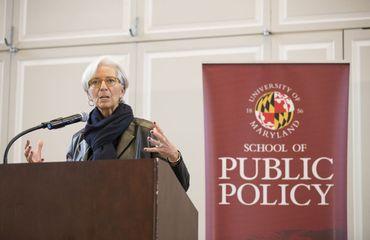
São Paulo – The managing director of the International Monetary Fund (IMF), Christine Lagarde, said this Thursday (4) that low oil prices are an opportunity for developing countries to end fuel subsidies and transform this “counterproductive” spending into measures of social impact. The statement was made via an internet broadcast with journalists sending questions on emerging countries.
The main focus of the questions was the challenges faced by developing countries due to oil and other commodities in general declining prices, as well as China’s downturn and the recession in some of these nations, such as Brazil.
“That is a great opportunity that the low oil prices have to offer. It’s the fact that subsidies that have, historically, been paid with state government revenues, particularly in non-oil producing countries, could easily be removed and replaced by measures targeting safety nets to help poor people. Actually, this could unleash fiscal revenues that could be used with education and to offer help”, said Lagarde.
She also mentioned that emerging countries share some similarities among themselves, such as having experienced rapid growth in the last few years, but pointed out that there are differences among the members of this group.
“I’m a little bit cautious in putting the emerging economies in the same group because each one of them has their priorities. Brazil and Russia are in a critical position: recession. At the same time, Mexico is doing very well because it adopted some reforms, and India is also progressing well”, she said. Another positive example mentioned by Lagarde is Colombia.
According to Lagarde, other countries could use this moment of the economy to create a new business model, to allow the exchange rate to float and even to use it as a cushion against oil prices. They could also diversify their economies, export more and have their revenues depend less on the commodity.
Lagarde added that the new economic reality of the majority of emerging nations demands more support from financial institutions, such as the IMF. She also said the Fund will offer the resources if needed. “In terms of financial security, we will be working with the available resources to meet the demand of these countries. We will be available to offer a hand in this moment”, she said.
Earlier, in a speech made at the University of Maryland, United States, she said that the Fund is studying the possibility of strengthening and expanding its “precaution” funding instruments, that is, those that secure economic liquidity.
*Translated by Sérgio Kakitani
