


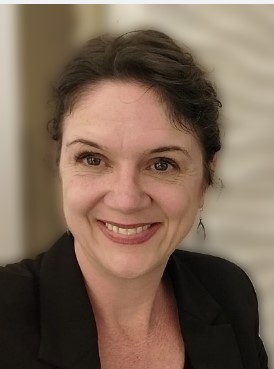

São Paulo – The work of French-Algerian Jacques Derrida will be the topic of a lecture this Monday (28) in the city of São Paulo at São Paulo Federal University (Unifesp). The writer and professor Olgária Matos will speak on the philosopher’s theory concerning the relations with the foreigner. Derrida argues that language is the homeland of the individual.
The lecture is part of the debate series “Chair Edward Saïd: Studies on Contemporaneity”, which will be promoted throughout this year on Middle East studies, in a partnership between Unifest and the The Institute for Arab Culture (Icarabe). The lecture by Matos, professor and coordinator of the Philosophy course at Unifesp’s Guarulhos Campus, is the first of the cycle.
The presentation is called “Derrida and Monolingualism: From the Pure Reason to Marrano Reason”, title explained by the story of the philosopher and his thought. A Jew born in Algeria, when the country was under French rule, he went to France still a kid. Even with the implementation of the Nuremberg Laws in the European country, Derrida lost his French nationality. “But he only spoke French”, explains Matos in an interview to ANBA by phone.
From there comes monolingualism, which places language as belonging. What happened to Derrida was expropriation, still in first age, of his symbolic belonging, according to explanation by the Unifesp’s professor. From the philosopher’s experience and thought, the speaker will talk about the relation with the foreigner. “They are strangers, who need to be accepted to become familiar”, she says.
The pure and marrana reason refer to the experience faced by the Jews that lived in Europe until the 16th century. As not to be deported by the Christians, they were forced to convert to Catholicism. But there were doubt if they in fact had converted or if they were secretly practicing Judaism. “The Catholics had their doubts”, says Matos.
Later on, when these Jews were able move to Europe countries with more freedom of belief, such as the Netherlands, they returned to Judaism. But then, doubt would arise among other Jews if they in fact had converted back. These “mestizos” of religion are called Marranos and their situation of living under two religious experiences is a counterpoint to a pure, homogeneous and sedentary reason, according to Matos.
Admission to the lecture is free and those participating will get a certificate at the end. After this, the next debate scheduled as part of the cycle will be on April 5 with Mamede Mustafa Jarouche, professor of Arab Literature at São Paulo University (USP), who will speak on the accounts of the first translator of the book One Thousand and One Nights for a Western language, Frenchman Antoine Galland.
The Chair Edward Saïd, which organizes the meetings, is part of Unifesp and was created in 2014 in a partnership with Icarabe. The goal of the initiative is to produce analysis and ideas on modern culture, in the area of political and culture transformations of the present in its relations with History, based on the thought of Saïd, a Palestinian intellectual.
Derrida and Monolingualism: From the Pure Reason to Marrano Reason
With Olgária Matos
March 28, 2016, at 5 PM
At Anfiteatro Leitão da Cunha – Rua Botucatu, 720 – Vila Clementino, São Paulo/SP
Enrollment: http://www.unifesp.br/reitoria/proex/acoes/cursos-de-extensao-e-eventos/cursos-e-eventos
*Translated by Sérgio Kakitani
