


São Paulo – The Masdar Institute of Science and Technology, an Abu Dhabi, United Arab Emirates, institution that does research and offers post-graduate courses in sustainable energies, wants to host more Brazilian students starting next year.
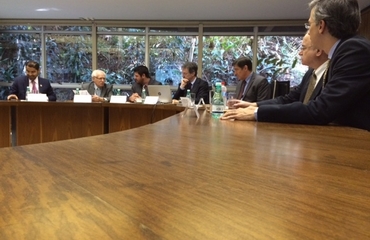
Last week, staff members from the institute were welcomed by the president of the São Paulo Research Foundation (Fapesp), José Goldemberg, and expressed their desire to host more Brazilian students in its campus in Masdar City. Goldemberg proposed the signing of an agreement for the exchange of researchers between the two institutions.
Currently, there are five students from Brazil over there, but all went independently. “They visited us as an effort to take more students. The Masdar Institute was created in collaboration with the Massachusetts Institute of Technology (MIT), United States, which charges an expensive enrollment fee, which is not the case with Masdar”, said Goldember to ANBA.
“Besides, they offer accommodation and labs for the researches. It’s a great opportunity for studies in the area of renewable energy”, said Goldemberg. According to Fapesp’s president, the Masdar Institute wants to have at least ten Brazilians in time for enrollment of next year’s course, which start in November of 2015. Classes start in August 2016.
Apart from Masdar receiving more students from Brazil next year, Goldemberg suggest the signing of a partnership between Fapesp and Masdar. In this case, the focus of the project is to promote the exchange of researchers between the two institutions. “I invited Masdar’s dean to come to Brazil for us to sign an agreement in the line of the ones we have with MIT and the University of Oxford (United Kingdom), for instance. We would then select researchers for the exchange”, he said.
The Masdar Institute is part of a project by Abu Dhabi to diversify its economy away from oil, its main source of revenues. Masdar City was built according to sustainable practices and remains so. The cars that circulate in parts of the campus are electric and driverless. The buildings were projected to optimize air circulation in a desert climate and were built with discarded materials from other construction works.
The institution has one hundred researchers, offers scholarships and search for students from several countries, especially those that stand out in the development of renewable energy. Besides Brazil, Masdar’s staff members also elected Australia as an example of a nation with potential for development and research in renewable energies. The classes are taught in English.
*Translated by Sérgio Kakitani
