


Rio de Janeiro – Two institutions that develop projects for preservation of the environment and sustainable development had their work recognized on Sunday (24), in Rio de Janeiro, with the Unesco Sultan Qaboos Environmental Preservation Award, delivered by the government of Oman in partnership with the United Nations Educational, Scientific and Cultural Organization (Unesco).
The organisations honoured were the Endangered Wildlife Trust, from South Africa, and the General Board for the State of Forests, of Poland. The South African organisation manages the environmental protection programs and operates in partnership with small communities that adequately use the ecosystems in which they are based. The Polish institution, in turn, is aimed at guaranteeing the correct and non-predatory use of the forests in the European nation.
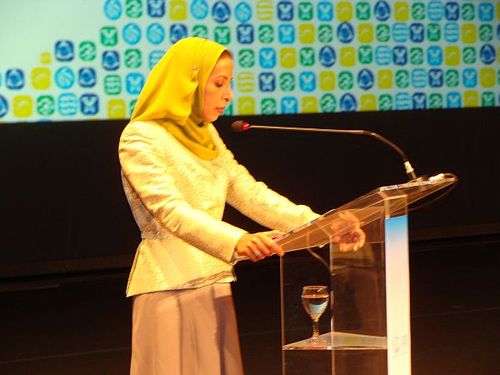
Delivery of the award was during the opening ceremony of the 6th World Science Forum (WSF), at the Municipal Theatre, in Rio de Janeiro. The city receives WSF events this week, under theme “Science for Global Sustainable Development”.
Established in 1989, the Unesco Sultan Qaboos Environmental Preservation award is granted every two years, including a certificate and an amount of money, to people who work for the environment. The award has already been granted to people and organisations in Mexico, Ecuador, Sri Lanka, Norway, Slovakia, the Czech Republic, Chad, Malawi and Ethiopia, among another 14 countries. This year, each winning institution should receive US$ 35,000.
The minister of education of Oman, Madiha Ahmed Al-Shaibani, who granted the award to those honoured in 2013, said that the award is “recognition of the efforts of those concerned with sustainability”.
The general director at Unesco, Irina Bokova, said that awarding the General Board for the State of Forests is “recognition for the efforts made to mitigate the effects of climate change and promote the diffusion of knowledge”. Regarding the Endangered Wildlife Trust, she declared that the institution stands out due to “confidence in preservation, in the training [it offers] and in the efforts to promote education [regarding endangered species]".
To ANBA, the chief of Research and Science at the Endangered Wildlife Trust, Harriet Davie-Mostert, stated that receiving the award shows that the institution is on the right route for promotion of sustainability and environmental preservation”.
Science week
Before the awarding ceremony, the president of the Brazilian Science Association (ABC), Jacob Pális, and the president of the Hungarian Science Academy, Jozséf Pálinkas, opened the 6th edition of the WSF. Up to next Thursday (27), over 600 scientists should discuss, in several assemblies, meetings and plenary sessions, how scientific knowledge may help preserve the environment and natural resources. One of the main themes of the debate is reduction of social inequality as a way to promote sustainable development.
The opening of the WSF included Brazil’s vice president, Michel Temer, the minister of science and Technology, Marco Antonio Raupp, the vice-governor of Rio de Janeiro, Luiz Fernando Pezão, as well as Bokova and the Education minister of Oman.
Temer, in his address, said that the theme of the Forum this year offers scientists the opportunity of relating scientific knowledge to the social reality of many people. “What will be discussed in the [Forum] may be taken and implemented I other countries. We are going to connect exact sciences to humanities,” said the Brazilian vice president.
WSF is promoted every two years, but had never taken place outside Hungary, where it was created. Starting with the event this year, the editions of the Forum will be promoted once in Hungary and once in another country chosen by scientists. Pálinkas announced during the ceremony that Jordan will receive the event in 2017. The next edition, in 2015, will be hosted by Hungary.
*Translated by Mark Ament
