


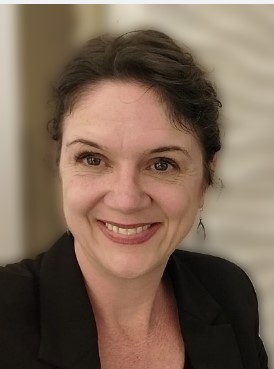
São Paulo – The Palestinian filmmaker Kamal Aljafari will participate in a commented session of his film The Roof this Friday (8th) in Porto Alegre, the capital of Rio Grande do Sul. The film, a portrait of Aljafari’s own family, is a part of Mostra Cinema e Paz (Film and Peace Festival), underway at Casa de Cultura Mário Quintana up until next Sunday.
“In his address, Kamal will be invited to give his opinion on the role of cinema and art to the comprehension of what is taking place in Palestine, if and how cinema influences this reality, and what is the reality of filmmaking in Palestine, an occupied territory. It will be an account from someone who experiences this reality first-hand,” says the international relations advisor to the government of Rio Grande do Sul, Espártaco Dutra.
Aljafari holds a degree from the Academy of Media Arts Cologne, in Germany, and his films, which include The Roof, from 2006, and Port of Memory, from 2009, have won international awards. He is the director of the German Film and Television Academy. “Born in Palestine and based in Germany, Kamal Aljafari possesses a strong authorial work. In a combination of documentary and fiction, he recreates often absurd situations from the daily lives of Palestinian people,” says Dutra.
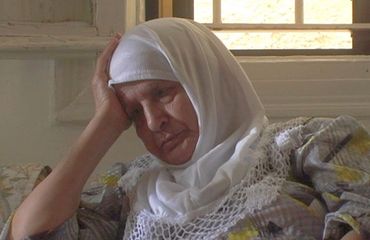
The Roof is described as a documentary and biopic, driven by a nimble camera that moves calmly, but constantly, through empty, damaged houses in Palestine. The title refers to the house where the director’s family was resettled in 1948, which did not have a roof. The festival also features another of the director’s works, Port of Memory. The piece portrays Aljafari’s family facing eviction, if they failed to prove that they actually owned the house. The film was screened last Wednesday (6th).
In addition to the commented session, this Thursday at 6:00 pm Aljafari will take part in a debate with the Rio Grande do Sul state governor, Tarso Genro, at the government seat Palácio Piratini. “The governor will outline the state of Rio Grande do Sul’s perspective of the conflict, seeing as the state has welcomed several Palestinians and Jews among its population, and stress once again the need for dialogue as the key to the long road ahead to peace. First and foremost, he will make a plea for human values to be respected in a conflict that costs many lives,” says the international advisor.
The Film and Peace Festival has two phases. The first one, from October 29th to 31st, also featured film screenings and a commented session with Israeli filmmaker Amos Gitai. The second phase will comprise six productions, including feature and short films, which reflect about tolerance, respect and solidarity among peoples in the Middle East.
“The film festival is part of a greater process for closer ties to be established between the state of Rio Grande do Sul, Palestine and Israel. The governor went on a mission in April and May this year, during which, among other issues, cultural exchange was discussed, aiming to better understand the situation of these two countries within the Middle East through art and its manifestations. Thus, the festival is one of the developments of the mission from Rio Grande do Sul to the region,” Dutra told ANBA.
The event is held via a partnership between the Advisory for Cooperation and international Relations of the Secretariat for Culture of the State of Rio Grande do Sul. Admittance is free, but tickets must be collected beforehand at Casa de Cultura Mário Quintana. See the programme for the next few days below.
Service:
Film and Peace Festival
Until November 10th, 2013
Casa de Cultura Mário Quintana
Porto Alegre – RS
11/07 – Thursday
19h30 – To my Father, by Abdelsalam Shehadeh
11/08 – Friday
19h30 – Commented session – The Roof, by Kamal Aljafari
11/09 – Saturday
19h30 – Session featuring three short films
Colorful Jouney, by Arab Abu Nasser and Tarzan Abu Nasser
Arafat and I, by Mahdi Fleifel
Izriqaq, by Rama Mari
11/10 – Sunday
19h30 – Session featuring three short films
Colorful Jouney, by Arab Abu Nasser and Tarzan Abu Nasser
Arafat and I, by Mahdi Fleifel
Izriqaq, by Rama Mari
*Translated by Gabriel Pomerancblum
