



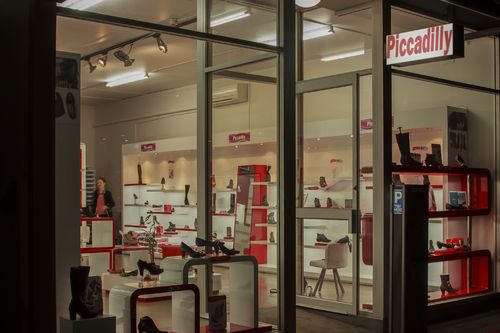
São Paulo – Piccadilly, a Brazilian female shoe brand, should open its first shop in Bahrain, in the Gulf, on Saturday (19). The unit will be in Manama and will be inaugurated in partnership with businessman Abdul Latif Al Aujan, of the A. Latif group, which has distributed Piccadilly shoes in the country since 2007. “It was one of the client’s initiatives. He saw the brand potential and decided to invest in a shop for the brand,” said the export manager, Tatiana Müller de Oliveira, in an email interview to ANBA.
The brand already has nine shops in an Arab country, Kuwait, also managed by the local distributor. The company targets, however, are to expand operation in the region and open another shop in Bahrain and one in Qatar in 2014. Piccadilly has 28 brand shops abroad. Apart from Kuwait, they are present in Venezuela, Peru, the United States, the Dominican Republic, Guatemala and New Zealand. The establishments are not franchises, but belong to the company distributors abroad. Oliveira said that acceptance of the product at shops in Kuwait was “enormous”.
According to the executive, the Middle East is an important expanding market. “We know of the great potential of the region and our products are successful in the market,” she said. In 2007, Picadilly exports to the Middle East represented 5% of the total sold abroad. Last year that share had risen to 14.5%. Oliveira believes that the economy of the countries in the region is living a good phase.
The Piccadilly products in greatest demand in the Arab world, according to the export manger, are high-heeled shoes, from the classic to the more modern. Most shops abroad sell only female Piccadilly shoes, but some are also already selling male shoes and accessories. In Brazil, Piccadilly does not have its own shops, it sells to multi-brand shops and has representatives in all states.
The Piccadilly brand is made by Grings Piccadilly, which is headquartered in the city of Igrejinha, in Rio Grande do Sul. In the first half of this year, the company produced 4.2 million pairs of shoes and had growth of 13% over the same period in 2012. Before the end of the year, 10.2 million pairs of shoes should be made, with expansion of 15% over the same period last year.
Exports, however, should drop a little, due to economic problems faced by some of the main markets for the brand abroad, like Venezuela and Argentina. “But due to the expansion in non-traditional markets, like the Middle East, we should offset losses in these countries,” said Oliveira.
*Translated by Mark Ament
