



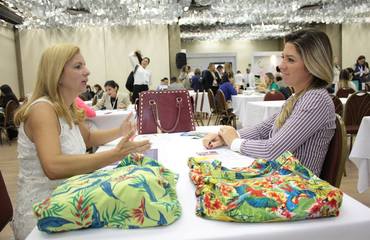
São Paulo – A project from the Brazilian Export and Investment Promotion Agency (Apex-Brasil) is helping to make exporters out of Brazilian female entrepreneurs. Officially launched in March of this year, Mulheres na Exportação (Women in Exports) reached some 1,300 in 2016 through foreign trade awareness-raising actions.
Apex’s coordinator for Competitiveness Adriana Rodrigues told ANBA that the agency first turned its attention to creating opportunities for women in 2011, when internal work on sustainability led to the realization that despite a relevant female participation within Apex, no market-oriented actions were taking place.
At the same time, the Apex realized that opportunities were arising as the World Trade Organization (WTO) and the United Nations Conference on Trade and Development (UNCTAD) discussed how female entrepreneurs could join international trade and thus help develop the world economy.
In keeping with that trend, last year saw the Apex join the International Trade Center (ITC) to hold the Women Vendors Exhibition and Forum (WVEF) in São Paulo. The event featured business meetings for Brazilian women who are small business owners and buyers from multinational corporations.
On that occasion Apex entered into a partnership with the women’s entrepreneurship network Rede Mulher Empreendedora (RME). The Apex has since been inviting women to attend meetings called Café com Empreendedoras (Coffee with Female Entrepreneurs), whose purpose is to raise awareness to international trade. Following the meetings, the women are advised to seek out Apex and join one of its projects for encouraging exports.
At an RME-held forum in São Paulo last September, Apex carried out new actions, including matchmaking sessions to hook the businesswomen up with international buyers and export/import companies. Other activities took place throughout the year.
The Women in Exports project advises entrepreneurs to join international digital platforms such as the ITC’s in order to export; that way they can connect with buyers from multinationals.
Adriana Rodrigues names two other platforms that the project works with: the Inter-American Development Bank’s Connect Americas, also designed for connecting with importers, and WEConnect, which certifies female entrepreneurs to join its business platform. “We make them known to our contacts so they can take advantage of these opportunities,” says Rodrigues.
Apex is partners with several organizations for its women-oriented project, including Fundação Dom Cabral, Fundação Getúlio Vargas and Itaú. Female entrepreneurs can also rely on other Apex initiatives, such as Passaporte para o Mundo (Passport for the World), an exports training program partly geared towards women.
The actions of Mulheres na Exportação include training in trade promotion. This year, in addition to the 1,300-plus women who took part in Café com Empreendedoras events, workshops and lectures, 47 women-led businesses joined Apex’s promotional actions, and 48 such companies underwent training. Out of the companies affiliated with Apex projects, 986 are led by women.
*Translated by Gabriel Pomerancblum
