


São Paulo – A project will integrate schools and teachers working with refugees into an online network for learning and experience sharing. The initiative is from non-governmental organization I Know My Rights (IKMR), with backing from the United Nations High Commissioner of Refugees (UNHCR).
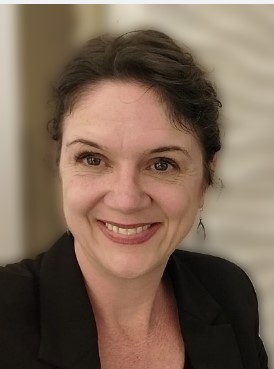
The early days of December should see the creation of the private social network. Schools or teachers whose students include refugee children will be able to join, said the psychologist and project coordinator Mariana Moreira Alves.
The initial idea was to hold face-to-face meetings in each of the São Paulo zones, but due to commute issues, encounters will take place online instead. Thus, educators from all over the country will be able to join.
Shared contents will touch on bilingualism, asylum laws, integration, the children’s mental health and other assorted education-oriented information. The space will be open for educators to relate and discuss their own experiences.
Alves explains that the goal is to hear the schools. Registration for the network is available at https://goo.gl/forms/vXUpi2i6Wr3pUvuY2.
The network will be part of a bigger UNHCR-backed IKMR pilot project, Cidadãs do Mundo (Citizens of the World), to offer assisted learning to 100 refugee children aged 6 to 12 in São Paulo, including a diagnosis of kids and their families’ conditions, among other things.
According to Alves, Cidadãs do Mundo serves Syrian and Palestinian children. Most of the refugees monitored by the initiative are from public schools.
The project is run by three pedagogues and one professional with a bachelor’s degree in Languages. They have additional training in psychomotricity, storytelling, cultural projects and physical education. Volunteers are also involved. Alves, the coordinator, holds a master’s in International Migration Policies from the University of Buenos Aires and is currently pursuing a doctorate degree in Neuropsychology with a major in Neurodevelopment, Asylum and cultural Neuropsychology from the University of Granada.
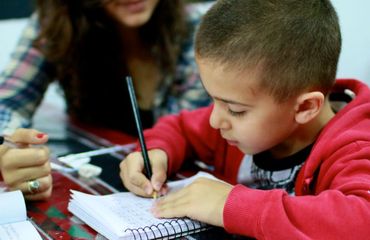
The children get learning support and oversight including homework and studying for exams, Portuguese learning, and help with learning difficulties. Alves explains that since everything is done at the kids’ households, their families end up studying with them and learning to speak Portuguese in the process.
*Translated by Gabriel Pomerancblum
