


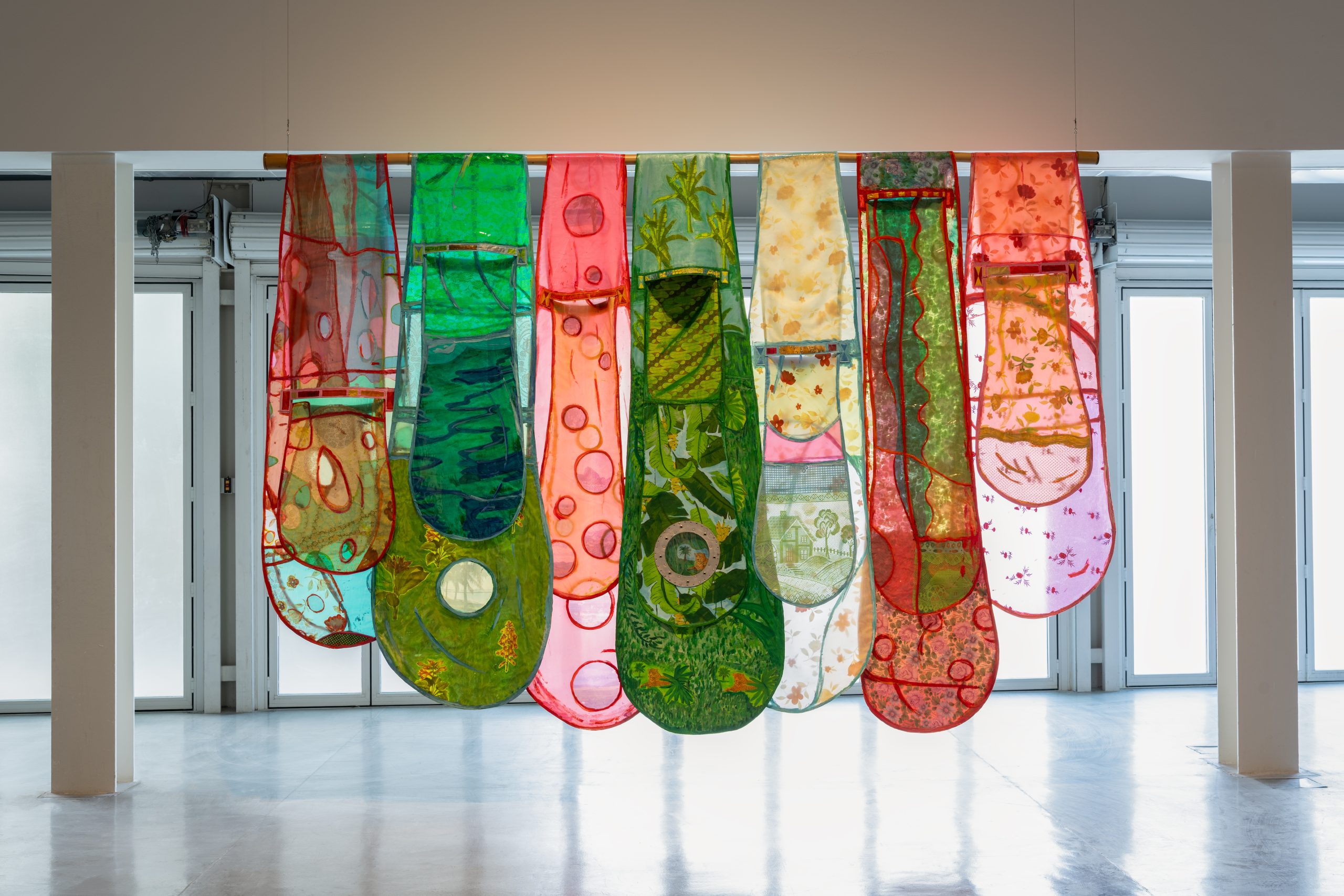
São Paulo – This is Brazilian artist Leda Catunda’s first exhibition in an Arab country. Yet it is far from being just a thematic or dated selection of work from one of the leading contemporary Brazilian artists. The show, running from September 26 to February 8 at the Sharjah Art Foundation in the United Arab Emirates, offers visitors a comprehensive journey through the artist’s creations, from the 1980s till now.
That’s why the exhibition is titled “Leda Catunda: I like to like what others are liking.” The name is almost a portrait of the door the Brazilian artist has opened in her compositions to what is already made, to what appeals to others’ tastes—something that has become one of the hallmarks of her work.
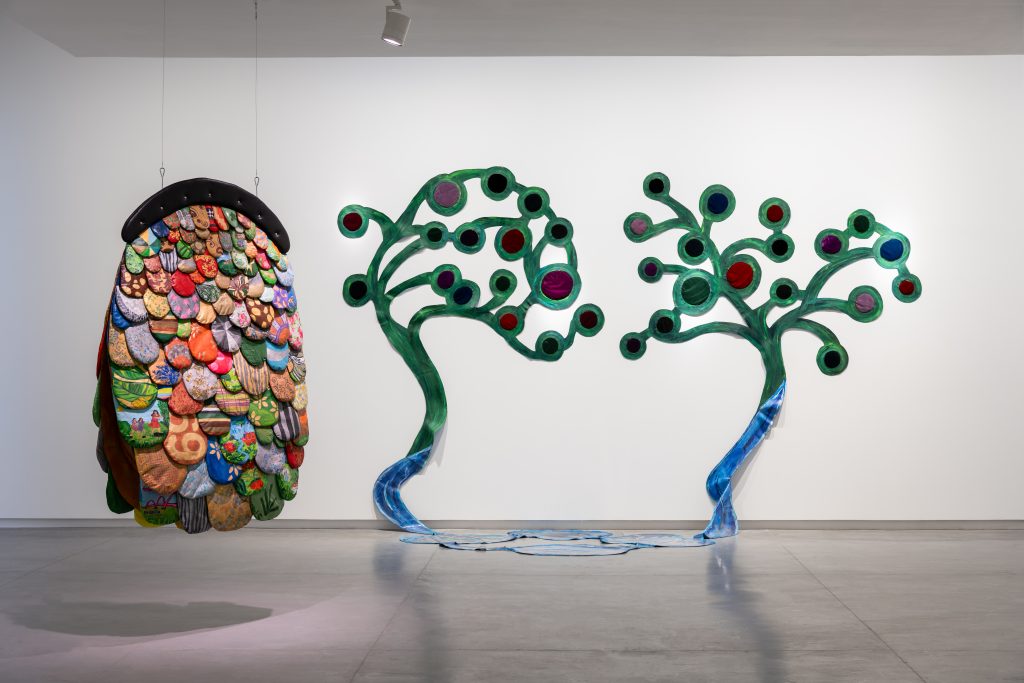
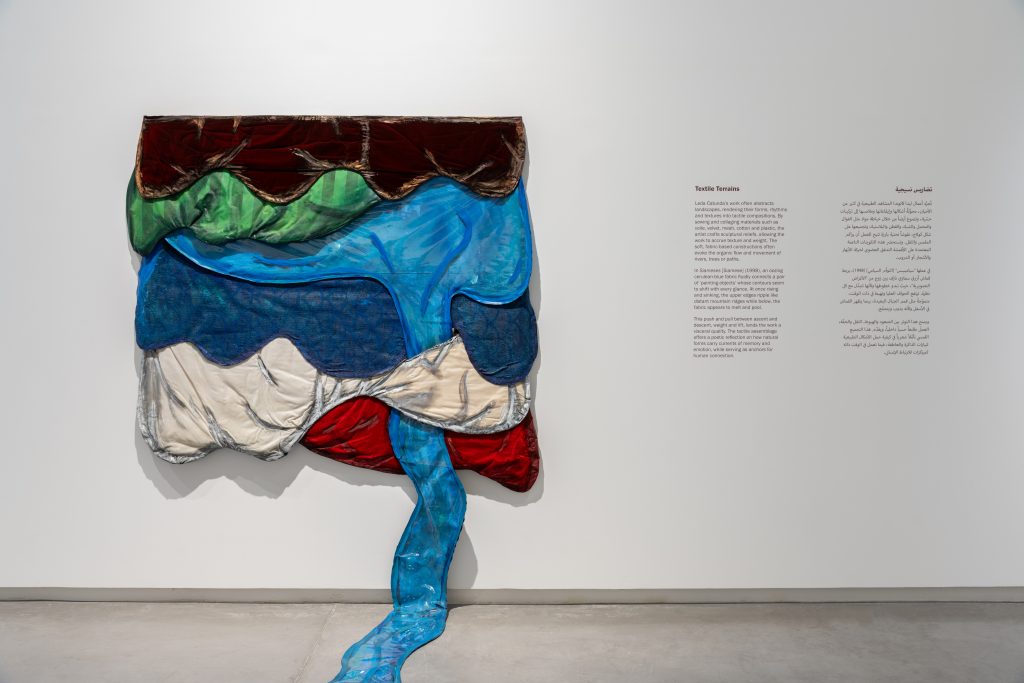
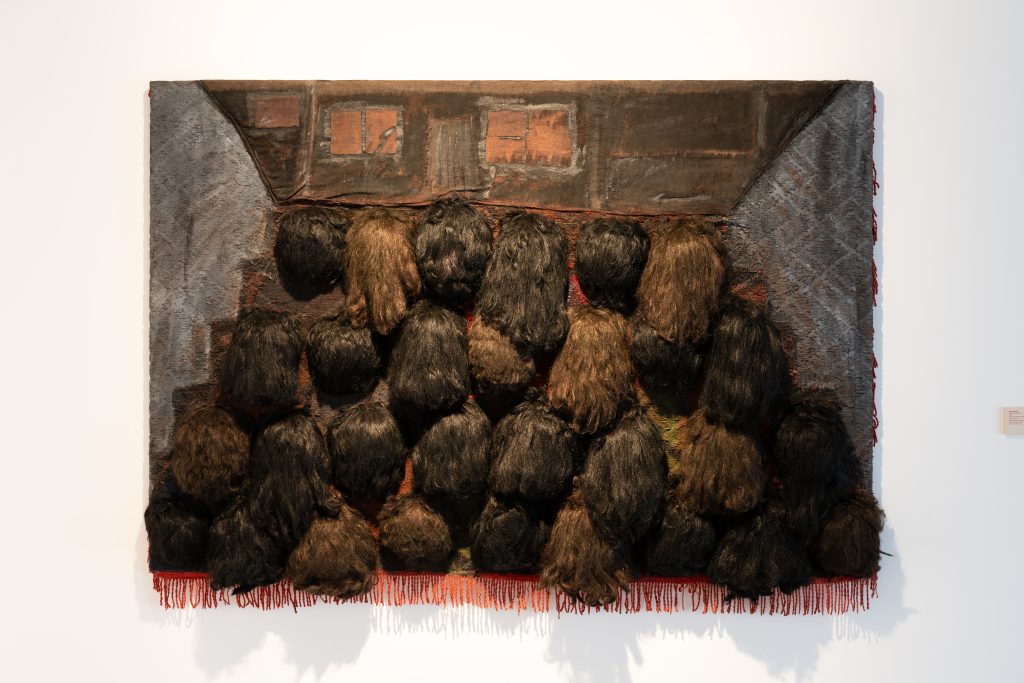
What Catunda does, however, is not merely a combination of already finished images and materials, but a creation that moves between painting, sculpture, installation, and works on paper, often referred to as paintings/objects. And what is placed there as already made, combined with what comes from Catunda’s mind, brush, and hands, shaped by contours she herself defines, becomes a subtle and brilliant message.
“In the society we live in—the consumer society—people try to cater to every taste to sell more,” explains the artist. Catunda’s work, however, is far from being just a critique of this world. She sees the individual within the machinery of consumption, where you can’t have everything, but you can have something. “I think that in this capitalist phenomenon, the way we adapt is very affective, because you have to save your money, or it runs out—but you’ll have your team’s t-shirt, you’ll take that trip,” she says.
The artist sees the drama in the choices of consumption in today’s society, where buying—beyond basic necessities—is truly a selection of what one likes and the fulfillment of desire. “In a highly massified society, you end up looking for a specific identity,” she says, noting that this also applies to how one chooses to live or what to believe in. “By choosing, you invent, take risks, and try to find more individualized paths, even within this massification,” she adds.
And if this permeates and underpins Leda Catunda’s work, it is also evident in the more than 60 pieces the artist is presenting in the UAE. To bring them together in galleries 4 and 5 of the Arab foundation, the works were sourced from various parts of the world. Some come from the artist herself, others from museums, and others from private collectors in places as diverse as Seoul, South Korea, Detroit and Cleveland, United States, and Caxias do Sul, Brazil, among others. The effort to arrange all of this for the exhibition, as well as the intention to present her work as a whole, surprised the artist herself.
Leda Catunda says her connection with the UAE began about eight years ago, following a meeting with Hoor Al-Qasimi, the current director and president of the Sharjah Art Foundation, curator of the Brazilian artist’s exhibition, and named the most influential person in the arts in 2024 by ArtReview. A collector and owner of Catunda’s work herself, Al-Qasimi visited the artist’s studio in Brazil and proposed the retrospective exhibition. “What was very surprising for me,” says Catunda, clearly pleased with the vibrancy the collection generated. The artist adds that she found Hoor Al-Qasimi’s selection of works very significant. The exhibition also has curatorial assistance from Meera Madhu.
The Brazilian artist followed the development of the exhibition remotely during the six months leading up to it and traveled to the Arab country to oversee the installation and the opening days of the show. During the trip, Catunda had the opportunity to speak to the public alongside Al-Qasimi and to teach classes, including a workshop for children. “There weren’t two children from the same place. For that reason, they all spoke English. That was the thing I found most striking in the UAE. It’s a place full of energy; people go there to build a life,” Catunda told ANBA.
The artist was also struck by the cleanliness and modernity of the cities in the UAE, the number of women working at the Sharjah Art Foundation, and the local openness to the new and to increasingly understanding contemporary art. Leda Catunda has exhibited around the world, in countries such as China, Japan, Norway, and the United States, but Sharjah hosts her largest solo exhibition outside Brazil.
Meeting the UAE
Now that she has debuted in the Arab world and seen the recent interest in contemporary art there, she also wants to make the region her artistic ground. “There are no concrete plans, but I had a meeting there with African curators, and with people from Australia as well, and I felt these were encounters I wouldn’t have in Brazil. I feel like I made a good first step and I’m very open,” she says about future projects.
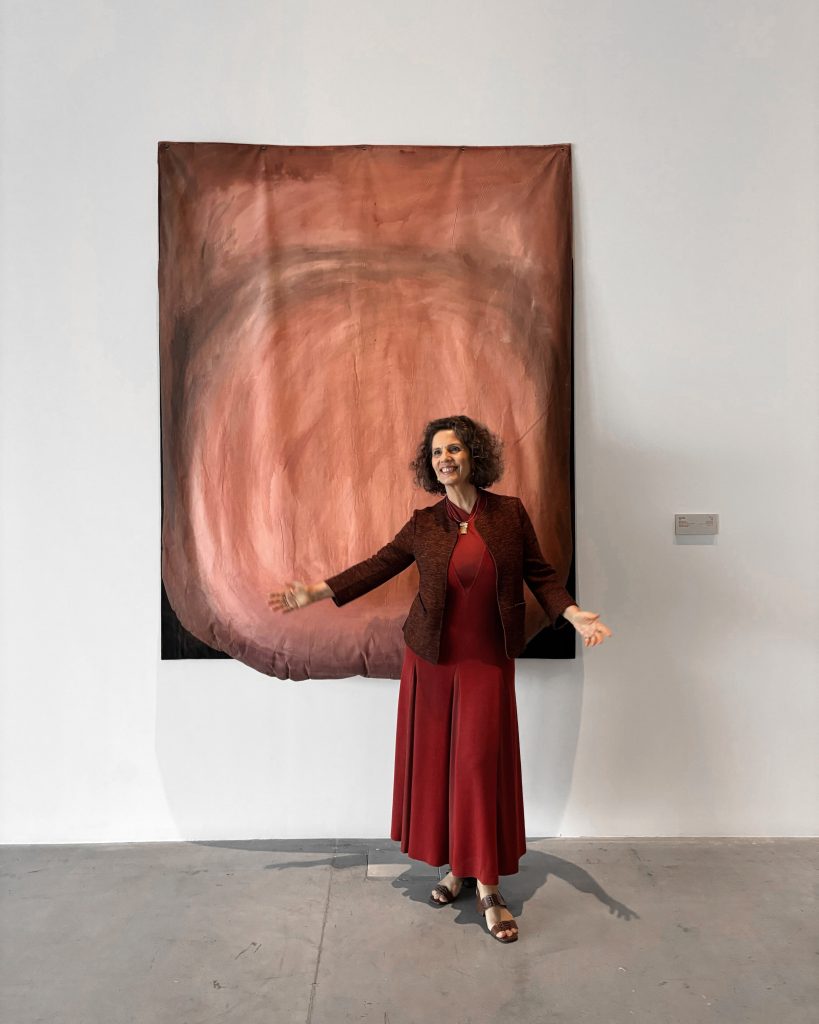
Catunda says she wasn’t prepared for the Arab world, but it was a very positive surprise. “It’s very different from Brazil and from all the places I’ve been, and I was very happy about that, realizing there is now a new space,” she says, also highlighting the warm response she received from the local audience. “For me, the experience of reaching an audience that doesn’t know me and welcomed me with open arms—they have posters on the streets with my name—is really amazing, wonderful,” she adds.
A leading figure of her time, Catunda played a vital role in reshaping Brazilian art in the 1980s, with works that brought painting and sculpture closer together, followed by softer paintings in the 1990s, and in recent years bringing Baroque intensity to her creations. Catunda entered the School of Fine Arts in the 1980s and began exhibiting in solo and group shows. The artist also holds a doctorate in Arts, has experience in academic teaching, and has received numerous awards for her work.
Quick facts:
Exhibition – Leda Catunda: I like to like what others are liking
From September 26, 2025, to February 8, 2026
At the Sharjah Art Foundation – Galleries 4 and 5
Al Mureijah Square – Sharjah, United Arab Emirates
More information and tickets here
Translated by Guilherme Miranda
