



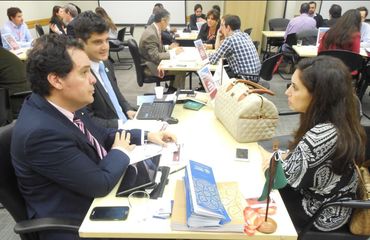
São Paulo – Brazilian small- and medium-sized businesses are interested in selling to the Arab market. Several business executives who fit this bill had meetings with staff from the Arab Brazilian Chamber of Commerce this Tuesday (27th) at the offices of the Federation of Industries of the State of São Paulo (Fiesp) in the namesake state capital São Paulo. The federation held meetings between 16 foreign chambers of commerce active in Brazil and local businesses, in a bid to fuel exports.
One of the companies in attendance that spoke with Arab Chamber Marketing and Trade manager José Cristóvão and Market Intelligence coordinator João Paulo Paixão was Marina Gaydou. The São Paulo-based microbusiness makes purses and leather items primarily targeted at women with small children. “The purses are very feminine, and we are aware that Arab women really care about how they look,” says company owner Monica Nogueira.
One of the products her company makes is baby bags, of the bigger type, to carry diapers and bottles. Instead of colorful prints of cute animals, however, the items by Marina Gaydou are more feminine in style, similar to other women’s purses. “We do it so women can feel like women when they have a baby,” she says. The items also include folders to carry the baby’s documents in, small handbags to carry a few diapers, and regular women’s purses. The company does not export yet; it has shipped product to Argentina a few times, but is looking to break into the Arab market.
A representative from Xtire, Fabio Ferreira, was also at the matchmaking event Fiesp. He is interested in exporting, including to the Arab market. The company has a plant in Atibaia, São Paulo, where it makes tire sealant. The product seals the tire from the inside out, increasing durability by 20%. It offers protection against holes up to 6 millimeters deep. According to Ferreira, who sells to corporate buyers and the government, in the former case, in which mileage is high, the sealant increases tire life by a year. Under normal conditions, tire life increases by as much as two to three years.
“The Arab market is one of the world’s leading vehicle consumer markets,” says Ferreira. The company has been on the market for 15 years, and now it has decided to global. It doesn’t export yet, and wants to start out on the international front by selling to corporate buyers and government as well, since the volumes are higher. The product, however, is also sold retail and direct to end buyers. In the latter case, the cost is BRL 200 for all four tires of a low-priced vehicle.
Renove also met with Arab Chamber staff. The company works with machine automation for the box-making industry. It works to increase the speed and quality of cardboard box manufacturing machinery, says manager Chrissie Barban, who was at the Fiesp headquarters.
Renove is a small family-run business working out of São Paulo. It began working on exports recently. Barban says she wants to learn more about the Arab market and ascertain whether there’s a demand for her product there. Even though the company is interested in the Arab countries, it plans on starting with Latin America. Renove caters to undulated cardboard box manufacturers.
The Arab Chamber executives made a point of doing prospecting to find out whether there is a demand in Arab countries for the products the companies are offering. According to Cristóvão, most are fledgling exporters, so the role of the Arab Chamber and other organizations, such as Fiesp and sectorial associations, is to prepare them and help them with the exporting process. “The Arab Chamber is working hard to help these companies export,” says Cristóvão in a reference to small/medium businesses. According to the Marketing manager, many said companies are seeking out the Arab countries as alternatives, since this is not the best of times in the domestic market, and the exchange rate is favorable to overseas sales right now.
*Translated by Gabriel Pomerancblum
