


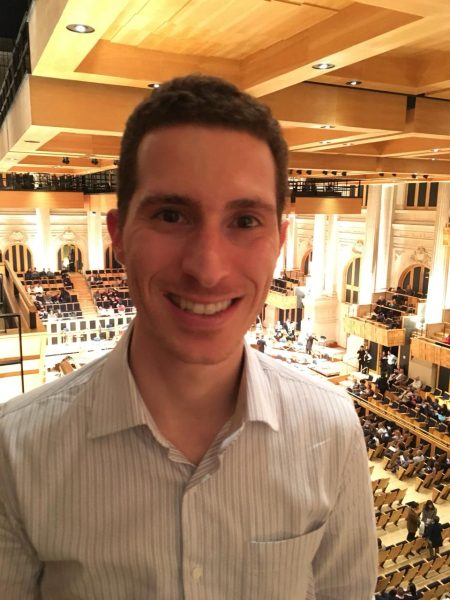
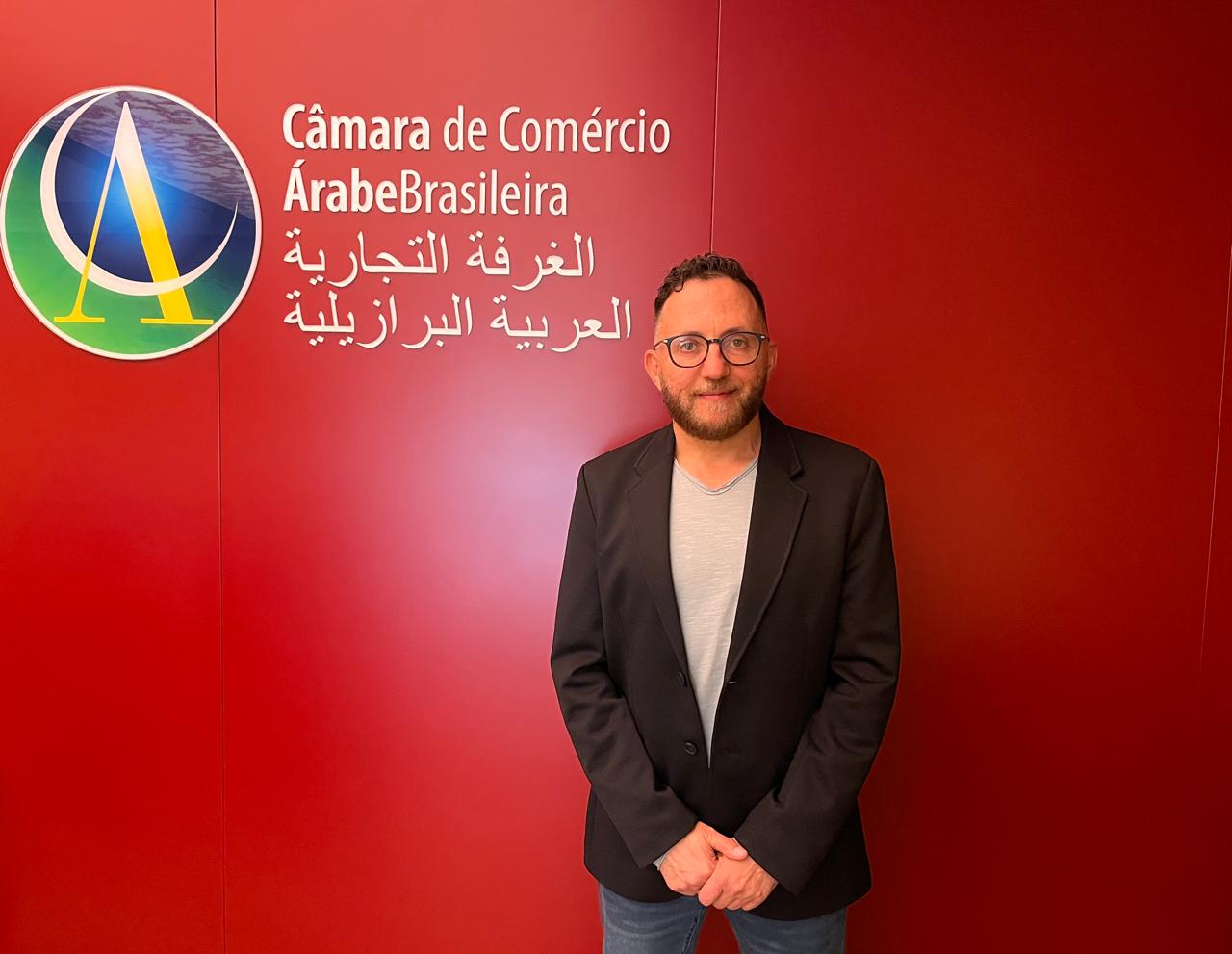
São Paulo – One of the screenwriters of Lebanese film Arzé (2024), Louay Khraish, is in São Paulo this week to attend the 20th Arab World Film Festival, organized by the Institute for Arab Culture (Icarabe), Serviço Social do Comércio (Sesc), and state-run lender Banco do Brasil. On Thursday (14), he visited the Arab-Brazilian Chamber of Commerce (ABCC), a sponsor of the event, in São Paulo. In an interview with ANBA, he said he has a full schedule of appointments in the city, which he hadn’t visited before, and that Brazil and São Paulo, home to many Arab immigrants, can inspire future films and stories.
With a script by Khraish and Faissal Sam Shaib and directed by Mira Shaib, Arzé was Lebanon’s entry for this year’s Oscars but did not make the final five nominees in the Best International Feature Film category, which was won by Brazilian film I’m Still Here. Still, Khraish wasn’t disappointed. In fact, the connection and even the “pride” that Lebanese people feel for Brazil is so strong that he was happy nonetheless.
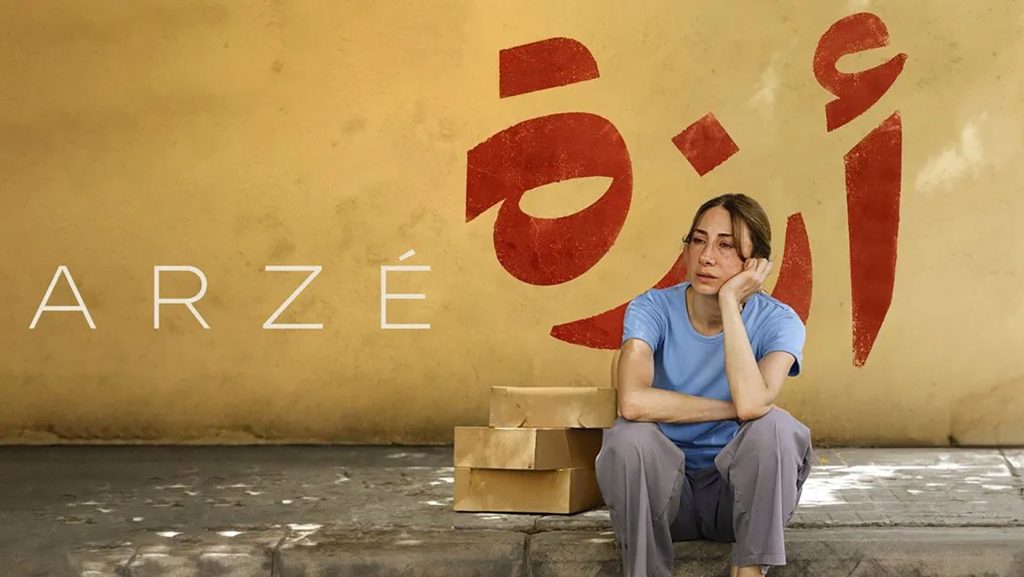
Both Brazil, depicted in I’m Still Here, and Lebanon have experienced internal turmoil, notes the screenwriter, which ultimately brings the countries and their stories closer together. More than that, Khraish says, there is even a similarity in the filmmaking style of the two feature films. “There’s a certain color, a warmth, some similarity. I can’t quite explain it,” he says.
In Arzé, a single mother—played by Diamant Abou Abboud—roams the streets of Beirut searching for her son’s stolen motorcycle in a story that explores daily life, depicts Lebanese reality, and addresses contemporary issues. The inspiration for the screenwriting duo came from the Italian film Bicycle Thieves (1948). “We loved the story because of its simplicity, about this father-son relationship and their search for a stolen bicycle. And we really loved how this film told us a lot about the post-war Italian society,” Khraish says about the European classic. “This film’s story can be told in Lebanon.,” he adds.
Arzé followed in the footsteps of its Italian inspiration because the screenwriters and director initially wanted it to be widely seen within Lebanon but also to reach audiences in neighboring countries like Syria and Jordan. They were also aware of the film’s potential in South America due to the cultural similarities between the peoples.
Khraish was born in Ain-Ebel, a town south of Beirut, and now splits his time between the Lebanese capital and Los Angeles, United States. He has previously visited Rio de Janeiro, and for his first trip to São Paulo, he had several goals: meet friends, visit museums, and see landmarks such as the São Paulo Cathedral and the Municipal Market. The “Mercadão,” as the latter is known, is located near Rua 25 de Março, one of the main hubs of the Arab community in Brazil.
“I think there’s a lot of untold stories about the Lebanese or Arab experience in São Paulo that could be told. In the US, for example, the Italian Americans have done a very good job telling their stories. I think there’s a lot of potential to tell stories here in Brazil and other South American countries about the immigration from Lebanon and Syria,” he says.
Check out the full schedule of the Arab World Film Festival at this link.
Read more:
Arab World Film Fest opens with film on Palestine
Filmmaker to attend Arab World Film Fest in Brazil
Translated by Guilherme Miranda
