



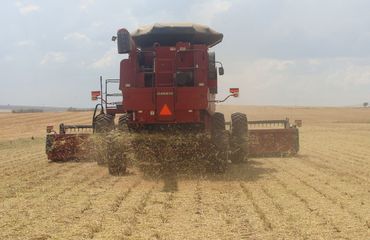
São Paulo – Named after one of Syria’s biggest cities, the chickpea strain BRS Aleppo was developed by the Brazilian Agricultural Research Corporation (Embrapa) using material from the Arab country. Embrapa will launch it in Brazil to encourage domestic production, eliminate the need for importation, and eventually export surplus production.
Brazil spent roughly USD 8 million on importing 7,000 tons of chickpea last year. The potential income prompted Embrapa to work towards growing the plant domestically. Some eight years ago, and building on previous work, Embrapa Vegetables researcher Warley Marcos Nascimento created a project focusing on genetic resources and improvement of legumes such as peas, chickpeas and lentils.
The project saw Nascimento travel in 2010 to the International Center or Agricultural Research in Dry Areas (ICARDA), a World Bank-funded effort that works with chickpeas. The ICARDA headquarters used to be in Aleppo, Syria, and were moved to Lebanon due to the ongoing Syrian civil war. “I went out there to learn a little bit,” he says. Although chickpeas are grown in several countries, there used to be no technologies or cultivars that matched tropical climate conditions such as those found in Brazil.
At the ICARDA, the researcher selected three test-strains to bring back to Brazil: one with higher drought tolerance, one with larger grains, and one with higher tolerance to soil pests. BRS Aleppo was developed from the latter, which exhibited higher yields, resistance to soil fungi, and grain quality, after roughly five years of testing. According to Nascimento, it proved a perfect match to the Cerrado area (the Brazilian Savannah), with yields three to four times higher than the world average: 3,048 kg per hectare.
The researcher explains that Embrapa works to provide information on chickpea growing in Brazil, but the actual cultivars were lacking. Testing showed that BRS Aleppo thrives in higher and drier areas. The seed showed good results in northern Minas Gerais, in the Goiás state municipality Cristalina, and in the Federal District, during April and May, when the heat is milder in those areas.
The seeds are being multiplied and should be available to seed producers this month, according to Nascimento. Sales to growers are expected to begin by 2018. The Embrapa researcher believes it will take three to five years before a surplus can be exported. He also said talks are ongoing with Indian companies to take the chickpea strain to India.
But the researcher believes there’s still work to be done in Brazil, such as producing more research data, advertising the cultivar to consumers, persuading growers to grow it, and making the agrochemicals required available. Since the plant was not grown, no products have been developed so far.
One of the advantages of growing chickpea, Nascimento says, is the fact that the whitefly is not a problem; this is not the case with beans, which are grown at the same time of the year. He adds that supermarkets sell chickpeas for twice the price of beans, even though the price of the latter is high right now.
Their higher cost can make chickpeas attractive to growers, but on the other hand it can scare buyers away. However, domestic growing and increased supply can bring prices down. In Brazil, chickpeas are mostly used in salads and as an ingredient for Arab dishes like falafel and hummus.
The growing of chickpea entails no royalty payments, despite the fact that the product came from another country. ICARDA works in tandem with several institutes around the world, Embrapa included, and one of its goals is to help advance food production in developing countries.
*Translated by Gabriel Pomerancblum
