



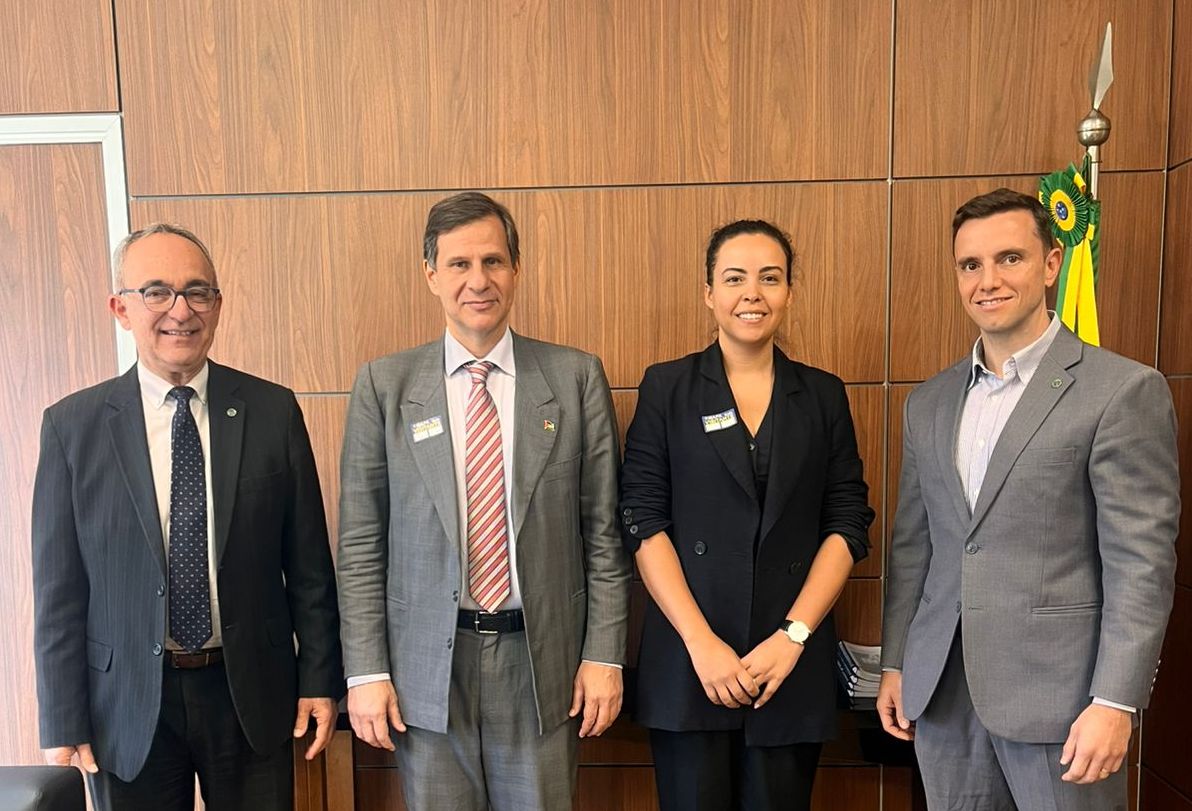
São Paulo – The Arab Brazilian Chamber of Commerce has supplied Brazil’s Ministry of Agriculture and Livestock (MAPA, in the Portuguese acronym) and Ministry of Foreign Affairs (MRE) with a report stating that Arab countries could take in some of the Brazilian-made products the United States has raised tariffs on. Arab Chamber leadership discussed this and other topics during meetings with Executive and Legislative officials in the federal capital on Thursday (7) and Friday (8).
On Thursday, the Arab Chamber’s International Relations vice president and secretary general Mohamad Mourad and Institutional Relations director Fernanda Baltazar convened with the MAPA Secretariat for International Trade and Relations’ secretary Luis Rua, deputy secretary Marcel Moreira, and head of office Guilherme da Costa Junior.
Read more on the report:
Arabs can be an alternative to US tariffs
The Chamber’s executives said two products that have come under tariffs, coffee and frozen beef, could be exported to Arab countries. “The Arabs already import these products from Brazil, and they do so in volumes that are second to none in the world, so there is a potential to divert some of the exports from the United States to Arab countries,” Mourad told ANBA. The ministry called upon the Arab Chamber to work with it on identifying potential markets for frozen fish and honey from Brazil, and especially from the state of Piauí.
There is a potential to divert some of the exports from the United States to the Arab countries.
Mohamad MouradPUBLICIDADE
It was agreed that a workgroup will be created by the Arab Chamber, the MAPA, the Dubai office of the Brazilian Trade and Investment Promotion Agency (Apex), and agricultural attachés in Brazil’s embassies in Arab countries to look into harnessing opportunities in Arab markets resulting from the tariff situation. The Arab Chamber was also called upon to support an investment roadshow from Brazil’s Ministry of Agriculture and Livestock in the UAE, Saudi Arabia, and Singapore.
This Friday, Arab Chamber president William Adib Dib Junior, along with Baltazar and Mourad, handed over the report to MRE Department of Commercial Promotion, Investments and Agriculture director Alex Giacomelli during a meeting. They discussed what products could be worked on and how awareness of those products could be raised in Arab countries through tandem work by the Arab Chamber, the MRE, the MAPA, and ApexBrasil. The Chamber’s executives told Giacomelli about the organization’s upcoming events in Arab and Muslim countries as well as in Brazil this year.
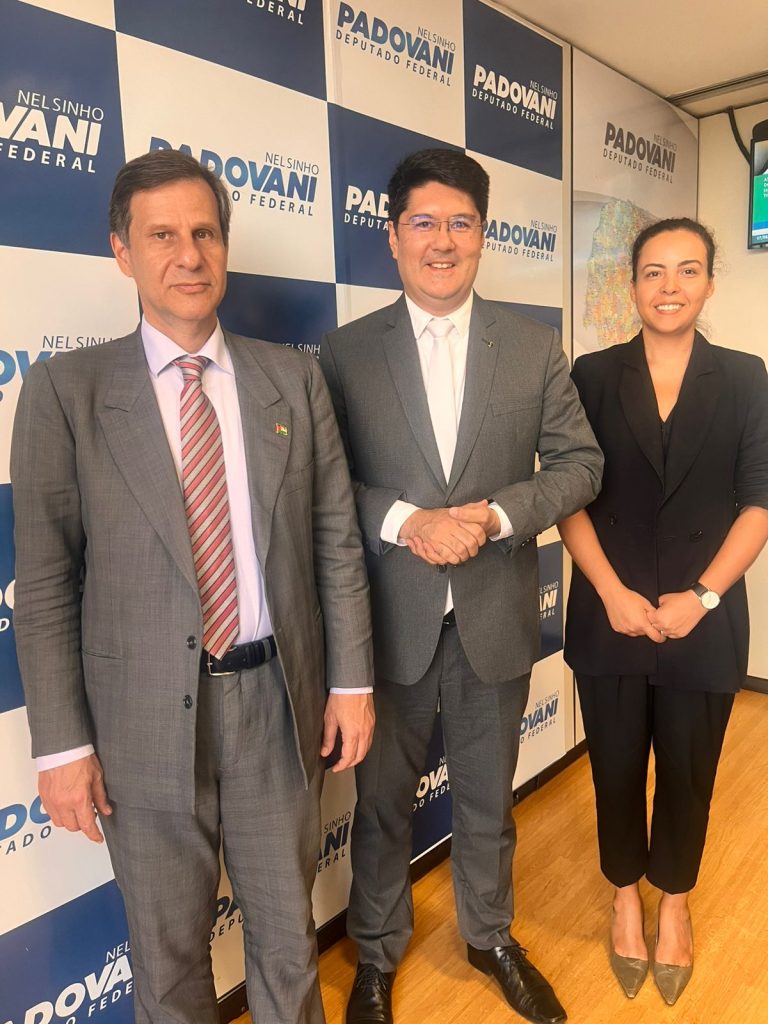
Mourad and Baltazar also met on Thursday with federal congressman Nelson Padovani (União Brasil-PR)’s head of office Seiti Iwano. Padovani has drafted a bill to regulate the halal services and products trade in Brazil. The agenda for the meeting included the Global Halal Brazil Business Forum (GHB), which the Arab Chamber and Fambras Halal will host next October in São Paulo. The Chamber’s executives also discussed the GHB at the MAPA and the MRE and invited officials to attend.
Arab trade in the context of United States tariffs was also discussed with Iwano, who called upon the Arab Chamber executives to have Arab businesspeople visit the state of Paraná, a strong agricultural state, during trips to Brazil. The report presented to authorities in Brasília was created by the Arab Chamber Market Intelligence Department.
During their time in the federal capital, the Chamber’s executives also had courtesy meetings with the ambassadors of Egypt, Mai Khalil, and Qatar, Ahmad Alshebani, with whom they discussed topics including the GHB forum. The executives were also scheduled to attend a farewell dinner in honor of the chargé d’affaires at the Embassy of Lebanon in Brazil, George El Jallad.
Translated by Gabriel Pomerancblum
