


São Paulo – As of January 1st, 2017 the UN will have a new chief. The chosen one will take charge of the United Nations faced with ample challenges, and with a limited scope of action. The refugee crisis, the Syrian civil war, and Russia’s annexation of part of the Ukrainian territory are but some of the problems that will force the secretary general-to-be to sit down with opposing sides of international diplomacy to seek out solutions to conflicts. The UN’s governance and relevance are other issues awaiting the replacement of South Korea’s Ban Ki-moon for the next five years.
Six of the twelve candidates are women, and favorites include the former New Zealand prime-minister Helen Clark, the former Argentinian minister of Foreign Relations Suzana Malcorra, and the director-general of the United Nations Educational, Scientific and Cultural Organization (Unesco), Bulgaria’s Irina Bokova. Two other potential winners are former Portugal prime-minister and former UN High Commissioner for Refugees, António Guterres, and the former Serbian Foreign Relations minister Vuk Jeremic.
The secretary-general selection process began last July, with unofficial polls in the Security Council, which comprises ten rotating members and five permanent ones. During Security Council meetings, each candidate gets voted as “encourage candidacy,” “discourage candidacy,” or abstention. At the end of each voting round, candidates who get the most “discourage” votes are expected to withdraw, until two or three names are submitted to the General Assembly, held every September and slated for the 20th this year.
The winner is usually announced in October, but this year the process might conclude only after the United States presidential elections on November 8. The country is one of five Security Council members with veto powers, alongside Russia, China, France, and Britain.
There are hints that the next UN secretary-general could be a woman, since none has ever won the post. An Eastern European would be desirable, for the same reason. Protocol also calls for someone from a country that’s not a world power. The winner will serve a five-year term, which can be renewed indefinitely. No secretary-general ever remained in position for more than two terms.
Challenges
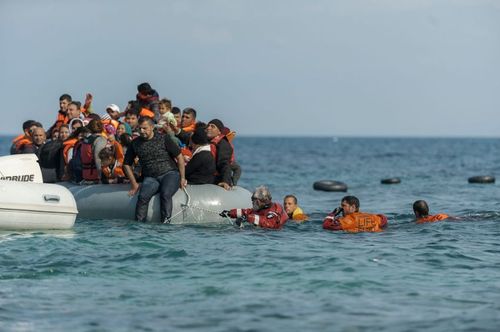
Refugee flows require swift action from the next secretary-general. Data from the United Nations High Commissioner for Refugees (UNHCR) show there were 65.3 million internally and internationally displaced persons in the world in 2015. Refugees amounted to 21.3 million at the end of last year. Marcus Vinicius de Freitas, a professor in the International Relations Course at Fundação Armando Álvares Penteado (FAAP), believes that the solution for the refugee crisis hinges on solving another problem: the Syrian conflict.
“The Syria issue is hard to solve, because it involves, first and foremost, what should be done with president Bashar al Assad. One side – the United States’ – believes a regime change is in order, so that a democracy can be built under a new leadership. The other option, which Russia espouses, is leaving Assad in power. These two conflicting views prevent the problem from being solved. Moreover, the United States are unwilling to deploy its troops on the ground, all the more so in a year of election,” he says. For Freitas, the best-case scenario would be a change of regime, so long as it’s a calculated move with broad international support.
Pio Penna Filho, a professor at the Foreign Relations Institute of the University of Brasília (UNB), agrees that the biggest challenge of all is the refugee crisis. “There never have been this many [refugees], or this many migrants to Europe. These flows will be met with harsher reactions from European governments. Displays of xenophobia are already underway,” he says. He noted, however, that the UN could focus its actions on a region that can achieve peace and development in spite of all the conflicts: the Middle East. “Almost every topic converges on the Middle East. The UN could do something there, it could concentrate its efforts there,” he ponders.
Faster to act
Penna Filho recalls that the United Nations used to be more active during the Cold War of the 50s, 60s and 70s, as well as in the 1990s, during the terms of Egypt’s Boutros Boutros-Ghali (1992-1996) and Ghana’s Kofi Annan (1997-2006). From 1950 to 1970, he notes, the UN General Assembly would discuss the agenda in depth and seek solutions to the problems. Throughout the 1990s, summit meetings such as the Eco92, a conference on environment held in Rio de Janeiro, saw the UN step into a major role in addressing the biggest challenges of civilization.
“I see a decline after the United States began their war on terror (in the wake of the September 11, 2001 attacks). As a result, the UN emptied down, and regional blocs emerged in response to its lack of leadership,” says Penna Filho.
To the International Economics professor at the Pontifical Catholic University of São Paulo (PUC-SP), Antônio Carlos Alves dos Santos, the UN must address yet another challenge: itself.
“The UN was founded in 1945; at its core were the countries that won World War II (1939-1945). It’s unlikely to meet the demands of today, considering the Security Council, which comprises five permanent member countries. In itself, the fact that it leaves out Germany, Japan and some heavily influential emerging countries indicates its disconnection with the 21st century,” says Santos. “One of the challenges to be addressed by the next UN secretary-general is to forge ahead with the organization’s reform, which began during the current term and depends on the five Security Council members,” he asserts.
The UN reform process entails faster internal procedures and faster action to address the demands that come up. For the most part, UN decisions require consensus. Hiring an employee, for instance, can take over 200 days. The reform process was partly put in place by Ban Ki-moon, whose administration gets mixed reviews.
Freitas believes the South Korean will leave office after ten years with no major scandals, unlike his predecessors. Santos points out that he worked hard to streamline the UN and initiate reforms, but concedes that his administration had “thunderous” failures, like the Ukraine crisis and the Syrian conflict.
Penna Filho claims that under Ban Ki-moon, the UN lost its leadership and influence, although he acknowledges that his powers are limited. “The secretary-general has limited powers. However, he can take on major subjects, such as refugees and the championing of human rights. If a woman gets chosen, there will be more of an emphasis on gender difference issues, a stronger focus on the precarious situations faced by women around the world,” he says. “The UN only works if the big powers are committed to it. There’s no point in having over 100 countries abiding by its strength and leadership if a group disregards its decisions.”
*Translated by Gabriel Pomerancblum
