



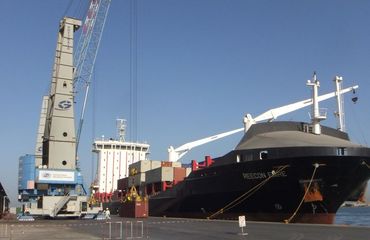
São Paulo – In 2002, one year prior to the inception of ANBA, it was US$ 2.6 billion. The following year it was US$ 2.7 billion, and then US$ 4 billion in the next one, all the way to US$ 14.8 billion in 2012. Ever since the Brazil-Arab News Agency was established, Brazilian exports to the Arab countries have increased near-continuously. The website reported on new business dealings by Brazilian enterprises in Arab countries, rising grain shipments, calls for tenders offering opportunities to Brazilian and Arab businessmen alike; shipping, as well as information, was progressing fast.
In the wake of an administration that turned its eye to the Arab world, businessmen did too. Companies like MBR Trading discovered the importing potential of the Emirates and its luxurious Dubai. Trading company Latinex shipped biscuits, canned meat and fruit juices to Libya, Egypt, Syria and others. Either by themselves, alongside government organizations, or with the Arab Brazilian Chamber of Commerce, small and medium businesses went about selling to the Arabs. The big ones, which had set their foot in the region for some time then, went about selling even more.
Specialists claim that such a marked evolution of Brazilian exports to the region – which have seen a near-six-fold increase during the period – was mainly driven by rising commodity prices. The chairman of the Brazilian Foreign Trade Association (AEB, in the Portuguese acronym), José Augusto de Castro, claims such an increase is not common. In Arab lands, the oil price hike drove purchasing power up. Brazil took advantage of the scenario to sell more of its commodities, such as ores and grain, whose prices were also bullish.
The Arab Brazilian Chamber CEO, Michel Alaby, stresses the fact that Brazil further cemented its position as a supplier of beef and poultry to the Arab countries during that period. Brazilian Ministry of Development, Industry and Foreign Trade figures compiled by the Arab Brazilian Chamber show that exports by these industries to the region soared from US$ 511 million in 2002 to US$ 3.9 billion in 2012, a near-sevenfold increase higher even than the leap seen in overall exports.
The product portfolio, however, remained fairly concentrated during the period, a reflection of what occurred in Brazil. “In 2000, manufactured goods accounted for 59% of the export portfolio; by 2012 the rate was 37%. Commodities accounted for 22% and grew to 47%,” says Castro regarding Brazil’s overall exports, claiming that this was mostly a consequence to the “Brazil cost” (i.e. the cost of doing business in Brazil), especially logistics-related costs. Alaby ascribes the diminishing market share of manufactured goods to yet another factor: rising domestic demand, which causes enterprises to turn to the local market, and the bearish dollar.
Brazil’s trade portfolio with Arab countries has been historically based around commodities, such as sugar, meats and ores. During this particular period, however, exports of some types of grain, such as maize and beans, have increased. At this time, Brazilian sales to Arab countries are topped by sugar, which accounts for 28.5% of total exports. By 2002, sugar stood at 29.5%. Meats rank second at 26.5%, as against 19.6% ten years ago; ores account for 16.4%, as against 8.46% in 2002; and grain accounts for 10%, as against 1.2%.
In ten years, Brazilian imports of Arab goods have also grown a lot, from US$ 2.2 billion to US$ 11 billion. The increase was fivefold. In both 2002 and 2012, however, the products shipped were mostly fossil fuels and fertilizers.
The product portfolio, however, has become slightly less concentrated, considering that fuels used to answer to 90.7% of total imports and dropped to 82%, and fertilizers went from 4% to 12%. As a result, Algeria, a major supplier of oil and its products to Brazil, has lost some of its fertilizer market share to Morocco. Saudi Arabia retained the same share in Brazil’s imports over these ten years: 28%.
Stories
Alaby lists initiatives that have contributed to boosting trade with Arab countries, like closer government ties, which the CEO says Arabs place great value on. He also cites the Arab Brazilian Chamber’s actions, such as taking part in trade shows, business missions, business matchmaking rounds, and the inception of ANBA. “The role of ANBA has been to publicize Brazil in the Arab countries, and to publicize Arab countries in Brazil,” said Alaby, highlighting the agency’s economic and cultural focus.
MBR Trading is one of the enterprises whose story has been told by the agency. The São Paulo-based company exports fruit, mostly Tahiti-type lemon, and has shipped product to Qatar and the Emirates. According to MBR partner Renato Miralla, the fact that the company has featured in an ANBA article grants it credibility. Dubai is currently the target of 15% of exports by the trading company, which also sells to Canada and seven countries in Europe. The company’s sales to Arab countries took off after it procured a representative in Dubai two years ago.
Businessman Eduardo Moraes, from the Brazilian state of Paraná, founded Latinex the year ANBA was born, and exported to the Arab market from 2005 to 2011. He says the agency has helped build Latinex’s relations with the Arabs. “It has helped us stay abreast of the main developments in the Arab world, as well as of the Arab Brazilian Chamber’s events and actions,” says Moraes. The company partakes of the actions held by the Chamber on a regular basis. “These are very valuable to Brazilian businessmen,” he said.
Since 2009, Latinex has a Premium food import operation targeting specialized retail outlets, such as emporiums and delicatessens. The trading company is restructuring its export unit at this time, and plans on resuming its foreign sales at full speed soon. “Our focus will be on the Apex Brazil Trade project as the exclusive trader for some of the food companies involved in the project, and Arab countries will surely be included,” says Moraes regarding the project of the Brazilian Export and Investment Promotion Agency (Apex) to encourage small businesses’ exports via trading companies.
*Translated by Gabriel Pomerancblum
