



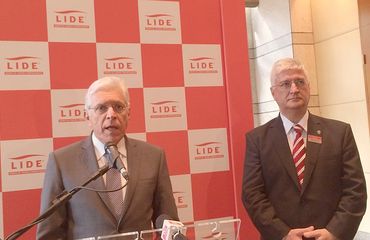
São Paulo – The trade mission that Brazilian business will take to Egypt and Algeria in May is one of the opportunities that the country has of expanding trade relations with Arab nations until it can equalize the trade balance with some of them. The executive secretary of the Ministry of Development, Industry and Foreign Trade (MDIC), Ivan Ramalho, said to ANBA this Monday (27th) that the country has a chance to sell more to the region and also to attract Arab investments to domestic projects.
“We have an important relationship with Algeria, for instance, who sells oil to us and holds a surplus in the trade balance. We can explore more their market, sell them more. Other countries, such as Egypt, Iran (which is not Arab) and Saudi Arabia also have a [trade] potential to be explored”, said Ramalho after the debate “New policies to the industry, trade and services sectors”, organized by the Business Leaders Group (Lide, in the Portuguese acronym) in São Paulo.
Ramalho also told ANBA that Brazil’s trade relations with theArab countries are “very important” and reminded that some Arab nations, such as Saudi Arabia, are big food buyers from Brazil. “We are suppliers, especially of food, and can expand our presence. On the other hand, the Arab countries have investment agencies in other nations and Brazil is the gateway for investments in the region (South America)”, he said.
The trade mission of Brazilian businessmen to Egypt and Algeria is being organized by the Brazilian Trade and Investment Promotion Agency (Apex-Brasil) and by the Arab Brazilian Chamber of Commerce. It will take place from May 24th to the 28th and, in addition to businessmen from both countries, Brazilians will take part in a business round with Moroccans and Tunisians.
During the lunch in São Paulo, Ramalho and David Barioni, president of Apex-Brasil, presented the government’s plans to increase Brazilian exports and what can be done so the country returns to posting surplus in this year still. In 2014, the trade balance deficit stood at US$ 3.9 billion.
Barioni said that one of Apex’s goals is to expand the number of companies that went international and guide them to create an export culture. He said that from the more than six million Brazilian companies, only 20,000 exports and that the agency seeks to help with the export plans of small and medium-size companies.
Ramalho guaranteed that the Brazilian government will release until the end of the first semester an exports incentive plan with a focus on the diversification on the exporting agenda both on destinations and products. He cited as example the fact that Brazil is a large exporter of manufactured products to South America countries and pointed out, on the other hand, that sales to Asia are focused on commodities. He also said that the government is already putting an effort to increase sales to the United States, as a result of the visit of Armando Monteiro Neto, minister of Development, Industry and Foreign Trade (MDIC, in the Portuguese acronym), to the United States earlier in the year, and also to the talks of a bilateral agreement with the European Union.
“One of the plan’s main goal looks to diversify exports”, he said. According to Ramalho, exporters “will not be surprised” with this project because they are helping with the draft and should have most of their pleas fulfilled. More than 30 countries should receive exports incentive actions contained in this project.
Attending the event were executives of Brazilian multinationals companies, especially from the services and industry sectors. President of Lide International and former minister of MDIC, Luiz Fernando Furlan, said that in the current moment of the Brazilian economy, with slow and weak growth, the answer lies in the incentives to exports. Lide’s president, João Dória, said that the selection of trade partners must be guided by the opportunities that they offer. “You don’t mix exports policies with ideological alignment”, he said.
*Translated by Sérgio Kakitani
