


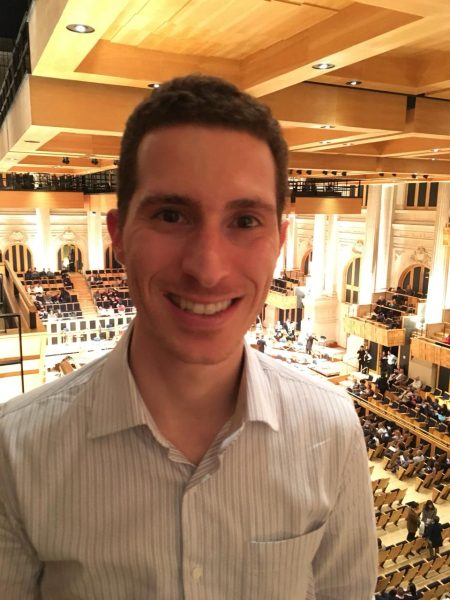
São Paulo – Last week, the bookstores of Brazil received the fourth and last volume of the first complete translation of the “Arabian Nights”, translated by the Oriental Language professor at the College of Philosophy, Literature and Human Science of the University of São Paulo (FFLCH-USP), Mamede Mustafa Jarouche.
Apart from the nights that were lacking, this volume includes another two texts: “Aladdin” and “Ali Baba and the Forty Thieves”, which were not originally among the manuscripts, although they were also translated from Arabic. These tales were included into the translation into French by Jean Antoine Galland, between 1704 and 1717, the first into a western language.
This edition, according to the translator, was the most challenging one and the one that resulted in most work. In it, there are popular stories, like “The phases of man, according to women,” to political treaties, as may be observed in “The education of princes”.
“This volume was larger than the others, with over 500 pages. The volume of material I worked with was greater and there were also more problems. There were stretches that I had to read in the original [which inspired the tales of the ‘Arabian Nights’] to be able to translate,” recalls Jarouche.
Part of the challenge faced by the translator was a consequence of his choice: translating the first and the second volumes, both from the Syrian line, and the third and fourth volumes, from the Egyptian line, from manuscripts and not from the vulgate, which is the most popular edition, accepted as the authentic version of the text. He made this choice as he considered, early into the project, that the vulgate did not contain the details that the originals contained.
Recognition
The “Arabian Nights” tells the story of king Šāhriyār, who discovers he is cheated on by his wife. He has her killed and decides that each night he will marry a woman and kill her on the following day. Not to follow the same destination as that of her predecessors, Šahrazād promises the king she will tell him a story each evening. This way, her death is postponed until the 1001st night, when the king decides what to do to her.
It was Galland’s translation, said Jarouche, that made it possible for the “Arabian Nights” to become known and revered worldwide, not just in the East. “The ‘Arabian Nights’ is already emblematic of Arab culture. It has, in fact, even received greater recognition in the East after being translated in the West, in the 18th Century,” says the translator.
In the case of the translation directly into Portuguese, many tried, but only Jarouche managed to finish. One of those who made an attempt was Brazil’s emperor Peter II. In his book, Jarouche reveals that Peter II translated 120 nights, but did not go beyond.
Projects
Now, after 13 years of research and trips, the challenge of translating the “Arabian Nights” is complete. Other projects, however, are on the way. Jarouche is now working on the translation of other texts from Arabic into Portuguese. One of them, an erotic tale. The other, “The fundaments of the art of governing”, is a political treaty. And he promises: he will not abandon the Arabian nights so soon. “In future” the translator will dedicate himself to the translation of the first vulgate edition, from Cairo, dating back to 1835, and of the second edition, from Calcutta, from 1839-1842.
*Translated by Mark Ament
