



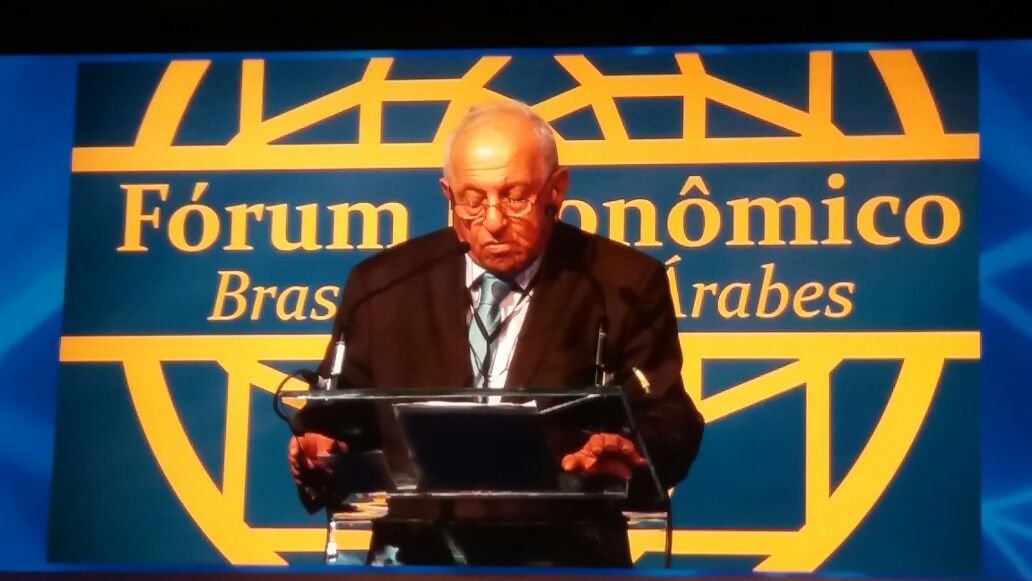

São Paulo – Two thirds of Arabs are interested in visiting Brazil and the same number of Brazilians would like to go to Arab countries. This data is part of a survey conducted by the Arab Brazilian Chamber of Commerce that was presented at the Brazil-Arab Countries Economic Forum. The event was organized by the Chamber and is underway this Monday (02) at Hotel Unique in São Paulo.
The survey interviewed 1,338 people in Brazil, Saudi Arabia, United Arab Emirates, Egypt, Jordan and Algeria, and was presented at the forum by the Arab Chamber’s CEO Michel Alaby, who offered an overview of Brazil-Arab countries relations in his speech. The survey shows that, for the Arabs, soccer, tourism, food products and economic power are Brazil’s flagships.
The forum’s theme is the future of relations between Brazil and the Arab countries and the research showed that the two regions’ populations believe that this future relies mainly on young people qualified for a globalized society, of citizens with a strong voice in society and of women holding important positions in government, plus an integration ability.
The survey showed that Arabs and Brazilians believe that there is, undoubtedly, opportunities to be taken in this relation and that trade potential is promising. The research reveals that both peoples wish to be culturally and economically connected, thus strengthening this relation before the international community.
Other leaders talked, during the forum, about the current economic scenario of the relations between Brazil and the Arab world. The Arab Chamber’s vice president of Foreign Relations, Osmar Chohfi, mentioned the growth potential of each region for this year – 3% in Brazil and 3.1% in the Arab world – and said that he believes that these numbers could open up great opportunities.
The Union of Arab Chamber’s secretary-general, Khaled Hanafy, said that 2017’s USD 20 billion trade between Brazil and the Arab countries is a modest number. “It’s not proportionate (to the size of the economies),” he said. According to him, the talks between Arabs and Brazilians should focus not only on trade, but on strategic partnerships.

He suggested for support points to be created in ports in the two regions, so they can storage goods. The idea is to avoid price volatility and prevent the intermediaries to have the most gains with the trade between Brazil and the Arabs. “This way, producers here will increase gains and consumers over there will pay less,” he said.
The chief economist of XP Investimentos, Zeina Latif, offered an overview of the Brazilian economy, focusing especially in the country’s recovery of a major crisis. She said that Brazil will be facing great challenges, such as the fiscal policy and the need to speed up the reforms. “We need to speed up this program [of reforms], we need to take advantage of the economy being back on track to push forward the reforms,” said Latif.
Jordan senator and the president of Amman’s Chamber of Commerce, Issa Mrad, was also a speaker on the forum. He presented many sectors in Jordan that are interested in receiving Brazilian investments, such as pharmaceuticals, livestock, agriculture, tourism, energy and infrastructure. Mrad talked about Tunisia’s safe environment for investments.
Translated by Sérgio Kakitani
