



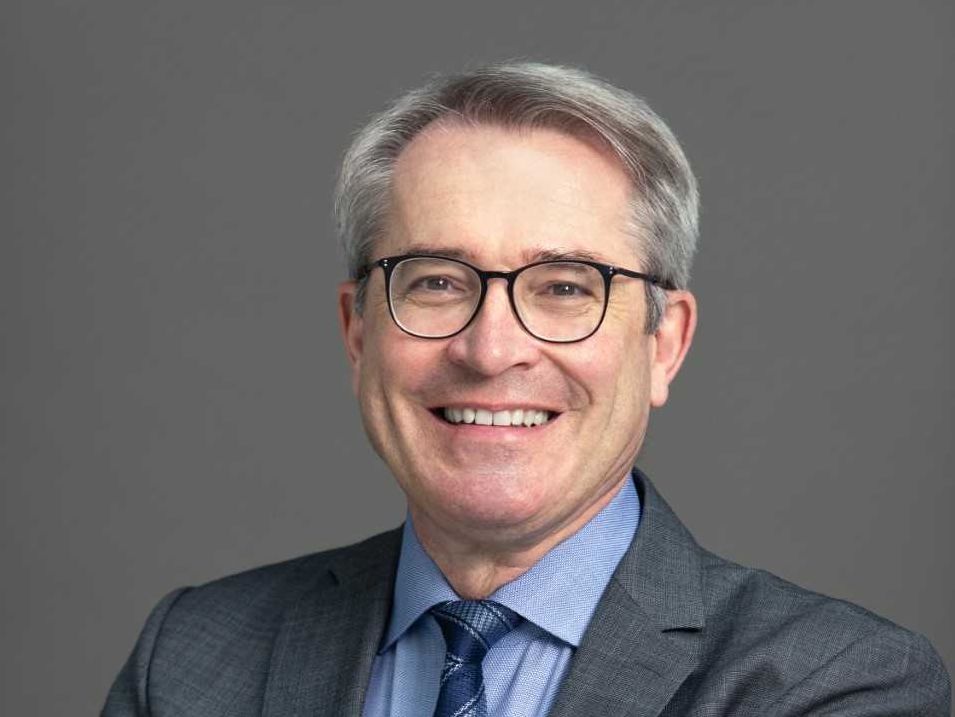
São Paulo – The United Nations Industrial Development Organization (UNIDO), a UN agency, works closely with the private sector and has been seeking new partnerships to advance its strategy. UNIDO’s mission is to promote, drive, and accelerate industrial development with inclusion, sustainability, innovation, and resilient infrastructure.
Last week, UNIDO’s Managing Director for SDGs Innovation and Economic Transformation, Gunther Beger, visited the Arab-Brazilian Chamber of Commerce (ABCC) in São Paulo, where he spoke with the institution’s leaders about possible areas of cooperation.
In a written interview with ANBA after the meeting, Beger said that private sector engagement is a key factor for significant changes in sustainable economic and industrial development. “The private sector has the knowledge, technology and resources that are necessary for this,” he said.
UNIDO has been adopting an expanded approach in its partnerships with the private sector and is working to increase them. “We’re making great efforts to forge new partnerships to mobilize those resources for a new quality of engagement with innovative partnerships to the benefit of all involved.,” he said.
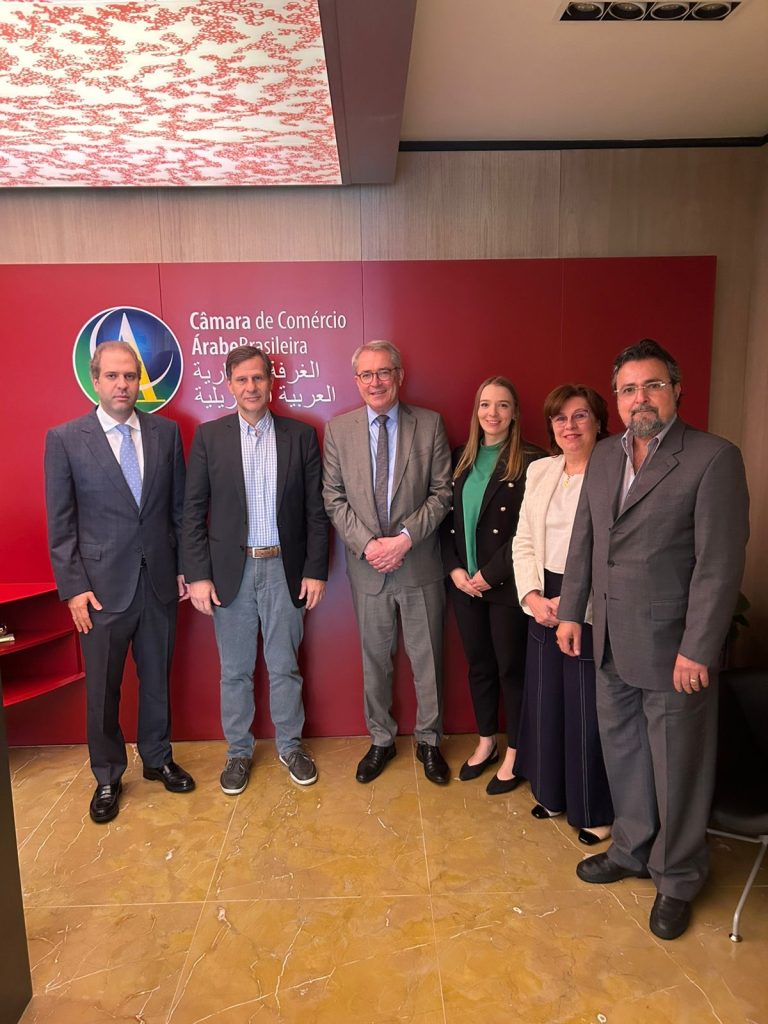
One of the objectives of Beger’s meeting at the ABCC was to better understand the institution’s work and explore potential overlaps with UNIDO’s priorities in Brazil. The ABCC’s mission is to strengthen relations between Brazil and Arab countries, with a special focus on the economic area. Beger reported that UNIDO maintains a very productive partnership with the Arab region.
“The Union of Arab Chambers is a strong partner in our ongoing cooperation, especially through our Investment and Technology Promotion Office (IPTO) in Bahrain,” he said. There is cooperation in promoting financial and non-financial services for entrepreneurs and micro, small, and medium-sized enterprises (MSMEs) through the Enterprise Development and Investment Promotion (EDIP) program.
Beger explains that more recently, in cooperation with the Accounting and Auditing Organization for Islamic Financial Institutions (AAOIFI), the Union of Arab Banks (UAB), and other partners, UNIDO launched a program that will mobilize Islamic and Arab finance to support small and medium-sized enterprises.
Following the meeting at the ABCC, the Managing Director envisions a range of cooperation possibilities in areas such as halal food and infrastructure development. Events and conferences of common interest and participation were also identified for potential exploration. Regarding the meeting, he highlighted the ABCC’s broad and solid presence in Brazil and the partnership opportunities between the Arab region and Brazil, such as in fertilizers and food sectors. Arab countries supply fertilizers to the Brazilian market, while Brazilians export food to the region.
“The ABCC is not only active in Brazil, but also in other regions. Cooperation in Africa could also be a possible form of collaboration. Countries affected by conflict need active support in their recovery efforts, and there seems to be a mutual interest to play a role in that, especially in the agribusiness sector. We already have a strong basis of cooperation with the Union of Arab Chambers, which also extends to several African countries. Now we want to explore how the ABCC can also be a partner in the region,” he said.
Hunger and climate change
UNIDO works with three priorities, as defined by Director-General Gerd Müller. Briefly summarized, the three fronts are promoting fair and sustainable supply chains; limiting climate degradation and providing access to renewable energy solutions and energy efficiency; and ending hunger through value addition, among other methods. “Hunger and poverty, climate change and environmental degradation are the key challenges which we all face today,” says Beger.
In Brazil, the portfolio focuses mainly on industrial decarbonization and energy efficiency, according to the executive. “We have a growing number of projects focused on areas such as energy transition, industrial decarbonization, and circular economy, which demonstrate a strong alignment of our work with Brazil’s national goals.,” he says. Areas like the carbon market, green hydrogen production, and low-ammonia fertilizers are also being considered by UNIDO as potential focus areas in Brazil, as well as establishing projects in agribusiness.
UNIDO will be strongly represented at COP30, according to Beger. The climate summit will take place in the Brazilian state of Pará in December. “UNIDO is envisioning a series of events on critical issues including food security and agribusiness, bioeconomy, responsible and green minerals, green hydrogen and low-emissions ammonia fertilizer and industrial decarbonization and energy efficiency. All of these important issues align with the six thematic areas outlined in the 4th letter of the COP30 President.,” he says.
At the ABCC, Beger was accompanied by Project Associate Marie-Christin Schabus and was received by ABCC International Relations Vice President & Secretary-General Mohamad Mourad, Institutional Relations Director Fernanda Baltazar, and Board members Arthur Jafet, Alessandra Frisso, and Sami Roumieh.
Read more:
COP30 sparks Arab interest in Brazil
Translated by Guilherme Miranda
