



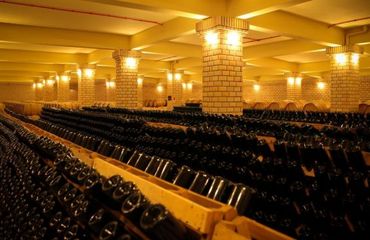
São Paulo – Brazilian wine exports have grown and already reached the export target for the whole year in the period between January and June. According to the manager of the project Wines of Brazil of the Brazilian Wine Institute (Ibravin), Roberta Baggio Pedreira, the growth in sales stems from the advertisement of Brazilian wine abroad. This year, this task has received the “support” of the World Cup, which helped introduce Brazilian fine wines to foreigners.
According to data from the first half of this year (H1) released by Ibravin, Brazil has exported by June US$ 7.16 million in bottled wines, which corresponds to 1.78 million litres. In all of 2013, wine shipments amounted to US$ 5.3 million, and 1.5 million litres in volume. According to Ibravin, average price of a bottle has also risen: from US$ 3.36 last year to US$ 4.01 this year.
By June, exported volume in 2014 accounted for 17% of bottled fine wine sales. Fine wines are those made from "viti vinifera" grapes (suitable for wine making) and include wines and sparkling wines. H1 fine wine sales grew by 257% from the same period last year.
Pedreira points out several reasons for the growth in exports. She mentions the World Cup, which has increased the Brazilian product visibility, and the entry of Brazilian wine in large retail chains in the United Kingdom, a large wine consuming market. In 2013, the United Kingdom was the sixth leading target market of Brazilian wine. This year, it is the first.
Pedreira, however, says that the increase in Brazilian wine exports is the result of Ibravin’s efforts to promote the product through the project Wines of Brazil. The ten-year-old project is a partnership between Ibravin and the Brazilian Export and Investment Promotion Agency (Apex-Brasil).
“The foreign consumer is noticing Brazilian wine with its unique features. It is softer, fruity, with a lower alcohol content,” says Pedreira. As regards the United Kingdom, she says the British consumers are keen on wines and open for new experiences.
Besides the United Kingdom, the Wines of Brazil project expects US and German markets to have a larger-than-average growth in Brazilian wine imports. “We have a representative in the United States to promote the wine there and it is yielding good results. In Germany, we have two agencies to promote our wine. In addition to that, we also take part in wine fairs,” says the manager of the project.
The project is also eyeing three other markets, besides the United States, Germany and United Kingdom, namely Holland, China and Hong Kong. The top ten ranking of leading buyers of Brazilian wine features, besides the United Kingdom in the first position, Belgium, Germany, Holland, Paraguay, Japan, United States, Swiss, China and Colombia.
The United Arab Emirates is the only Arab country to be in the list. They are in 33rd position. According to Pedreira, the only client from the country made a purchase in January this year. According to figures from the Ministry of Development, Industry and Foreign Trade (MDIC) disclosed by the Ibravin, 248 litres were exported to the country, sold at US$ 1,210. In 2013, there were no Arab imports of wine from Brazil. Middle Eastern and North African countries have a low consumption of alcoholic beverages due to Islamic rules. However, nations such as Lebanon and Tunisia export and produce wine.
*Translated by Rodrigo Mendonça
