

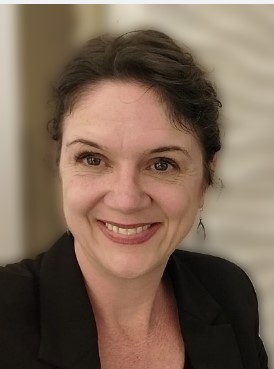
São Paulo – In the month of March, the São Paulo-based exporting company Braseco closed a sales deal of US$ 3 million to supply doors, kitchens, bedrooms and bathrooms to a Lebanese construction company. It took one year and a half of negotiations before the deal was closed. On the part of the Brazilian company, the person answering emails, telephone calls, and receiving importers in person was not a serious business executive wearing a tie or eyeglasses. It was a personable, talkative lady wearing a short hairdo, a suit, and well-kept nails. Her name is Damaris Eugênia Ávila da Costa, the director of Braseco, and she is part of the ever-increasing team of Brazilian women in charge of exports to the Arab market.
The secretary general of the Arab Brazilian Chamber of Commerce, Michel Alaby, who has been following up exports by Brazilian companies to the Arabs for over 25 years, reports that women are increasingly present at negotiation tables with the Arabs. Presently, according to him, no trade show or mission to the Arab world that the Chamber promotes is woman-free. The trend reflects a reality of Brazil and many other countries, in which they already are a majority when it comes to owning a business. Women account for 53% of the people heading new businesses in Brazil, according to the Global Entrepreneurship Monitor survey, disclosed in Brazil by the Brazilian Micro and Small Business Support Service (Sebrae).
But are not the Arabs too tradition-oriented to deal with women? “There is a stereotype according to which women and the Arab market do not match,” says the account manager for company Cacique, Argélia Andrade. Younger and older women who have been at the front line of a sale to the Arab world both agree. Argélia, who is in charge of the Middle East and North Africa at the company, which manufactures the Brazilian coffee brand Café Pelé, goes so far as to believe that Arabs prefer doing business with women. “I think women are better when it comes to negotiating, they are agreeable, they go for the deal, they provide support,” she claims.
Damaris, Argélia and other names, such as Raquel Casagrande, of the ceramic tile manufacturer Casagrande Revestimentos Cerâmicos, are cases of success in relations with the Arab world. And they do not sell lipstick or “girly” items, as one might imagine. Damaris exports glass and wood, Argélia deals coffee, and Raquel sells ceramic tiles. Of course, there are also those who trade cleaning products, such as Bianca S. Linck, the trade manager for Brastex Indústria e Comércio, a company that manufactures cleaning cloths, coffee filters, cotton waste and flannel. But cleaning has long ceased to be a women-only matter.
Damaris, aged 49, explains that she became involved in foreign trade because of her talent for languages. “My first job was in foreign trade, at age 18, while I was still in college. It was at a company that represented Brazilian products in Africa and Lebanon. I got the job because I knew English and typing,” she says, laughing at the situation. At Braseco, whose main focus is on sales to the Middle East and Africa, Damaris first worked as an assistant to the director, and now she is the director herself. She took her first trip to the Arab world in 2003, to buy glass. “I went there to buy and ended up selling it,” she says.
Currently, the São Paulo native has a long list of contacts in the Arab world. Her clients in the region, she claims, are all Muslims. “I have never had problems dealing with the Arabs, though,” she says. With a knack for making friends with everyone, Damaris believes that what determines whether a deal is closed is not whether a man or a woman is involved. “It is about being serious with the people that you work with, giving attention to your client, and not leaving anyone’s questions unanswered,” she claims. She laughs while recollecting occasions in which she shared booths with male colleagues at trade shows in Arab countries. “The Arabs would always talk to him first. After realizing that he would ask me everything, they would start dealing with me,” says Damaris, who holds a degree in Advertising and a postgraduate degree in Marketing.
And how is your family?
According to Damaris and other executives who deal with Arabs, negotiations with them always involve the family. “The Arabs are very family-oriented, it is impressive. I always tell them about my family, I show them pictures, and it is amazing how it helps establish a bond,” she says. Argélia, of Cacique, has a similar opinion and has met the families of many of the Arabs to whom she sells coffee. “One Arab who impressed me a lot was this Moroccan. I have been told that Arabs do not usually bring people into their homes, and this one invited me over for dinner at his house, with his family. I met his wife, who was beautiful and very nice, I met his brothers, their wives, I was flattered,” she claims.
Argélia, 47, holds a bachelor’s degree in Business Administration with a specialization in Foreign Trade, and started working in international trade at a company that imported blood oxygenators. After that, she worked for another food company, and then Cacique. It was in the latter that she joined the trade department and started having direct contact with the Arabs. When it comes to defining her counterparts in the Middle East and North Africa, Argélia uses the word “nice” a lot. “I have been to Morocco and Tunisia. My clients there are extremely nice, they give us all of their attention whenever we are in their countries,” she claims.
Argélia says that the Arabs enjoy establishing closer ties with the people they do business with, and she believes that this makes her job easier. According to the account manager of Cacique, they also like collecting information about the company that they are buying from, and making sure it is reputable. How about when the negotiation comes to the “price” issue? Well, this is a delicate subject, say the interviewees who have either sold or negotiated with them. “Arabs need to leave the negotiation believing that they have won, even if it is a matter of cents,” says the executive. “When it comes to prices, they drive a hard bargain,” claims Raquel, of Casagrande.
At the company, Raquel is in charge of exports to Central America, but always helps the team out at trade shows in the Arab world. “I have never had any problems in dealing with the Arabs. If they do have anything against negotiating with women, I have never noticed it,” she says. With the Arabs, Raquel kicked off deals that resulted in sales of 15,000 to 20,000 square metres of ceramic tiles. Raquel believes Arab importers enjoy negotiating with Brazilians in general. She claims that the Casagrande company usually develops long-standing relations with its clients, which leads to relations of trust, something that Arab importers hold in very high esteem.
The daughter of one of the Casagrande group’s founders, Raquel, aged 55, claims that she was encouraged to enter the world of business from a young age. As soon as the group was established and exported wood, she was an adolescent, and paid close attention to talks with importers who came to the company. Raquel, as well as Damaris and Argélia, says that she loves her work. “I love to work. This is not work to me, this is leisure. Exporting is a very dynamic affair, you get to deal with so many people, so many cultures, you learn so much,” she says. Until this day, Raquel is encouraged by her brother, Renato Casagrande, the group’s current director, to actively participate in business.
A rookie among Arabs
Bianca is beginning to join the team of negotiators with the Arabs. She took Brastex’s products to the Arab countries for the first time in April this year, during a mission to Egypt and Lebanon. At age 33, with blonde hair and strikingly beautiful, the manager had no problems discussing pricing, shipments, or product adaptations with the Arabs. “I was very well received. There came a moment in which six men from the same company were sitting across from me,” she says, recollecting a business roundtable she attended in Egypt.
Just like most women who travel to the Arab world, Bianca was warned before travelling that she was supposed to wait for Arab men to hold out their hand to greet her at the beginning or the end of a conversation, because Muslim men usually do not greet women with handshakes. On one occasion, however, she forgot it and held out her hand before the importer did. “I pulled my hand back right away and he said: no problem you may hold out your hand,” she recalls. Bianca claims that she was surprise with the receptiveness, because before leaving Brazil she had been told that her being a woman would lead to restrictions when the time came to do business.. She did well, but was not spared the bargaining. “All that he cared about was as discount,” she says.
An opinion
“As a whole, Arabs are receptive towards women in negotiations,” says Alaby, of the Arab Brazilian Chamber. He highlights the fact that Arabs enjoy developing relationships of friendship and trust, and this favours women, who ascribe greater value to relationships. “Besides, women know how to say yes and how to say no,” says Alaby. This bluntness, or clarity in doing business is well regarded by Arabs, according to him. However, receptivity to women is at different stages in different Arab countries. In Saudi Arabia, for instance, there are restrictions to female participation in business.
According to Alaby, the presence of women in Arab business environments started gaining acceptance approximately 10 years ago. The technical director of the Sebrae Brazil, Carlos Alberto dos Santos, claims that the growing participation of women in new businesses, particularly at micro and small companies, where it is the strongest, reflects social change. “There is greater participation of women in culture, politics, economy, as university professors, electoral candidates. Business could not be an exception,” he claims.
*Translated by Gabriel Pomerancblum
