

São Paulo – Far away from Brazil, in the African continent, little Abdel and little Samira see their families involved in a tribal fight. They are in Darfur, Sudan. In the neighbouring Ethiopia, little Ayanas and Dawits have lost uncles and fathers in a territorial dispute with Eritrea. In Rio de Janeiro, underage Anas and Joãos have their parents involved in drug trafficking, and the loss of close ones for murder is commonplace. All of these children, in Africa or in Brazil, have something else in common, besides daily coexistence with violence: the difficulty in learning.
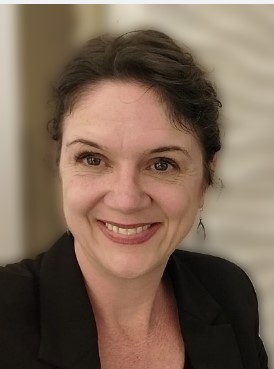
A Brazilian woman from the city of Rio de Janeiro, named Yvonne Bezerra de Mello, has been to Sudan, Ethiopia, Angola and the viaducts of Rio de Janeiro, and she created a means for children exposed to violent situations to learn as much as those who have structured families, love, caring and money. The pedagogical method, entitled Uerê-Mello, started being devised during Yvonne’s trips across Africa in the 1970s. At that time, she lived in France and travelled to Africa to work as an interpreter. “I started becoming interested in the learning problems of children in poor countries,” says Yvonne.
Aside from the studies for the graduation course in Languages that she was taking at the Sorbonne University, in Paris, Yvonne conducted in-depth research on the subject. She returned to Rio de Janeiro in the early 1980s, and there she continued to invent her different way of teaching – this time, however, spending time with the children in the streets of Rio de Janeiro. From the establishment of the first classroom, underneath the Leopoldina Viaduct, in Rio, until today, when the project is developed in a school for 430 children, sixteen years have gone by.
Yvonne’s method has no big secrets. The focus is on working to overcome the memorisation difficulty that the children have as a consequence of blockages caused by living amidst violence. Simple techniques are used, such as a lower time period, of fifteen minutes, for conveying each set of contents. The thematic variation makes the student’s brain more agile. Oral exercises are applied before the written ones as well, something that helps the retention of knowledge. In-class interaction is a priority. There is no desk for the teacher and the children do not copy from the blackboard, they only answer the questions in their notebooks.
"In the beginning of the class we have a conversation. We ask what the child’s day was like, what nice things happened, what they ate, how the food was cooked, what happened their father and mother. It is a roundtable, we make the child express their fears," says Airton Ribeiro, one of the teachers in the project. According to Ribeiro, the difference in the development of children compared with public school students is evident. The school is located in the Baixa do Sapateiro community, at Complexo da Maré, a complex of favelas (slums) in the North side of the city of Rio de Janeiro.
"Here at (project) Uerê I learn faster and more," says Maria, aged 10. The girl entered the school in 2006, after having studied in a public school. She claims to prefer Uerê and believes that she used to learn less at the public school for two reasons: “at the public school I did not pay as much attention (to the class) as I do here, there were too many people talking,” she explains. According to Maria, the way in which the teachers teach, in her current school, is also much more interesting.
Equality of intellect
The students in the Uerê project are mostly children from danger zones. They are minors who live near drug trafficking, in areas of conflict between factions such as Comando Vermelho and Terceiro Comando, who witness people being murdered, violent police and criminal action, and some have alcoholic or drug-addict parents, or suffer domestic abuse and aggression. Yvonne embraced the cause of these small ones, willing to give them the chance of being "big". "Everyone talks about poverty, but no one talks about the differences between classes in terms of intellect,” she explains.
Ribeiro, a teacher who has been with Yvonne for approximately ten years, ever since she used to work in the streets, tells stories of students who came to the project with no structure and are now well-adapted adolescents. He remembers one of the girls, who arrived at the school at age six, had drug-addicted parents, and gave them a real hard time. “She had no limits,” he says. Now an adolescent, the girl is an exemplary intern with a large hotel chain in Rio. “Many are already going to college,” says the teacher. The school accepts children aged from 4 to 18, from kindergarten through high school. They learn seven different languages.
This year, the Uerê-Mello methodology is going to start being implemented in 150 public schools in danger zones in Rio de Janeiro. Yvonne should start training school teachers in May. She is also going to launch a book on her methodology by the Senac publishing house. The Uerê-Mello method has not been taken to other countries yet, but the author would like it to. “My idea is to help the highest possible number of children,” she says. The Uerê project is maintained by means of donations, mostly from abroad.
*Translated by Gabriel Pomerancblum
