

São Paulo – The issues posed by a new language and culture clash are some of the challenges Syrian refugees encounter in Brazil – but not the only ones or the biggest. Here, they enjoy the same rights granted to any foreigner: they are allowed to study, work and apply for documents. Along their journey, they experience the same problems the Brazilian population does. Paperwork requirements when applying for documents and setting up businesses, and lack of safety are some of their complaints. Still, Brazil was the country that welcomed them, and this is where they can rebuild their life far from the war.
According to information from the Brazilian Ministry of Justice’s National Committee on Refugees (Conare), 1,894 Syrian refugees are sheltered in Brazil, whose total refugee population is 7,948. Syrians make up 23.83% of them, followed by Colombians, Angolans, Congolese, Lebanese and Palestinians.
In September 2013, Conare passed a resolution to facilitate the entry of Syrian refugees in Brazil, reducing the number of documents required. The Brazilian diplomatic representation in the asylum-seekers place of residence gives them a 90-day tourist visa and, on arrival, they apply for shelter. The application is reviewed by Conare, which either approves or denies it.
Open doors
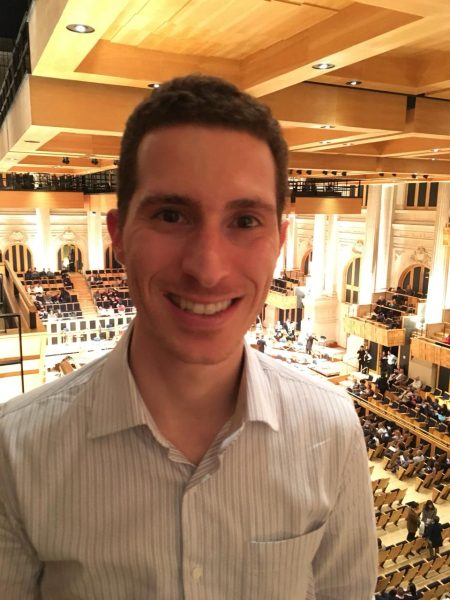
The Syrian mechanical engineer Talal Altinawi, aged 42, arrived in Brazil in December 2013, coming from Lebanon. He had left Damascus for Beirut in January that year. Altinawi fled with his 32-year-old wife, Ghazal, and children Riad, who is 13, and Yara, aged 10.
“I was thinking of going to in Switzerland, Australia or the United States, but I couldn’t get a visa. During my time in Beirut, I would make the rounds of embassies and consulates looking for a country to give me shelter. They all required visas and papers. When I phoned the Brazilian embassy, they told me that in October 2013, Syrians seeking asylum in Brazil would get special treatment,” says Altinawi, in a reference to the Conare’s resolution, which became effective in September 2013. “I chose to come here. I knew nothing of Brazil, an unknown country to us Syrians. All I knew about Brazil was: coffee, São Paulo, Rio de Janeiro, and football,” he recalls.
For his first three months in Brazil, Altinawi was helped by a friend who’s lived in the country for 19 years, and of Caritas São Paulo, which assists refugees in the city. But adapting wasn’t easy. “It was all really difficult. Everything seemed new. The language, the culture, the way of thinking. Things are slowly becoming easier and easier. I’ve learned to speak Portuguese, my children are going to school, but it’s still hard. São Paulo is a very dangerous, very unsafe city, the Brazilian economy is in a slump. Here it’s very hard to obtain documents or rent a house,” he says.
Thirty-year-old computer engineer Fadi Mohamed landed in Brazil in November 2013, but hasn’t been able to secure a good job or learn to speak Portuguese yet. A native of Homs, Mohamed left Syria in 2012 for Alexandria, Egypt. There, he could find no employment because the political scenario was tense, ever since president Hosni Mubarak had stepped down a year earlier. The solution was to seek asylum in Brazil.
“This was the country that accepted me legally. The only way you can get to Europe is in those immigrant boats. I couldn’t get a job in Egypt, because by the time I got there things had deteriorated badly. There weren’t even any openings for them. I am a computer engineer, and still I can’t land a job. Brazil has opened its doors, but it provides no support. Whenever Europe opens its doors, it gives you support, assistance,” says Mohamed, who’d rather not show his face in the photos.
Another refugee, who spoke on condition of anonymity, left Syria because in order to stay, he would have to join the Army. “I left Damascus in 2012, went to Beirut and stayed there a month. I also went to Jordan and then to Dubai (the United Arab Emirates), where I lived for a year. I went to the Brazilian consulate because it was easy to get a visa for Brazil, but [the government] here won’t help me rent a house so I can enroll in a university. When I got here, I had to make a three-month rent down payment, make a security deposit, or find a guarantor. How am I supposed to find a guarantor?!,” says the refugee, who is 24 and a works as a cook.
Modern legislation
The Spokesperson for the United Nations High Commissioner for Refugees (UNHCR) in Brazil, Luiz Fernando Godinho claims the country has accepted growing numbers of refugees over the past few years. This is a result of the country’s “modern” legislation, but is also the root of the problems refugees experience in adapting to Brazil.
“The number of people seeking asylum in Brazil has more than doubled in the last few years. Besides the fact that there are more conflicts going on in the world, this is also because Brazil embraces them – but it does take its toll. The government knows there are problems and is working on solving them. Faster screening of asylum requests and improved document issuance are some of the aspects the government is preparing to work on,” says Godinho.
On the other hand, says the Unhcr’s representative, refugees need to understand that they are starting a new life in a new place and that they will live with the reality of this new country. “If this refugee is a doctor, engineer, businessman, he must understand the need to revalidate his diploma, to adapt, that one can’t go against Brazil’s labor regulations. We know it’s a difficult decision, but to become a refugee is an individual’s choice, as well as to choose where to go”, he said.
Despite complaining about the troubles they face, refugees also praise the country. “All of them acknowledge the opening that Brazil offered and point out the peacefulness to be able to restart their lives here. They say they fell welcomed”, says Godinho.
Brazilian daughter
Altinawi left Syria after being arrested. He was in jail for three months after the army took him for another man, who also is named Talal Altinawi and was wanted by the government. “When they let me go, they said that I could be arrested again for the same reason. So I left.”
Here, Altinawi worked in an engineering company and opened a stand to sell children’s clothes, but neither project worked. Now, he believes his recipes of Arab cuisine will work. “A friend said that I cook very well so I decided to bet on the cuisine”. He already opened a Facebook profile called Talal Comida Síria (Talal Syrian Cuisine) with the help of a journalist, and already attended fairs and parties with his typical dishes. “I would like to open a restaurant, but it’s very hard and expensive. For now, I’ll keep cooking at home”, he says, standing beside a machine used to prepare pastry for esfihas at the living room of the apartment he lives, in the neighborhood of Brás, in the city of São Paulo.
While he bets on the cuisine, Altinawi builds his life here. His Syrian sons are enrolled at a public school and already speak Portuguese. Four months ago, Iara was born, the first São Paulo native of the family. Altinawi’s relatives live in Syria, United States and Turkey. Despite missing them, he doesn’t think about returning to his home country. “If things got better and I returned, I would have to start from the ground up again after being five years away from my life in Syria. My sons will have learned Portuguese and would have grown here. I don’t know if I would return”, he says. That doesn’t mean, however, that São Paulo is the city in which he wishes to live.
I think about leaving São Paulo to go to a safer place in Brazil. I like Curitiba (Paraná state capital). But the place where there’s work is São Paulo. There is no better place for it in Brazil”, he says.
Mohamed also doesn’t think about returning to Syria. “There is simply no way. If I come back, I would have to join the government’s army”, he says. But, in contrast to Altinawi, he could leave Brazil if he can’t find a good job. His 24-year-old wife arrived four months ago and is pregnant. “The people here is very receptive, they treat me very well, but a job position is a problem”, says Mohamed, who lives in São Bernardo do Campo, a city in the São Paulo metro area. “My wife’s still adapting. She is pregnant. We will wait until my son is born and then decide what to do”, he said.
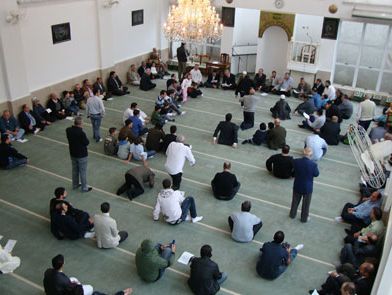
The cook, that didn’t want to be identified, has also been facing problems to adapt, but plans to insist on Brazil before thinking about leaving. “In Syria, I couldn’t stay. Despite already fulfilling the compulsory military service, I would have to join the army or leave the country. I like it here, but there are good and bad things. Last week, I was mugged here in the street (Barão de Ladário street, where Pari Mosque, which gives him shelter, is located). There are a lot of thieves here and a problem with drugs”, he says.
*Translated by Gabriel Pomerancblum and Sérgio Kakitani
