


São Paulo – On October 14, Saudi state-owned oil company Saudi Aramco announced that in a few years it would produce shale gas for its clients. As is the case with Saudi Arabia, Oman, another great global producer, aims to start commercially exploring its 849,500 cubic metres of unconventional gas, another name given to shale.
The reason that has caused the owners of the main oil reserves in the world and the main exporter of “regular” oil and gas to invest in shale is the rapid promotion of exploration of shale oil and gas by large consumers of crude oil. Among them, and mainly, is the United States. The North Americans have been exploring shale commercially since the 1980s, but evolution of product extraction technology in recent years should allow for rapid growth of shale in years to come.
The United States Energy Information Administration (EIA) says that since 2011 the united States have been capable of producing 95% of the natural it consumes. In 2011, the United States produced the equivalent to 651.1 billion cubic metres of natural gas, of which 220.8 billion cubic metres came from shale. The EIA forecast is that in 2040 the country’s gas production should reach 937 billion cubic metres. Of this total, 472.7 billion cubic metres, or half the production, should come from shale.
According to the oil and services manager at consultancy Bentek Energy, Anthony Scott, this year the country imported 84.9 million cubic metres of natural gas as two cities in the country, Boston and Elba Island, do not have gas pipelines. According to Scott, it should not take long for these two cities to stop importing the product, as there are already projects for construction of pipelines to them. Thus, the United States should once and for all stop importing gas, becoming self-sufficient in the product, which they already export significant volumes of.
According to Bentek, a division of Platts, one of the world leaders in analysis of commodity prices and figures, in 2009, 17% of gas production in the US came from shale. This percentage should reach 39% in 2013 and 50% in 2020.
Oil
Oil production from shale is lower than that of gas, but it is also helping the United States depend less on imports. According to the annual global market study by British Petroleum, in 2012 the United States imported on average 10.587 million barrels of oil and consumed 18.555 million. BP forecasts that the United States should end 2013 with greater oil production than Saudi Arabia and says that by 2030 the country should produce five million barrels of shale oil a day.
According to Bentek projections presented to ANBA by Scott, the United States and Canada should increase their oil production by 4.8 million barrels a day by 2018. Of this total, 2.7 million barrels will come from the United States and 1.5 million, from Canada. Part of this growth in production should come from shale. According to EIA, in 2011 shale oil production in the United States totalled one million barrels a day. This year, it should total 2.5 million barrels a day. There are also forecasts for the US consumption to drop. However, according to Scott, the US will “likely never stop importing oil”.
Although the United States is the main global importer of oil, it is not the only one. Other great consumers of the product have significant shale reserves in their territories. EIA says that China has the largest shale reserves in the world, estimated at 5.29 trillion cubic metres. Argentina, Mexico, South Africa, Australia, Canada, Libya, Algeria, Brazil, Poland, France, Norway, Chile and India also have significant reserves. Argentina already produces oil from shale; Brasil is yet to confirm much of its reserves. France and some states in the United States prohibit the exploration of shale due to an environmental threat.
Not everyone can explore shale like the US, but in the evaluation of the deputy head of the Electronics and Engineering Institute at the University of São Paulo (IEE-USP), geologist Colombo Tassinari, stocks of these countries are already enough to affect sales and oil costs.
Tassinari believes that the barrel of oil may cost US$ 60 in the long run. Bentek figures are different, but also forecast a drop. The company forecasts that the Brent oil should end 2013 at US$ 108 and should drop to US$ 87 by 2018. “US and Canadian growth should provide downward pressure on world oil prices over the next five years with geopolitical disruptions such as Libya’s civil war and the Iranian embargo providing upward pressure from our price outlook,” he said.
Infrastructure is the challenge
The United States is in an advanced process for exploration of unconventional gas, but does not want to be alone in the business. According to Tassinari, the US has been pressuring other countries with significant international reserves to invest in exploration. “In the United States they extract, as the country has a more agile legal system. They show they want other countries to invest in unconventional gas to reduce oil prices worldwide. They have been pushing for other countries, including Brazil, to invest in the product,” he said.
However, it is not as easy for other countries. According to Tassinari, exploring oil from these rocks is even more profitable than regular oil, though infrastructure is necessary for such.
“Regular” oil is located in rocks called “source rocks”. The organic material sediment accumulated over millions of years is “trapped” within permeable rocks. Shale, in turn, is found in little permeable rocks, which only free the gas when cracked.
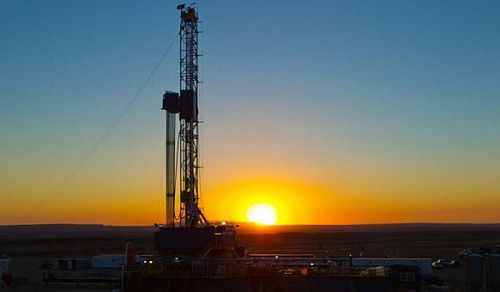
In this process, a probe is inserted vertically in the surface. It drills through the soil and rock to a depth of between 1,000 and 3,000 metres and then starts moving horizontally. Jets of water, sand and chemical products are injected into the rock, at high pressure, to fracture it. When the stone is fractured, the gas or oil within is captured. The temperature of the rocks defines whether what is in it is gas or oil.
Exploration of shale may cause environmental damage, and that is why it is prohibited in some places. As it uses chemical products and significant volumes of water, rock fracturing may contaminate the soil if the water with chemical products is not treated and disposed of or reused correctly. In areas with lack of water, the technique may, according to the EIA, generate shortages. There is also a small risk of earthquakes in some regions.
Scott says that most of the areas that have petroleum also have shale oil and gas. It is, however, necessary to invest in technology for extraction. “The largest challenge to the wide scale replication of the shale oil and gas boom in North America will be in the infrastructure to support the development. If countries invest in all the infrastructure necessary to support development (frac sand, railroads, pipelines, people, drilling equipment, etc.), shale oil and gas could certainly provide a competitive threat to conventional oil and gas exploration around the world,” said Scott.
*Translated by Mark Ament
