


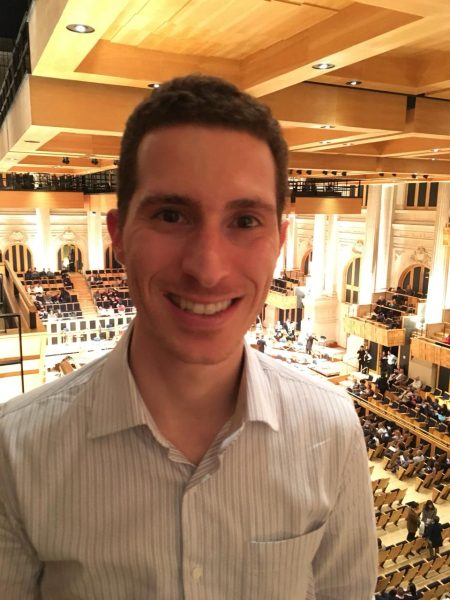
São Paulo – The effort was worthwhile. Almost 12 years after the day in which he had the idea of producing a movie about the story of his Syrian great-grandfather and having released the long movie, director Otavio Cury now celebrates the positive repercussion of the movie that opened at the 7th Arab World Cinema Exhibit, in June. The production has also already been shown at the Social Service for Commerce and should also be shown at another two cinema festivals this year, one in Brazil and another abroad.
“The repercussion the movie generated was very good, I am very happy about that. Constantino is not a commercial movie, and that is why it has different strategies for promotion and distribution,” said the movie maker.
Constantino tells the story of Cury’s great-grandfather, Daud Constantino Al-Khoury, who was a journalist, teacher and playwright and is considered one of the forefathers of Syrian theatre, alongside Abu Khalil Al Qabbani. Constantino was born in Homs, in 1860, and taught maths and arts. In 1891, he adapted play “Princess Genevieve”, acted by his students and one of the first Syrian theatre plays at a time in which the country was dominated by the Ottoman Empire.
In 1909, Constantino became the editor of Homs News, in which he published poems and articles about the situation of the Arabs. In the “Arab renaissance”, Constantino and other intellectuals published the first texts in Arabic after 400 years of Ottoman domination in the region.
When he was a teacher in Homs, he started writing a book that would only be published years later and that would be the seed for the movie produced by his great-grandson. When he migrated to Brazil, in 1926, the manuscripts of the “Compete Works by master Daud Constantino Al-Khoury” were still in his possession. Constantino died in 1939, without having published the book. In the 1960s, Syrian diplomat Shakir Mustafá was given the manuscripts by chance and published them in Classic Arabic years later.
It was during a trip to Homs with his family, on September 13, 2001, that Cury learnt about the book. “The stories rapidly spread throughout the Middle East. I said that I was Constantino’s great-grandson and that news soon spread. They heard that his descendants were in Syria and promoted a reception for us on the only evening we spent in Homs. At the time, I heard about the book and became interested,” recalls Cury.
Since then, he started seeking documents to retell the story and biography of his great-grandfather. He then sought sponsorship to produce the movie. With money and a screenplay, Cury and part of the team travelled to the Middle East in 2009 to shoot Constantino.
The director stated that, although the movie does not aim to compare the reality of Constantino with that of modern day Syria, the history of his great-grandfather shows the struggle of some people for the right to freedom of expression and their opposition to the repression of dictatorial governments. “The movie shows the fight for freedom at his time (the great-grandfather’s),” said the director.
Cury is already preparing another movie for release this year, Xié, about the volunteer work of surgeons in the Amazon. He should also go on with the story of Constantino: “To work on the movie I brought together a significant volume of documents, images and stories. I plan to show that in a book,” he said. These projects are already being developed. Apart from them, the movie director is getting ready to return to the Arab theme with stories about the movements and migrations of the people of the Middle East.
*Translated by Mark Ament
