



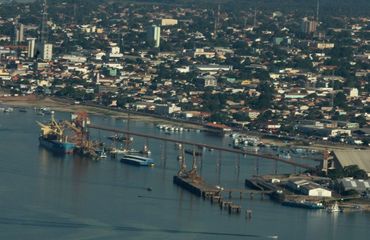
São Paulo – Algeria’s multisectorial conglomerate Cevital plans to invest over US$ 1.5 billion in projects in Brazil. The company’s area of interest in the country is agro industry, including commodities processing, food manufacturing, and shipping out production at inland ports of their own.
“We are buying plots and applying for environmental licenses. We will build agro industry complexes, one in Vera (Mato Grosso) and another in Santarém (Pará),” says Paulo Hegg, the executive representing Cevital in Brazil. According to Hegg, the plants will manufacture animal feed, vegetable oils, margerine, fertilizers and ethanol.
The businessman notes that in addition to plants in Africa, Cevital owns operations in Europe and is working on entering the United States. The operation in Brazil, he says, will be the group’s first in South America.
“They already import billions of dollars’ worth of goods from Brazil, and now they’ve decided to bring their know-how in logistics and ports from Algeria. And they are intent on buying direct from farmers,” says Hegg of the conglomerate’s decision to set up operations in Brazil.
According to Hegg, US$ 500 million will be invested in Vera and in excess of US$ 1 billion in Pará. In Santarém, apart from an agro industry complex, Cevital is building four inland ports to ship out production.
The group will also operate out of the Miritituba district, in Pará state’s Itaituba municipality, where inbound cargo from the Midwest will be transhipped before being carried to Santarém.
The executive and representative claims the Algerian group’s production will be sold domestically and overseas. According to Hegg, construction work for Cevital’s plants and ports in Brazil are slated to begin in two years.
The cities
Nilso Vígolo, mayor of the Vera municipality, affiliated with political party PROS, says the city is donating a 130 hectare plot for Cevital’s agro-industry complex to be built in. The mayor hopes the unit will benefit the city.
“We are expecting to see increased tax revenues, jobs, and better living conditions.” Vígolo says the local industry is weak and mostly focuses on wood. He points out, though, that the municipality is a major producer of commodities such as maize, soy and rice.
Vígolo believes the arrival of a large business concern like Cevital could entail an important transformation. “Municipal tax collection goes up and then health, education and security all tend to improve,” he says. Currently, the municipality collects R$ 30 million (US$ 11.5 million) in taxes. Once the Algerian multinational’s operations are up and running, the city hall expects the figure to increase by 200%. On the jobs front, as many as 1,500 new positions could open up in the municipality, whose population is around 12,000.
Valdir Matias Jr., the secretary for Planning and Development of Santarém, says the Algerian company is discussing buying a private 600 hectare plot. The same plot will be used for building the river terminals and the agro-industry complex. According to the secretary, Cevital will carry cargo from inland ports in the city to Belém or Macapá, from whence the goods will go to sea.
Matias also points out potential advantages to local industry once maize and soy start being processed locally, since the city’s economy relies on ports activity. “This is a groundbreaking project. Our industry is very weak. This project is strict when it comes to environmental legislation, and we hope it will spur sustainable development,” he says.
*Translated by Gabriel Pomerancblum

