


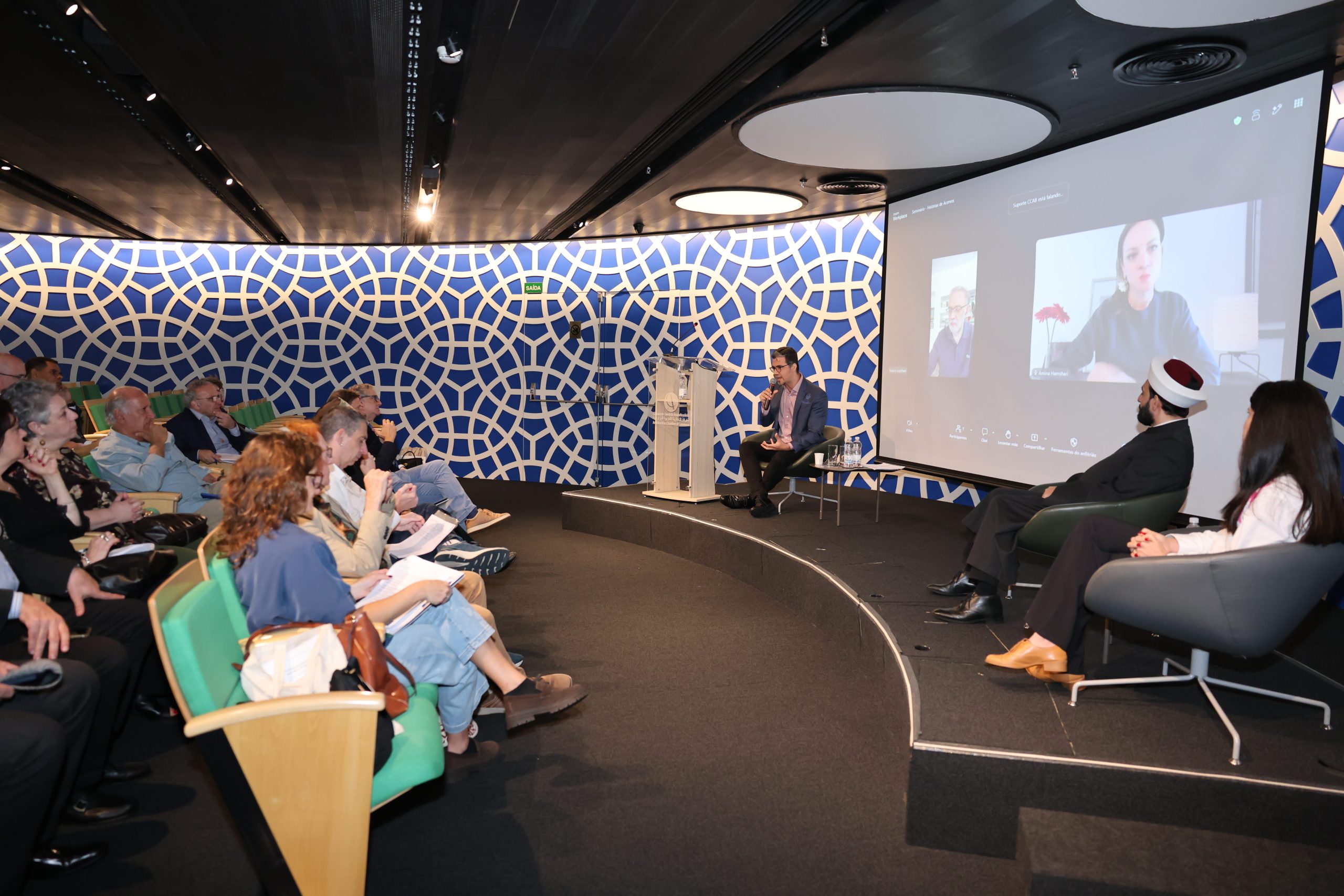
São Paulo – The seminar “Stories from the Archives: Unlocking the Memory of Arab Presence in Brazil” brought together discussions on the importance of preserving Arab immigrants’ documents through the Digitalization Project for the Memory of Arab Immigration in Brazil. The event was held at the Arab-Brazilian Chamber of Commerce (ABCC) in São Paulo on Friday (13). The project is a partnership launched in 2016 between the Arab Chamber and Saint-Esprit de Kaslik University (USEK) in Lebanon and now also includes the Edward Said Chair at the Federal University of São Paulo (Unifesp).
At the opening of the event, ABCC International Relations Vice President & Secretary-General Mohamad Orra Mourad recalled his own family history as a tribute to the achievements of Arab immigrants in Brazil.
“These stories always inspire us with their courage and determination,” he said.
ABCC Vice President of Marketing Silvia Antibas spoke about the project’s early steps, which began as a partnership between USEK and the ABCC initially to recover documents on Lebanese immigration and was later expanded.
“The project aims to map, digitize and publicize the archives of Arab immigration in Brazil.”
Edward Said Chair Coordinator Javier Amadeo said the partnership between the ABCC, USEK and the Chair is taking the project into a new phase and that the team is working to launch a multimedia platform.
“I believe we are working on a project of extraordinary importance from a social and academic perspective. It is an ambitious project that continues to grow as it progresses,” he said.
Through the initiative, families, individuals, institutions and companies lend their documents related to Arab immigration to be digitized at the ABCC by a Chair team using equipment provided by USEK. After being digitized and catalogued, each document is returned to its owner along with a digital copy.
Antibas said one of the project’s goals is to reach all of Brazil and, to that end, is working to establish new partnerships with institutions in Ceará, Amazonas and Rio Grande do Sul. She told ANBA that it is an endless task as more documents continue to arrive for digitization.
Building the collection
In the seminar’s first panel, titled “Mapping Arab Collections in Brazil,” National Library Foundation President Marco Lucchesi said the collection related to Arab countries began to take shape as early as the 19th century, during Emperor Pedro II’s trips to the region in 1871 and 1876. He noted that the collection offers an opportunity to bring Global South countries together, in what he called the establishment of a “culture of peace.”
The panel also featured researcher Geraldo Adriano Godoy de Campos of the Federal University of Sergipe and Amina Hamshari, Head of Social and Human Sciences at UNESCO’s Doha office. They presented ArabLatinos!, a UNESCO project aimed at strengthening ties between Arabs and Latin America. At the event, Icarabe President Natália Calfat said the institute is restoring 120 documents and noted that it is one of the institutions lending documents for digitization.
Sheikh Mohamad Al Bukai, religious leader of the Brazil Mosque in São Paulo, also took part in the panel. Founded in 1929, the mosque is a repository of the memory of the Arab and Muslim community. He said digitizing documents is essential to preserving history, as his own institution has already lost physical records in floods that hit its premises.
University of Arkansas Professor Joel Gordon shared his experience as a researcher and discussed the challenges researchers generally face in accessing public archives. Columbia University Professor Joseph Massad gave a lecture titled “The Price of Recognition: Islam in the West.”
The ABCC was also represented at the event by Treasurer Mohamad Abdouni Neto and board member Arthur Jafet.
Read more:
Genesis of an immigration memory project
Translated by Guilherme Miranda
