



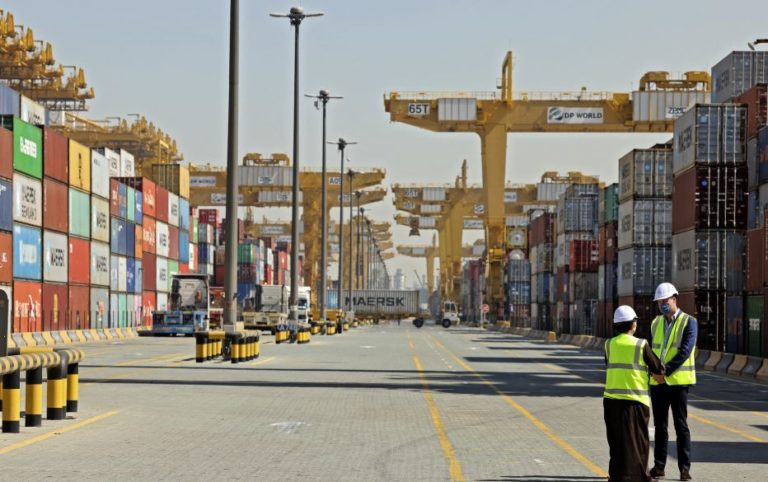
São Paulo – A study conducted by the Arab Brazilian Chamber of Commerce’s Market Intelligence Department shows that Arab countries could be the destination of some of the goods impacted by the United States tariff hike. This Wednesday (6), a 50% tariff on Brazilian goods entering United States soil has come into effect, which may render sales of said goods to the world’s biggest economy impractical.
The Arab Chamber’s survey covers only goods and sectors included in the sweeping tariffs put in place by United States president Donald Trump. As such, it does not include items exempted from the tariff under a more recent exceptions list, among them small and mid-sized aircraft, orange juice, crude oil, and wood filler.
The study was designed to find “avenues” through which to increase exports from Brazil to Arab countries. Arab Chamber president William Adib Dib Junior said the United States tariff hike has paved the way for exporters to turn to the Arabs for new markets.
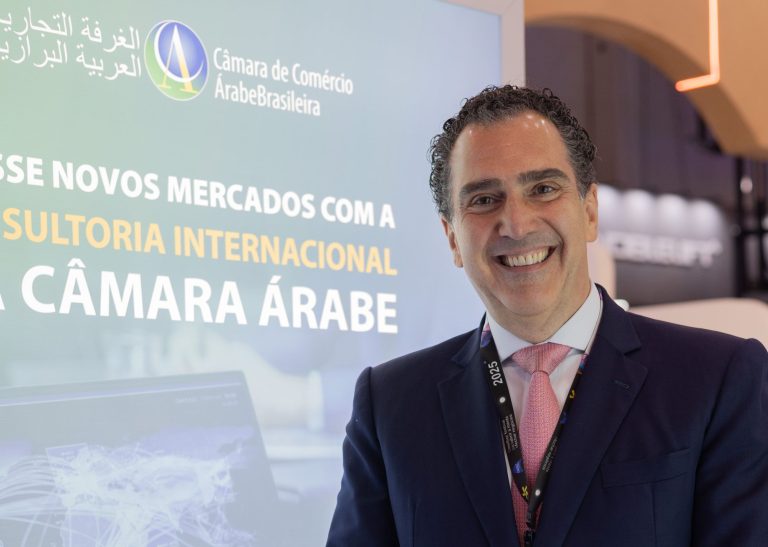
“These will be loyalized markets because Arabs are more loyal, more conservative. These new relationships will tend to be sustained. Even if the tariffs change, either during the Trump administration or in the future, I believe any doors opened at this difficult time will remain thus,” he argued. Dib said there is room for Brazilian products not currently sold to the Arab world, such as iron-steel byproducts, but he believes the biggest opportunities lie in increasing volumes of items already being sold to Arab countries.
Trump initially implemented a 10% tariff on Brazilian goods entering the United States and then announced an additional 40% on July 9. He ascribed the move to judicial issues – which do not fall under the purview of the Executive Branch – involving former Brazilian president Jair Bolsonaro and an alleged deficit sustained by the United States in its trade with Brazil. However, the United States runs a surplus, and Brazil, a deficit in bilateral trade, although the delta is growing narrower.
According to the Arab Brazilian study, which relies on statistics from the Brazilian Ministry of Development, Industry, Trade and Services and the United Nations, in 2024, exports from Brazil to the United States reached USD 40.4 billion, and imports to Brazil from the United States reached USD 40.7 billion, resulting in a deficit of roughly USD 300% million on Brazil’s side. In 2022, Brazil exported USD 37,4 billion worth of goods to the US and imported USD 51.3 billion, leading to a USD 13.9 billion deficit.
Brazil’s top exports to the United States are crude oil, semi-finished iron or steel products, coffee, non-conifer wood filler, unalloyed pig iron, light oil, small and mid-sized aircraft, beef, and orange juice.
Conversely, Brazil is seeing a widening surplus in its trade with the 22 Arab countries combined. In 2022, exports from Brazil reached USD 17.7 billion, and imports to Brazil reached USD 15.03 billion, yielding a USD 2.68 billion surplus. The surplus climbed to USD 8.66 billion the following year and hit an all-time high at USD 13.4 billion in 2024. Brazil-Arab trade is driven by commodities. Brazil sells mostly sugar, beef and poultry, and grain.
Considering the new tariffs, the document includes a list of Brazil’s top exports to the United States in the past five years that could either find a new market in the Arab world or have their sales increased there. Out of the 22 existing countries, the study picks three that could potentially take in each product.
Opportunities are available in Saudi Arabia, Kuwait, and Algeria for semi-finished or unalloyed iron or steel, whereas raw coffee sales could increase to Saudi Arabia, Algeria, and Egypt. Saudi Arabia, Egypt, and the United Arab Emirates could be targets for refined oil and frozen beef from Brazil, while Egypt, the United Arab Emirates, and Morocco are potential markets for other semi-manufactured steel alloys.
Bulldozers and angledozers, loaders and front-end loaders, sugar, conifer wood, wooden doors, doorframes and sills, road graders, other plywood made from wood sheets under 6 mm thickness and longitudinally sawed or split pinewood over 6 mm thickness are other items exported to the United States whose sales potential in Arab countries could be explored.
The study also lists average tariffs levied in Arab countries on the goods met with 50% rates in the United States, including no tariff on coffee, 0% to 6% on beef, 0% to 5% on pinewood thicker than 6 m, and 0% to 12% on semi-finished iron/steel products, depending on the country. The tariff on sugar in Arab countries ranges from 0% to 20%. Rates on refined oil, bulldozers and angledozers, and road graders are fixed at 5%, and those on loaders and front-loaders range from 5% to 6%.
Tariffs range from 5% to 10% for other plywood under 6 m thickness, 5% to 12% for semi-finished steel alloys, 5% to 20% for conifer wood, and 5% to 30% for doors, doorframes and door sills.
The road to new markets
The document outlines a potential work plan to find or broaden markets for these items in Arab countries, with actions along three “pillars”: raising awareness to new international trade dynamics; diversifying trade through international missions and investment attraction; and facilitating trade through removal of barriers, issuance of business visas, and the fast-tracking of agreements in negotiation between the Arab countries and the Mercosur.
Still this week, Arab Chamber executives will meet in Brasília with government entities, officials from the Legislative branch, and Arab diplomats to discuss the Arab Chamber study and the opportunities available going forward.
“Those are different countries, with different habits, and that’s where the Chamber can assist not only businesspeople but the government, which can steer this market, whether it be through government missions or business missions. We have several options to provide them with safety and facilities of some kind. Whether it be through consulting or presentations from businesses, from buyers and sellers, we can assist and assuage small and mid-sized business owners who need a destination for their products,” said Dib.
Translated by Gabriel Pomerancblum
