



São Paulo – Brazil will transfer its experiences in social protection to Egypt’s government in the way of sending reports of its best practices and being open for the Egyptians to attend events in Brazil related to the issue.
The achievement of this cooperation is the result of a joint mission taken by the Centre of Excellence against Hunger from the United Nations World Food Programme (WFP) and the Brazilian government from March 9th to 13th in the Arab country. The visit to the North Africa nation was requested by the Egyptian government itself due to Brazil’s know-how in the creation and implementation of social policies.
According to Sharon de Freitas, programs official of the Centre of Excellence, the Egyptians demonstrated great concern in taking its kids and youth off of the streets. “Through the Brazilian Cooperation Agency (ABC, in the Portuguese acronym), we will send the best practices that Brazil has in the areas of their interest. And if there’s a workshop here [about social protection], they will be invited also”, she said.
“We visited the Vocation Model Centre, where they showed us what they’re doing to take the kids off the streets. They offer wall painting classes, courses on electricity and hydraulic. The students choose what they want to learn”, she explained. Freitas said that the Egyptian government is trying to establish partnerships with the private sector to be able to direct these kids to the labor market.
According to Freitas, the initial focus of the visit was school feeding, but it ended up being expanded due to a request from Egyptian authorities. “In Egypt, the great challenge is to take the kids off the streets, put them in school and guarantee schools to all children”, she pointed out.
According to the Centre of Excellence’s official, Egypt also faces a huge challenge to guarantee universal coverage of school feeding. “They don’t have a universal school feeding as in Brazil. Currently, it’s the international organizations and NGOs that are responsible for the school feeding”, she said.
Freitas reminded that, in Brazil, a 2009 law determined that 30% of the budget earmarked for the National School Feeding Programme (Pnae, in the Portuguese acronym) should go, mandatorily, to the purchase of food coming from family farms. “This link with the family farms draws the attention of the whole world and they were impressed with Brazil’s experiment in this area”, she emphasized.
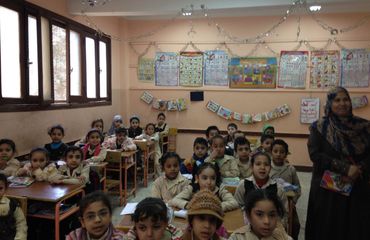
The mission to Egypt also included technical specialists from ABC, National Fund of Education Development (FNE, in the Portuguese acronym) and Brazilian Agricultural Research Company (Embrapa). They also visited schools, crops and the Ministry of Social Solidarity. The visits took place in Cairo and in towns around the country’s capital. There was also a meeting in the Brazilian embassy and other ones with officials from Egypt’s ministries of Agriculture and International Cooperation.
According to data from the WFP, Egypt invests US$ 60 million per year with its school feeding program, reaching 5.3 million out of the sum of 17 million enrolled in the country’s schools.
*Translated by Sérgio Kakitani

