



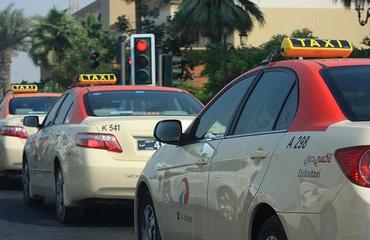
São Paulo – The São Paulo-based company Easy Taxi, the developer of a namesake application that enables users to find a taxi wherever they are at in up to five minutes, has received a R$ 15 million (US$ 6.8 million) in order to expand its operations in the Middle East and North Africa. Currently, the program is working in two Arab cities: Cairo, in Egypt, and Riyadh, in Saudi Arabia.
The investment is being made by Germany’s Rocket Internet and the Middle East’s iMena. Rocket Internet is Easy Taxi’s leading investor, and has injected capital into the company twice: R$ 10 million (US$ 4.5 million) in September 2012, and R$ 30 million (US$ 13.6 million) in April this year.
“Rocket has several partners, and iMena is one of them. They saw a huge potential for us in that region. Our work is 25% technology; the rest is operational. We need to become familiar with the countries’ habits, their culture,” explains Tallis Gomes, the CEO of Easy Taxi.
The businessman declined to disclose the countries that the company plans on entering, but said there are ten of them. “They are all countries which possess considerable taxi fleets and enable viable operations. We will enter countries that have a structure (in which for the program to function),” says Gomes.
According to the Easy Taxi CEO, operations in the Arab countries should begin in a month. The new operations will take place in both capitals and other big cities in the target countries.
Currently, Easy Taxi has 70,000 registered taxi drivers in the cities where the app is available: 27 in Brazil and 29 abroad. By the end of this year, as new cities are included, Gomes says he expects to see 90,000 registered professionals. “By the end of 2014, we are hoping to have 150,000 taxi drivers,” he says.
The operation
Before it enters a new country, Easy Taxi conducts an economic feasibility study. The company also hires a local CEO and maintains offices in each of the countries it operates in.
One of the most interesting aspects of the app is the fact that it is entirely developed in Brazil, but always in the local language of the place it will be used in. “If someone from Cairo comes to Rio de Janeiro, they may call a cab in their own language, and the request reaches the cab driver in Portuguese,” says Gomes.
The studies for developing the app are conducted by Rocket. “Each location has its own features. In Colombia, the streets have no names, they have numbers; in South Korea, we corner indicates the location,” says the businessman.
The app can be downloaded for free in mobile phones running on Android or iOS, as well as Windows Phone and Blackberry mobiles. So far, the app has been downloaded over 1.8 million times worldwide.
Taxi drivers are not required to pay monthly fees in order to use the app. In Brazil, R$ 2 (US$ 0.90) are charged per completed fare. The price varies from country to country. In Egypt and Saudi Arabia, for instance, the fares are not being charged from drivers yet.
“We don’t charge them initially, in order to get a foothold on the market. The taxi drivers must make money (with the app) first. Once they have made money, we begin to charge,” Gomes explains.
The investment goes into marketing actions and operating costs. “We do online marketing and public relations actions,” says the CEO. He does not disclose what city has the most users, but says 50% of downloads take place in Brazil, and the bulk of Easy Taxi operations are located in Latin America. “That is where we have the most users.”
Expectations
Gomes believes Arab countries have the potential to become one of Easy Taxi’s premier markets. “They rank among the populations that are developing the most in the world. I am certain that there is a huge potential, because they are very technology-oriented. We will work to tap into those markets, so they will use taxis more,” he said.
According to the executive, the company hopes to reach 20 million users in Arab countries in years to come.
The company
Easy Taxi was founded in June 2011. It was Gomes himself who had the idea for the app and the program was developed by his two partners, Marcio Willian and Vinicius Gracia. Presently, the company has over 1,000 employees in Brazil and worldwide.
The company operates in Chile, Peru, Mexico, Venezuela, Argentina, Nigeria, Malaysia, Philippines, Thailand, Ecuador, Uruguay and Pakistan, among other countries.
*Translated by Gabriel Pomerancblum

