



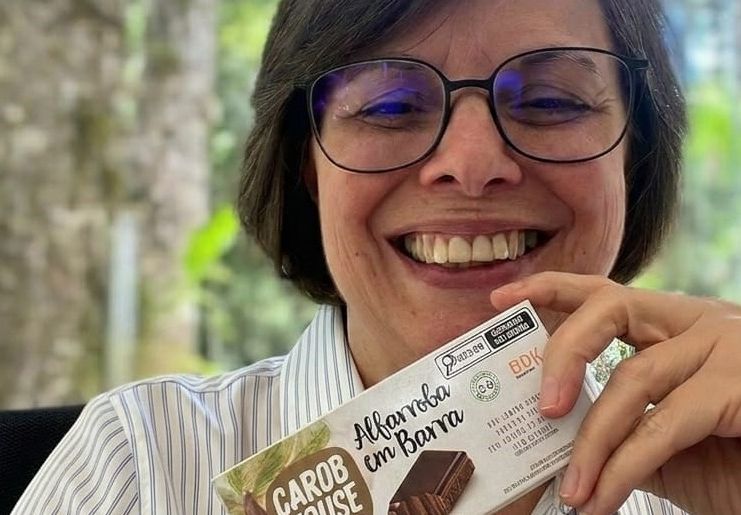
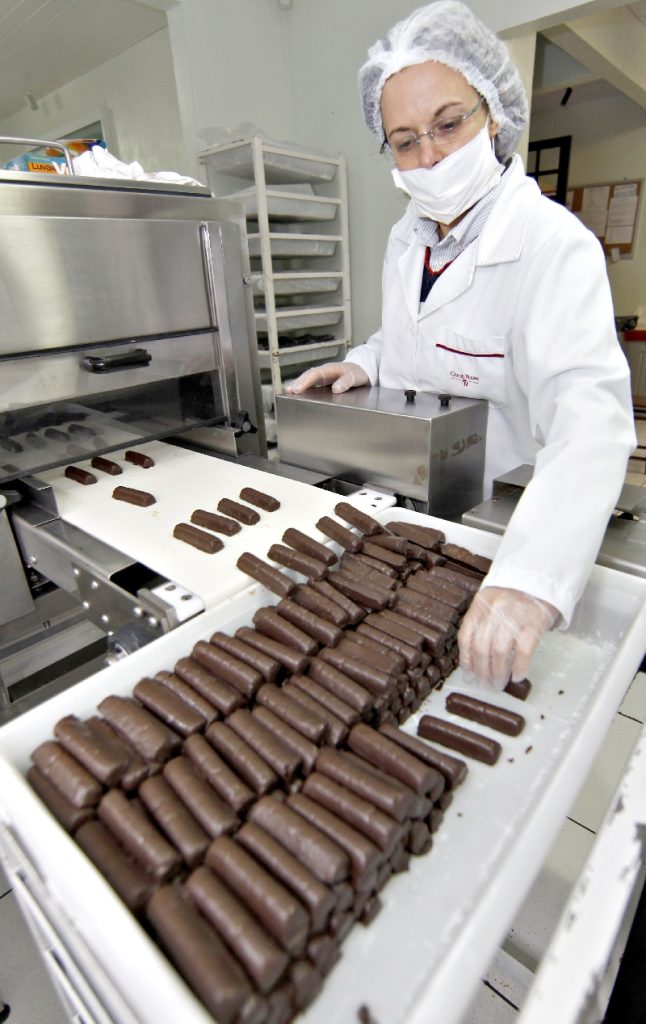
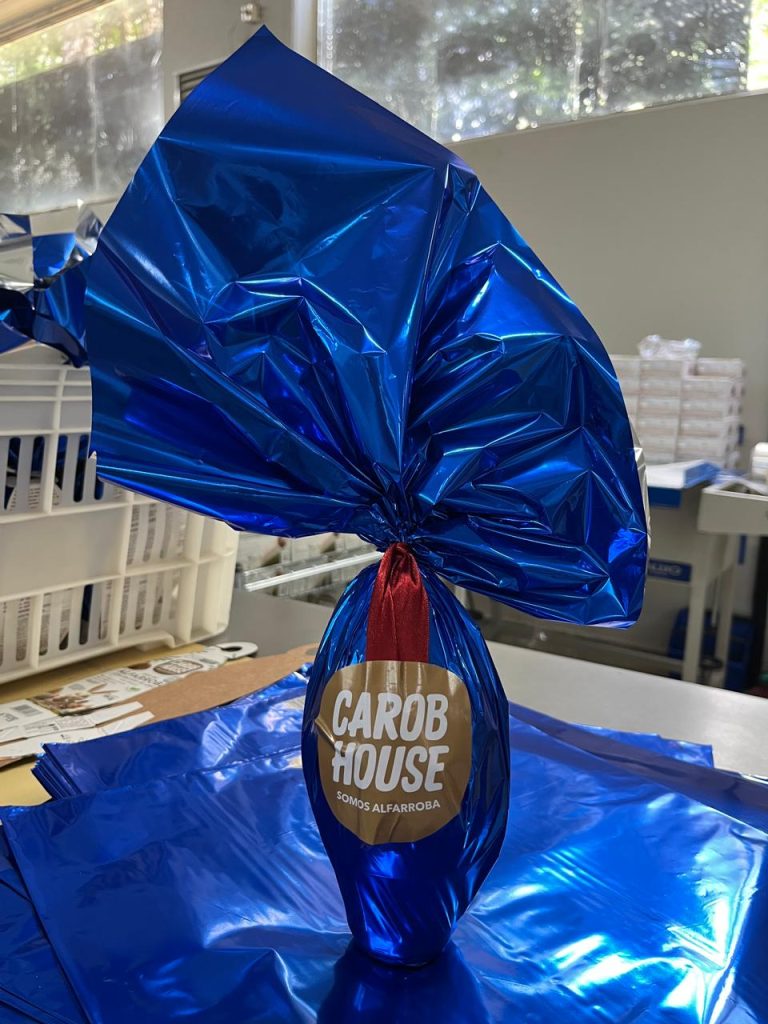
São Paulo – Amid an araucaria grove in Brazil’s Curitiba metropolitan area, there is a fully eco-friendly factory producing healthy foods made from carob, a pod from the carob tree, native to the Mediterranean. The fantastic alternative-to-chocolate factory, Carob House, was founded in 2002 and is now one of Brazil’s best-known healthy brands, with products ranging from its signature bars to tablets and spreads. Now, with Easter approaching, it also offers eggs.
Eloísa Helena Orlandi, the mind behind Carob House, discovered carob while living in Canada with her husband. There, the powder was sold in bulk, and there was also a carob-flavored drink mix produced at Loma Linda University in California. Because of its health appeal, carob became part of the family’s diet.
“When we returned to Brazil, we identified a gap in the market with the lack of an alternative product that could serve consumers who, for health, ideological, or taste reasons, did not consume conventional chocolate,” Orlandi says.
That’s how the venture began. It took nearly four years of research and development before the company officially opened in 2002, and the product only reached the market in late 2003.
The raw material is imported, as the carob tree is native to desert climates and does not grow in Brazil. Portugal, Spain, Italy, and Greece are among the largest producers. “However, given its many properties, several North African countries are investing heavily in carob cultivation. There’re also producers on other continents, such as Asia and Oceania,” says Orlandi, an avid enthusiast and scholar of the subject.
Carob House even supported a doctoral thesis by an Agronomy student at the Federal University of Paraná (UFPR), who developed the cultivation of carob trees in the state by creating a controlled environment that would allow them to grow. “They’re growing,” Orlandi celebrates. The carob tree is known for its slow growth and longevity: it can take up to a decade to begin bearing fruit.
Internationalization
Orlandi describes Carob House now as a food boutique: with cutting-edge technology, modern facilities, and a small team of dedicated staff. “Everything is carefully designed so the product reaches our end consumer carrying all the history and culture that underpin the concept of a premium product that is good for your health.”
In 2022, at the invitation of the government of Fribourg, Switzerland, Carob House set up operations there. At Carob House Swiss, the idea is to position carob as coexisting seamlessly with chocolate, catering to consumers seeking healthier everyday options—a global trend that gained momentum after the pandemic.
From Switzerland, the company aims to reach new markets beyond Brazil by internationalizing this trend. “We don’t export products—we export a concept. For me, internationalization goes beyond filling a container and crossing the ocean without knowing whether you’ll do it again,” Orlandi says.
To that end, it operates on several fronts. Recently, Orlandi took part in a halal business roundtable at Paraná state industry group FIEP. “I see strong alignment between my product and the Arab world, especially with halal, considering that our production process naturally meets the religious requirements for certification. Our plant is 100% vegan,” she says. Carob House’s formulas are patented, meaning it has no competitors in Brazil.
Carob’s connection with the Arab world is, in fact, historical. In Ancient Greece, carob seeds (kerátion) were used as a unit to weigh precious stones. Later, Arab merchants adopted this unit of measurement under the name qirat. It eventually became quilate in Spain and Portugal, the term still used today.
A São Paulo native and granddaughter of mineiros from Passos, Orlandi studied Law and released a book of poetry at the São Paulo Book Biennial in 1984. Before founding Carob House, she also worked at a multinational in the financial sector (while developing the project alongside her husband). Now nearly 25 years old, the company will not be passed on to her children, who, with their own careers, are not interested in taking over the business.
“Meanwhile, the father handles production and the mother takes care of everything else, until the day this legacy is passed on to endure over time,” she says, confident that her work will continue to exist—and expand—beyond her own lifetime, long-lived like a carob tree.
Read more:
Brazilian halal project firms enter 9 new markets
Report by Débora Rubin, in collaboration with ANBA
Translated by Guilherme Miranda
