



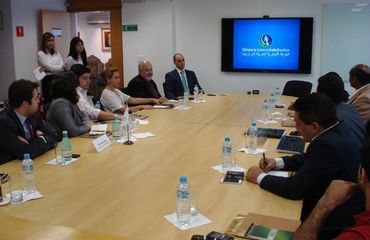
São Paulo – The Arab Brazilian Chamber of Commerce has kicked off the preparations for taking Brazilian enterprises to the 31st Khartoum International Fair, due from January 30th to February 6th 2014 in Sudan. This Tuesday (17th), delegates from Brazil-based companies interested in attending the event were at the Chamber’s headquarters to learn more about the fair and the Sudanese market.
In 2012, Brazil exported the equivalent of US$ 81.8 million to Sudan, mostly sugar, wheat, poultry and agricultural machinery. The sum accounts for only 1.2% from the African country’s total imports from the world last year.
“We are looking for Brazilian suppliers to serve our partners in Sudan,” said Suelma Rosa dos Santos, the Arab Brazilian Chamber Market Intelligence director, proof that there is still unmet demand in Sudan for Brazilian companies. Aside from attending the fair, the participating companies will have a parallel schedule based on their individual interests.
Luiz Ferraz, the production manager for machinery and engineering company Ferraz Máquinas e Engenharia, says his company owns a plant in South Africa and is in talks for two different projects with Sudan. The enterprise is based in the city of Ribeirão Preto and sets up animal food manufacturing complexes.
“South Africa is a bit ahead of the pack, they have major animal food companies. The remainder of Africa still imports lots of animal food, but the outlook is great. Eventually they will begin supplying the domestic market with local production,” the executive says.
Maria Prado, a trader for electric shower manufacturer Fame, says the company has consolidated exports to Latin American countries, and now the plan is to go after the African and Arab markets.
“Our product is the most economical for a hot bath. There are lots of people in the world who take cold showers because some appliances are too expensive, such as boilers or has heaters,” she says. “The electric shower is an easily installed product and it is very cheap, for places where the cold isn’t too harsh, and thus do not require sophisticated equipment. An electric shower often costs 10% of other product’s prices, so it is viable for lower purchasing power families,” she explains.
Katia Timani, the owner of hair cosmetics company Kans BR, which exports to four different Arab countries, has decided that she will attend the fair in Khartoum. Her company makes inner hair restoration cosmetics, and she believes her products will meet the needs of the Sudanese population. “Considering their hair type, my product should be very successful there,” she says.
*Translated by Gabriel Pomerancblum

