



São Paulo – The Dubai International Dance Festival, slated for September 14th to 21st, will feature three Brazilian attractions. Currently in its eighth edition, it is the main dance event in the Middle East, and will bring together local, European, Latin American, Asian and North American artists.
“Dancing is very popular in Dubai, there are many dance styles in Dubai, especially salsa, which is the most popular after belly dancing. We have a strong dance community,” says Chris Cross, the festival’s co-director. He also says there are several dance schools in the emirate, and the styles in most demand are salsa, tango, belly dancing, Bollywood dancing (Indian style) and hip-hop.
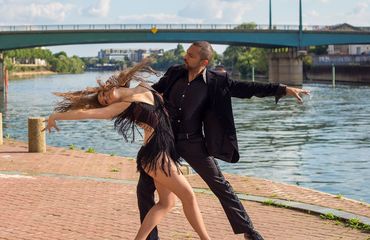
The Brazilians in the festival are the couple Alex de Carvalho and Mathilde dos Santos, who specialize in ballroom dancing; Martina Cancio, who does Latin and Arab styles; and Cafe de la Danse, an entertainment group that performs in several styles.
Alex de Carvalho has worked with ballroom dancing for 17 years, and also trains other professional dancers. He first took up dancing at Centro de Dança Jaime Arôxa, one of Brazil’s foremost schools. Mathilde dos Santos holds degrees in classical ballet and modern and contemporary dance from the National Conservatory of Music and Dance, in Paris (CNSMDP), and from the Palucca Schule Dresden international dance school in Germany.
Martina Cancio studied at the Dance School of the Federal University of Bahia. Her career in Dubai began in 2007, and she has performed in other Arab countries such as Syria, Lebanon, Egypt, and Oman. In 2013 she established a company in the UAE, Art Zone, offering samba, belly dancing, pole dancing, capoeira, flamenco, and Latin dance performances, as well as children’s shows and thematic performances.
Café de la Danse was founded by Brazil’s Milla Tenório and performs in various styles, running the gamut from typical Brazilian dances like samba and frevo to flamenco and other Latin dances, as well as traditional Arab styles like belly dancing and tanoura (where dancers wear a special skirt). Tenório has performed in Morocco, Syria, Tunisia, Lebanon, and Egypt.
“The Brazilian dance community is very active here. They do samba classes, samba events, Brazilian nights etc., and capoeira is very popular as well,” says Cross.
The festival will also feature performances by dancers from Lebanon, the UAE, Cyprus, Colombia, Russia, France, Spain, Cuba, the Dominican Republic, Hong Kong, the United States, Kuwait, Bahrain, Ukraine, Norway, and the Czech Republic.
Besides the performances, the festival will feature 25 workshops on rhythms such as salsa, quizomba, zouk, belly dance, hip hop, African dance, Bollywood dance, samba, and tango, among others.
According to the event’s organizers, Latin music will be the highlight of this edition, with the world premiere of the musical Dance Fever – A Tribute To The Global & Regional Dance Community, about the history of Latin music. The festival happens at several venues in Dubai. According to Cross, as many as 3,500 people are expected.
For more information on the Dubai International Dance Festival, go to http://dubaidancefestival.com.
*Translated by Gabriel Pomerancblum

