



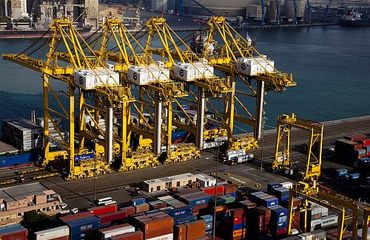
São Paulo – DP World, the port operator based in Dubai, United Arab Emirates, reported this Thursday (17) a significant increase in gains last year. Revenues totaled USD 3.968 billion, an increase of 16.3% over 2014. According to the company, the performance was impacted by the acquisition of the Economic Zones World (EZW), company that manages industrial and logistics complexes such as the Jebel Ali Free Zone, also based in Dubai.
DP World reported that an improvement in the capacity of cargo handling in several terminals that it operates impacted the increase in revenues. The majority of the company’s revenues came from its Middle East, Europe and Africa terminals, totaling USD 2.911 billion in 2015, an increase of 22% over the previous year.
In Australia and the Americas, the performance was more modest. Revenues totaled USD 642 million, an increase of 2.2% over 2014. The company says that Australia had a better performance, but in the Americas the volatility of the exchange rate and the low price of commodities reduced economic growth and impacted the results.
The company mentioned the weak performance of the terminal Embraport, at Santos Port, Brazil, as an example of a business that registered losses due to the exchange rate volatility. Embraport is a joint-venture between DP World and Odebrecht. The company from Dubai also has operations in Asia.
The company’s Ebitda, that is, earnings before interest, taxes, depreciation and amortization, stood at USD 1.928 billion last year, an increase of 21.4% over 2014. With this, the Ebitda margin went from 46.6% to 48.6% from one year to the other, a record percentage.
Meanwhile, profit stood at USD 883 million, an increase of 30.7% over 2014. “This financial performance has been achieved despite uncertain market conditions, which once again demonstrates the well diversified and resilient nature of our portfolio with its focus on high growth markets”, said the company’s president, Sultan Ahmed Bin Sulayem.
He added that the company invested USD 5.4 billion in 2015, with USD 4 billion in acquisitions and USD 1.4 billion in capex. “This investment leaves us well placed to capitalize on the significant medium to long-term growth potential of this industry”, he emphasized.
In 2016, the executive underscored that the macroeconomic and geopolitical conditions remain uncertain in some regions, but he believes that the company should expand its activities ahead of the market average.
*Translated by Sérgio Kakitani

